Water Damage Restoration Cost in Fort Myers: What Homeowners Need to Know
If you’re staring at soaked drywall, buckled wood flooring, or a carpet that squishes underfoot, the first question most Fort Myers homeowners ask is: what is this going to cost me? That’s a fair question, and this guide gives you real, Southwest Florida–specific numbers — not national averages that ignore our hurricane season, flood zones, or the relentless humidity that turns a small water leak into a mold problem within 48 hours. We’ve built this resource from hundreds of actual water damage restoration fort myers jobs across Lee County, Collier County, and Charlotte County so you can plan, budget, and make smart decisions fast.
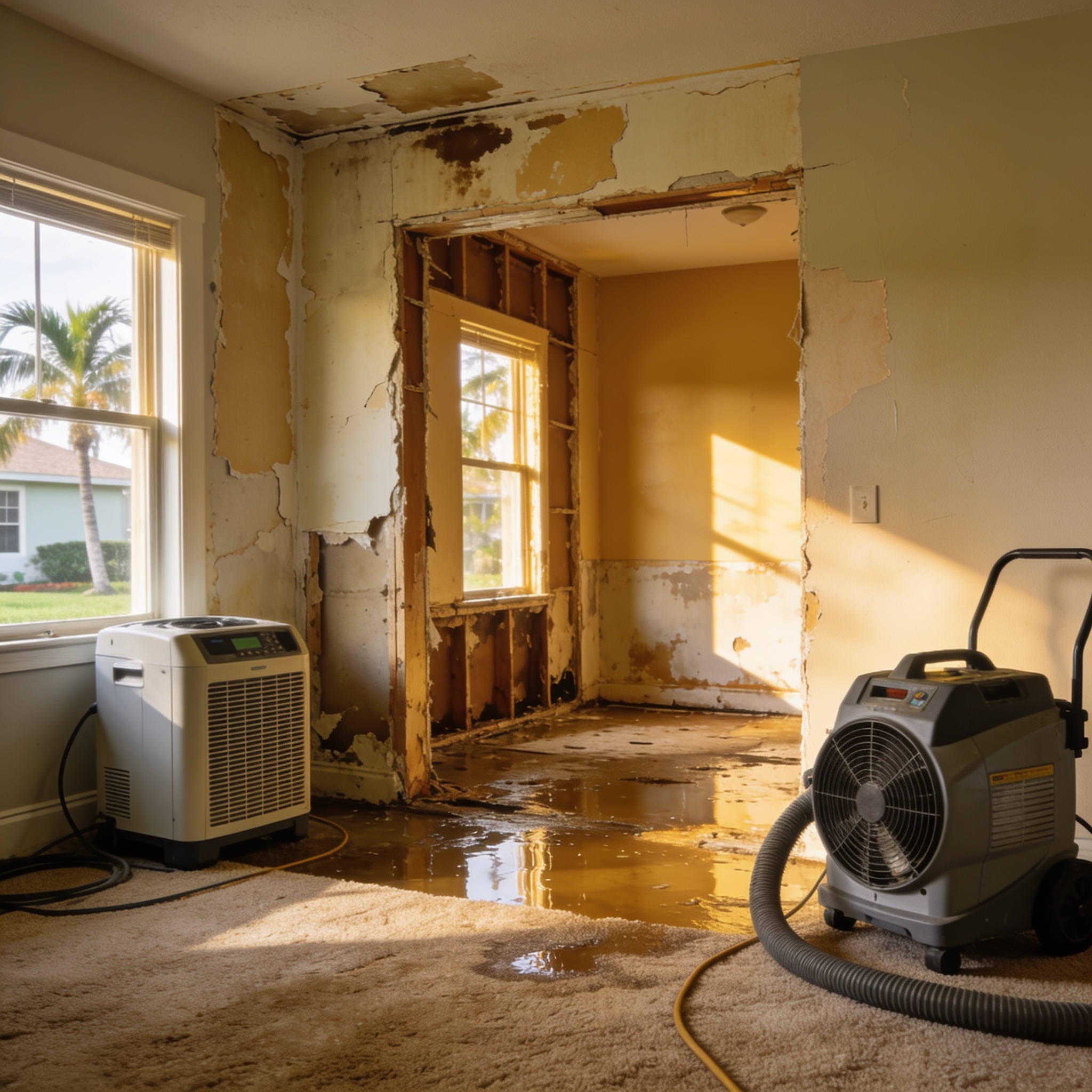
What Drives the Cost of Water Damage Repair in Fort Myers
The cost of water damage repair is never a flat rate. Several interconnected factors push the final number up or down, and understanding them helps you evaluate any cost estimate you receive.
- Severity of the damage: A slow water leak under a sink caught in 24 hours is a fraction of the cost of storm surge that sat for three days. The longer water sits, the deeper it soaks into subfloors, wall cavities, and insulation — multiplying the restoration work required. When damage is severe, costs can escalate rapidly into the tens of thousands of dollars.
- Type of water involved: Clean water from a broken supply line is the least expensive to remediate. Gray water from a washing machine overflow or dishwasher backup carries mild contamination and costs more to handle safely. Black water — sewage backups, category 3 flood water, or storm surge mixed with debris — requires full personal protective equipment, antimicrobial treatment, and often complete material removal. The type of damage and the water category involved are among the single biggest cost drivers on any project.
- Square footage affected: Restoration companies price water removal and drying largely on a cost per square foot basis. A 200-square-foot bathroom is a very different job than a 1,800-square-foot first floor.
- Structural damage: When water soaks deeper into framing, subfloor sheathing, or load-bearing walls, the repair cost escalates significantly. Extensive damage to structural components requires licensed contractors in addition to the restoration crew.
- Southwest Florida humidity: Fort Myers averages over 74% relative humidity year-round. That ambient moisture means drying equipment must work harder and run longer than in drier climates, which affects equipment rental costs and labor hours.
- Flood zone designation: Many Fort Myers properties — especially near Fort Myers Beach, Cape Coral canals, and low-lying areas of Lee County — sit in FEMA-designated flood zones. Flood damage in these areas often involves contaminated water, requiring more aggressive water damage mitigation protocols.
Types of Water Damage in Fort Myers Homes
Type of Damage: Classifications That Shape Every Restoration Decision
Understanding the types of water damage in Fort Myers that occur in Southwest Florida is essential to assessing the extent of damage and choosing the right response. The restoration industry recognizes several distinct damage classifications that directly influence restoration protocols and pricing. Water damage occurs in many forms — from a slow appliance leak to sudden storm surge — and each type of damage carries its own remediation requirements.
- Clean water damage: Caused by supply line breaks, water heater failures, or toilet tank overflows. Lowest risk and lowest cost when addressed promptly.
- Gray water damage: Results from appliance overflows, sink backups, or HVAC condensate failures. Requires antimicrobial treatment and protective handling.
- Black water damage: Originates from sewage backups, storm surge, or rising floodwater. The most hazardous and expensive type to remediate.
- Structural water damage: Occurs when moisture penetrates framing, subfloors, or load-bearing assemblies, often requiring both restoration and licensed contractor repairs.
- Flood damage: Storm-driven water intrusion common in Lee County’s flood zones; frequently involves contaminated water and requires flood restoration protocols distinct from standard water mitigation.
Typical Project Tiers: Average Cost of Water Damage Restoration Near Fort Myers
Below are realistic cost ranges based on actual restoration work performed in the Fort Myers area and communities near Fort Myers including Cape Coral, Bonita Springs, and Estero. These figures reflect 2026 pricing from licensed water damage restoration companies operating in Southwest Florida.
| Project Tier | Scenario | Typical Cost Range | What’s Included |
|---|---|---|---|
| Minor (Class 1) | Small water leak, one room, clean water, caught early | $500 – $1,500 | Water extraction, drying equipment 2–3 days, moisture monitoring |
| Moderate (Class 2) | Appliance overflow, bathroom flood, partial flooring affected | $1,500 – $5,000 | Water removal, dehumidifiers, fan placement, carpet/pad removal, drywall assessment |
| Significant (Class 3) | Roof leak after hurricane, multiple rooms, gray water | $5,000 – $15,000 | Full extraction, structural drying, drywall removal, antimicrobial treatment, mold prevention |
| Severe (Class 4 / Category 3) | Storm surge, sewage backup, black water, extensive damage | $15,000 – $40,000+ | Full remediation, material disposal, structural repairs, mold remediation, rebuild |
The average cost for a mid-range residential water damage restoration in Fort Myers falls between $3,000 and $8,000. Jobs involving higher water categories or larger affected areas carry a higher cost. Commercial water damage projects scale considerably higher based on business interruption and the volume of affected space.
Water Damage Categories: Clean Water, Gray Water, and Black Water
The IICRC — the industry’s certification body — classifies water damage into three categories, and every licensed water damage restoration service uses this framework to determine safety protocols and pricing. The water category assigned to a job directly shapes the restoration protocols followed, the protective equipment required, and the extent of material removal needed.
Category 1: Clean Water
Clean water originates from a sanitary source — a burst supply line, a malfunctioning water heater, or a toilet tank (not bowl) overflow. This is the least hazardous type of water and carries the lowest restoration costs, provided it’s addressed quickly. In Fort Myers’s heat, even clean water can degrade to a higher category within 24–48 hours as bacteria multiply.
Category 2: Gray Water
Gray water contains significant contamination that can cause illness if ingested or contacted. Sources include washing machine overflows, dishwasher backups, and sink drain failures. Gray or black water situations require additional protective measures and antimicrobial applications, raising the overall damage restoration cost.
Category 3: Black Water
Black water is grossly contaminated and includes sewage backups, rising flood water from storm surge, and any water that has contacted contaminated water sources. Category 3 water damage is the most expensive to remediate. After Hurricane Ian, thousands of Fort Myers properties dealt with black water intrusion from storm surge — a scenario that requires complete removal of all porous materials that contacted the water. Unaddressed black water events frequently lead to damage and mold growth that compounds remediation costs significantly.
The One Thing That Decides Whether This Becomes a Nightmare: Speed
Water damage in Fort Myers is not a “wait and see” situation. Every hour that standing water remains in your home, it soaks deeper into subfloors, wicks up drywall, and creates the warm, humid conditions that indoor mold needs to colonize. Mold can begin growing in as little as 24–48 hours in Southwest Florida’s climate. What starts as a $2,000 water cleanup in Fort Myers can become a $15,000 mold remediation project if action is delayed by even a day or two. Speed is the single most important factor in controlling the final restoration cost in Fort Myers.
Emergency Water Damage Restoration: Acting Before the Clock Runs Out
When water damage occurs, the first hours are critical. Emergency water damage restoration services are designed to respond immediately — stopping the water source, beginning extraction, and deploying drying equipment before secondary damage takes hold. Fort Myers homeowners should look for providers offering 24/7 emergency response, IICRC certification, and documented moisture monitoring from the first visit. A prompt emergency water damage restoration response also helps establish the documentation trail insurers require when processing claims. Crews must quickly remove water from all affected surfaces to prevent moisture from migrating into wall cavities, subfloor assemblies, and insulation. Delaying emergency water removal even overnight in Southwest Florida’s climate dramatically increases the risk of mold colonization and structural deterioration. Prompt emergency water removal is the single most effective action a property owner can take to limit both damage severity and total restoration cost.
Fort Myers Water Damage Restoration Service: Local Risks and Regional Expertise
Fort Myers water damage restoration service providers face challenges that national averages simply don’t capture. The combination of hurricane exposure, high ambient humidity, aging infrastructure in older neighborhoods, and widespread flood zone designations means that expert water damage assessment and response is not optional — it’s essential. Professional water damage restoration teams familiar with Lee County’s specific conditions understand how to account for salt-air corrosion near the coast, the behavior of concrete block construction common in Southwest Florida, and the accelerated mold timelines driven by local climate. When evaluating providers, prioritize those with demonstrated experience in the region and verifiable restoration certification from the IICRC or RIA.
What Type of Water Damage Is Most Common in Fort Myers?
Fort Myers homeowners face a unique combination of water damage risks that differ from the national norm. Understanding the most common water damage scenarios helps you prepare and respond correctly.
- Hurricane and tropical storm damage: Wind-driven rain, roof failures, and storm surge are the dominant causes of flood damage in Lee County. Fort Myers Beach and low-lying coastal areas face the highest exposure.
- Plumbing failures: Aging supply lines, corroded pipes, and sudden and accidental water damage from burst pipes are year-round risks. Sudden and accidental water damage is typically covered by standard homeowners insurance.
- Appliance leaks: Washing machine hose failures, refrigerator ice maker lines, and water heater tank ruptures are among the most common water losses in Fort Myers homes.
- Roof leaks: After heavy rain events, compromised roof membranes allow water intrusion that can saturate attic insulation and ceiling drywall before a homeowner notices anything.
- Toilet and sewage backups: Older sewer infrastructure in parts of Fort Myers contributes to backup events, which immediately classify as black water situations requiring emergency water removal and professional remediation.
Water Cleanup in Fort Myers: What a Complete Response Looks Like
Thorough water cleanup in Fort Myers does far more than extract standing water. A complete water cleanup response follows a structured sequence: emergency contact and source control, damage assessment and moisture mapping, water removal and extraction, structural drying, antimicrobial treatment, material removal where necessary, and final repairs. Providers who skip steps — particularly moisture documentation or antimicrobial application — leave homeowners exposed to mold and long-term structural problems. When evaluating any water cleanup in Fort Myers service provider, confirm they follow IICRC S500 standards and provide written documentation at every phase.
Water Extraction: The Foundation of Every Restoration Project
Effective water extraction is the critical first active step in any restoration project. Professional water extraction uses truck-mounted or portable extraction units capable of pulling hundreds of gallons per hour from flooring, carpet padding, and subfloor assemblies. The mistake many inexperienced crews make is stopping water extraction too early — pulling surface water but leaving moisture trapped in the substrate. That residual moisture becomes the foundation for secondary damage: mold growth, wood rot, and odor that persists long after the visible water is gone. Proper water extraction and drying requires moisture readings before, during, and after the process to confirm the job is complete. To perform water extraction effectively in a Fort Myers home, certified technicians must account for the building’s construction type, the water category involved, and the extent of the damage before selecting equipment and placement strategies.
Emergency Water Damage Repair in Fort Myers: Stop the Source First
Professional water damage restoration always begins with one non-negotiable step: stop the source of water. Whether that means shutting off the main water supply, tarping a damaged roof, or calling the utility company about a broken line, no meaningful drying can occur while water continues entering the structure. A trusted water damage restoration company will identify and document the source before any equipment is deployed — and if they don’t, that’s a red flag.
For emergency water removal in Fort Myers, our directory connects you with IICRC-certified teams available 24/7. You can also explore our full listings for Water Damage Restoration in Fort Myers to compare local providers.
How We Find Hidden Moisture — and Why “It Looks Dry” Means Nothing
One of the most important tools in professional water damage restoration is equipment the homeowner never sees: thermal imaging cameras and penetrating moisture meters. Water migrates through wall cavities, travels along framing members, and pools in areas with no visible sign of damage. A wall that looks dry to the eye can register 40% moisture content inside — enough to sustain mold growth for months. Fort Myers property owners should insist that any restoration company they hire documents moisture readings with calibrated equipment at the start, middle, and end of every drying cycle. Accurately mapping the extent of the damage — including hidden moisture — is what separates a thorough restoration from one that leaves problems behind.
Flood Damage and Flood Restoration: A Different Standard of Care
Flood damage from storm surge, rising water, or hurricane-driven rainfall requires flood restoration protocols that go beyond standard water mitigation. Because floodwater is almost always classified as Category 3 black water, all porous materials that contacted the water — drywall, insulation, carpet, and often cabinetry — must be removed and discarded. Flood restoration also involves thorough antimicrobial treatment of structural cavities, documentation for NFIP insurance claims, and coordination with local building departments when structural repairs are required. Fort Myers homeowners who experienced flooding after Hurricane Ian know that flood restoration is a multi-week process requiring specialized expertise, not a simple dry-out.
Structural Drying in Fort Myers: Equipment, Placement, and Why Positioning Is Everything
Drying in Fort Myers requires a calculated approach. The goal of structural drying is to create a controlled drying environment where warm, dry air is continuously circulated through wet building materials while dehumidifiers remove moisture-laden air from the space. Equipment placement matters enormously — an air mover pointed at the wrong angle can push moisture into an unaffected wall cavity rather than drawing it out. IICRC standards require a specific ratio of air movers to dehumidifiers based on the affected square footage and the water damage class. Certified technicians create a drying plan, document equipment placement, and take daily moisture readings to confirm the structure is drying on schedule. This is what separates professional restoration services from a crew that drops fans and disappears.
If you’re dealing with water damage near the coast, our listings for Water Damage Restoration in Fort Myers include specialists experienced with salt-air corrosion and storm surge remediation.
Restoration Costs: What Affects Your Final Bill
Every cost estimate for water damage restoration in Fort Myers should reflect the interaction of water category, affected square footage, building materials, and response time. The extent of damage — both visible and hidden — is the most variable factor from job to job. A project where water damage to your home is caught within hours and involves only clean water may cost under $1,500. The same footprint, left unaddressed for 48 hours in Fort Myers’s humidity, can triple in cost as moisture penetrates deeper assemblies and mold begins to establish. When requesting a cost estimate, ask providers to break out mitigation, drying, material removal, and repairs as separate line items — this makes it far easier to compare bids accurately and identify any gaps in scope. Additional cost factors include the need for mold remediation, structural repairs, temporary housing during restoration, and contents cleaning or replacement.
Commercial Water Damage Restoration in Fort Myers: A Higher-Stakes Response
Commercial water damage in Fort Myers carries consequences beyond the physical structure — business interruption, liability exposure, inventory loss, and tenant displacement all compound the urgency. Commercial water damage restoration requires crews experienced with larger-scale extraction equipment, phased drying strategies that allow partial business operations to continue, and documentation standards that satisfy commercial insurance adjusters. Restaurants, retail spaces, office buildings, and multi-family properties near Fort Myers each present unique challenges that residential-focused crews may not be equipped to handle. When evaluating providers for commercial water damage, confirm they have documented experience with commercial projects of similar scale and can provide references from comparable jobs in the Southwest Florida market.
Trusted Water Damage Restoration: Choosing the Right Provider in Fort Myers
Not all restoration services are equal. A trusted water damage restoration provider brings IICRC certification, regional expertise, and transparent documentation to every job. When evaluating water damage restoration companies in Fort Myers, look for the following:
- IICRC restoration certification: The Institute of Inspection, Cleaning and Restoration Certification sets the technical standards for the restoration industry. Certified firms follow documented restoration protocols and employ trained technicians.
- Local experience: A company familiar with Fort Myers’s construction styles, flood zones, and climate conditions will make better decisions on-site than a national franchise with no regional expertise.
- 24/7 availability: Water damage doesn’t happen on a schedule. Emergency response capability is non-negotiable.
- Transparent written estimates: Any reputable provider will give you a detailed written scope before work begins.
- Insurance coordination: Experienced restoration services work directly with adjusters and understand how to document claims properly.
- Complete water damage restoration: Confirm the provider handles the full scope — from extraction through final repairs — rather than subcontracting the rebuild phase without disclosure.
Fort Myers Property: Restoration Process From First Call to Final Repair
Every Fort Myers property presents its own combination of construction type, flood zone exposure, and water damage history — which is why the restoration process must be tailored to the specific conditions found on-site. Certified companies adhere to a defined sequence regardless of job size:
- Emergency contact and dispatch: A certified technician is on-site, typically within 1–2 hours for emergency calls.
- Damage assessment: Technicians use moisture meters and thermal imaging to map the full extent of damage, assign a water category, and classify the damage class.
- Water extraction: Truck-mounted or portable extractors remove water from all affected surfaces — crews must remove water thoroughly from flooring, wall cavities, and subfloor assemblies before drying equipment is positioned.
- Structural drying: Air movers and dehumidifiers are placed according to IICRC standards and monitored daily.
- Material removal: Unsalvageable drywall, insulation, flooring, and cabinetry are removed and properly disposed of.
- Antimicrobial treatment: All affected structural cavities are treated to prevent mold colonization.
- Monitoring and documentation: Daily moisture readings confirm drying progress and provide documentation for insurance claims.
- Reconstruction: Once the structure is certified dry, repairs restore the property to its pre-loss condition.
Insurance and Payment: What Fort Myers Homeowners Need to Know
Home insurance typically covers sudden and accidental water damage — a burst pipe, an appliance failure, or wind-driven rain through a damaged roof. It does not typically cover flood damage from rising water, which requires a separate NFIP (National Flood Insurance Program) policy. Given Fort Myers’s flood zone exposure, many homeowners carry both.
When filing a water damage claim, document everything before any cleanup begins: photograph standing water levels, affected materials, and visible damage from multiple angles. A reputable restoration company will work directly with your adjuster and provide a detailed scope of work. Be cautious of any contractor who asks you to sign over your insurance rights (Assignment of Benefits) without fully explaining the implications.
For properties in North Fort Myers or unincorporated Lee County, coverage questions and contractor licensing requirements may differ slightly. See our guide to Water Damage Restoration in Fort Myers for region-specific information.
What Counts as Water Damage Restoration (Not Just Cleanup)
True water damage restoration is a complete process — not just removing water. It includes emergency water removal, structural drying, moisture documentation, antimicrobial treatment, material removal where necessary, and final repairs that return the property to its pre-loss condition. Water cleanup in Fort Myers that stops at extraction and drying without addressing damaged drywall, flooring, or insulation is incomplete work that will lead to mold growth and structural deterioration. Make sure any estimate you receive covers the full restoration process, not just the mitigation phase.
Frequently Asked Questions
What is the average cost of water damage restoration in Fort Myers, FL?
The average cost for residential water damage restoration in Fort Myers ranges from $3,000 to $8,000 for moderate damage. Minor jobs involving clean water and a single room may cost as little as $500–$1,500, while severe flood damage or black water events involving extensive damage can exceed $40,000. The type of water involved, the square footage affected, and how quickly professional restoration services are engaged are the primary cost drivers.
Does homeowners insurance cover water damage restoration in Fort Myers?
Standard homeowners insurance covers sudden and accidental water damage — such as a burst pipe or appliance failure — but does not cover flood damage from rising water. Fort Myers homeowners in FEMA flood zones should carry a separate flood insurance policy through the NFIP. Always document damage thoroughly before cleanup begins and contact your insurer immediately to start the water damage claim process.
How long does water damage restoration take in Fort Myers?
Structural drying in Fort Myers typically takes 3–5 days for moderate water damage under normal conditions. However, Southwest Florida’s high ambient humidity can extend drying times. Severe damage involving black water, mold remediation, and structural repairs can take 2–6 weeks for complete restoration. Your restoration company should provide daily moisture readings so you can track progress objectively.
Can I handle water damage cleanup myself to save money?
DIY water removal is possible for very minor, clean water events caught immediately — but it carries real risk in Fort Myers’s climate. Without professional moisture meters and drying equipment, hidden moisture remains in wall cavities and subfloors, leading to mold growth and secondary damage that costs far more to fix than the original event. For any water damage involving gray water, black water, more than one room, or water that has been present for more than a few hours, licensed water damage restoration is strongly recommended to prevent further damage and protect your insurance claim.
Our editorial team verifies licensing and reviews for every restoration company in the directory and writes practical, Florida-specific guides to help homeowners act fast and protect their insurance claims after water, fire, mold or storm damage.