How Much Does Mold Remediation Cost? A Complete Breakdown for Homeowners
Mold remediation costs in Southwest Florida typically range from $2,000 to $6,000 for average residential projects, though extensive infestations in the Fort Myers, Naples, and Cape Coral areas can exceed $10,000 depending on the mold type, affected area size, and structural damage. Understanding the factors that drive pricing—from inspection fees to containment and removal—helps homeowners budget effectively for this critical restoration service. This guide breaks down what you’ll actually pay for professional mold remediation in your Southwest Florida home.
Key Takeaways
- The average cost of mold remediation in the U.S. ranges from $1,500 to $10,000, depending on the size of the affected area and severity of the mold infestation.
- In Southwest Florida — Lee, Collier, and Charlotte counties — high humidity, hurricane flood damage, and aging plumbing push costs toward the higher end of that range.
- Professional mold remediation includes containment, HEPA filtration, removal of porous materials, and post-clearance testing.
- Homeowner’s insurance may cover mold removal when it results from a sudden, covered peril such as a burst pipe or hurricane flooding.
- Early detection through a mold inspection can dramatically reduce the total cost of mold remediation before the problem spreads to multiple rooms.
How Much Does Mold Remediation Cost on Average?
If you’ve discovered visible mold in your home and you’re wondering how much does mold remediation cost, the honest answer is: it depends — but you can plan around a realistic range. Nationally, most homeowners pay between $1,500 and $5,000 for a mid-sized mold remediation project. Severe mold infestations covering multiple rooms or penetrating structural materials can push the total cost to $10,000 or more. On the low end, a small bathroom mold problem limited to tile grout or a single wall section can be remediated for as little as $500.
In Southwest Florida, the cost of mold remediation trends higher than the national average for several reasons: year-round high humidity, the aftermath of tropical cyclones like Hurricane Ian, and the prevalence of older construction in flood zones throughout Lee, Collier, and Charlotte counties. When water damage soaks into drywall, insulation, and wood framing and goes undetected for even a few days, mold growth can colonize rapidly in SWFL’s warm climate — making the scope of remediation far larger than it would be in a drier region.
Mold Removal Costs Per Square Foot
One of the most reliable ways to estimate mold removal costs is by square footage of the affected area. Most certified remediation companies charge between $10 and $25 per square foot, with complex jobs involving HVAC systems, crawl spaces, or attics sometimes reaching $28 to $35 per square foot. The total amount of mold present — and how deeply it has penetrated building materials — directly determines where your project falls within that range.
| Affected Area (sq ft) | Low Estimate | High Estimate | Typical Scenario |
|---|---|---|---|
| Up to 10 sq ft | $500 | $1,000 | Small bathroom mold patch, tile grout |
| 10–50 sq ft | $1,000 | $2,500 | Single wall, under-sink cabinet |
| 50–200 sq ft | $2,500 | $5,000 | Basement, crawl space, one room |
| 200–500 sq ft | $5,000 | $8,000 | Multiple rooms, post-flood scenario |
| 500+ sq ft | $8,000 | $15,000+ | Whole-home infestation, HVAC contamination |
The widely cited benchmark of $25 per square foot applies to moderate remediation involving drywall removal, HEPA vacuuming, antimicrobial treatment, and containment barriers. Jobs that require rebuilding structural elements or replacing insulation will cost more per square foot because a general contractor must be brought in alongside the remediation specialist.
Mold Remediation Cost by Project Size
Square footage tells part of the story, but the project cost also scales with the depth of contamination. Surface mold on non-porous tile is far less expensive to remediate than mold that has penetrated drywall, building insulation, or wood framing. When porous materials are involved, they typically must be removed entirely, bagged, and disposed of — adding both labor and material costs to the project.
For a Southwest Florida homeowner dealing with post-hurricane water damage, it is common to find that mold has spread behind walls and under flooring within 24–48 hours of flooding. In those cases, the scope of remediation expands quickly, and what initially looks like a $2,000 job can become a $7,000–$12,000 project once a remediation specialist opens the walls.
Mold Removal by Location: Costs in Every Part of Your Home
Where mold grows in your home has a significant impact on removal costs. Some locations are easy to access and treat; others require specialized equipment, demolition, or extended containment periods.
Bathroom Mold
Bathroom mold is the most common type of indoor mold homeowners encounter. Poor ventilation, constant moisture, and grout lines create ideal conditions for fungus growth. Removal costs typically range from $500 to $1,500 for a standard bathroom. If mold has penetrated the drywall behind tile, costs rise to $2,000–$4,000 because tile must be removed and drywall replaced.
Basement and Crawl Space
Basements are less common in Southwest Florida due to the water table, but crawl spaces are extremely prevalent — and they are among the most expensive to remediate. A crawl space mold problem typically costs $1,500 to $5,000 because of limited access, the need for full containment, and the likelihood that wood joists and insulation must be replaced. Encapsulation to prevent future mold growth adds another $1,500 to $4,000.
Attic Mold
Attic mold is often caused by poor ventilation or a roof leak. In SWFL, hurricane damage frequently compromises roof integrity, allowing moisture intrusion that goes undetected for weeks. Attic mold remediation costs between $1,500 and $6,000, depending on the square footage and whether roof sheathing must be replaced.
HVAC System and Ductwork
Mold in an HVAC system is particularly serious because the system actively distributes mold spores throughout the entire home, degrading air quality in every room. Remediating an HVAC system costs between $3,000 and $10,000. This includes HEPA cleaning of ducts, treatment of the air handler, and replacement of contaminated insulation inside duct runs. In Florida’s climate, an HVAC system that runs year-round is especially vulnerable to condensation-related mold growth.
Walls and Drywall
Drywall is a porous material that absorbs moisture and supports rapid mold growth. When a leak behind a wall goes undetected, mold can colonize an entire wall cavity. Drywall removal and replacement, combined with HEPA vacuuming and antimicrobial treatment, typically costs $1,000 to $4,000 per affected wall section.
Mold Inspection and Testing Costs
Before you can remediate, you need to know the type of mold, its extent, and the source of moisture driving its growth. A professional mold inspection costs between $300 and $700 for a standard home. Air quality testing and surface sampling — which identify specific mold spores including toxic mold species like Stachybotrys (black mold) — add $100 to $300 per sample. A full mold test with lab analysis for a mid-sized SWFL home typically runs $400 to $900.
Post-remediation clearance testing, which confirms that mold spore counts have returned to acceptable levels, costs an additional $200 to $500. IICRC-certified remediators will recommend independent post-clearance testing rather than testing their own work — a sign of a trustworthy mold remediation company.
What Drives the Cost of Mold Remediation Up
Several factors cause homeowners to pay more for mold remediation than the baseline estimate. Understanding these variables helps you avoid surprises and overpay situations.
Factors That Drive Mold Remediation Costs Higher
- Severity of the mold: The severity of the problem is the single biggest cost driver. A small, contained patch costs far less than a severe mold infestation that has spread behind walls and into structural framing.
- Type of mold: Toxic mold species like black mold require more aggressive containment protocols and personal protective equipment, increasing labor costs.
- Location in the home: Hard-to-access spaces like crawl spaces, attics, and inside HVAC ductwork require more time and specialized equipment.
- Porous materials: When mold penetrates drywall, carpet, wood, or building insulation, those materials must be removed and replaced rather than simply cleaned.
- Water damage source: If the underlying leak or flood source has not been repaired, remediators must address it before or during the project, adding cost.
- Multiple rooms: Mold that has spread to multiple rooms requires larger containment zones, more HEPA air scrubbers, and longer labor hours.
- Size of your home: Larger homes have more potential pathways for mold to spread through walls, ductwork, and shared cavities, which can significantly expand the scope and cost of the remediation process.
- Post-hurricane conditions in SWFL: After a tropical cyclone, demand for mold remediators surges across Lee, Collier, and Charlotte counties, which can temporarily increase project costs by 20–40%.
- Cost of living: Southwest Florida’s cost of living and contractor labor rates are above the national average, which is reflected in remediation pricing.
What Professional Mold Remediation Includes
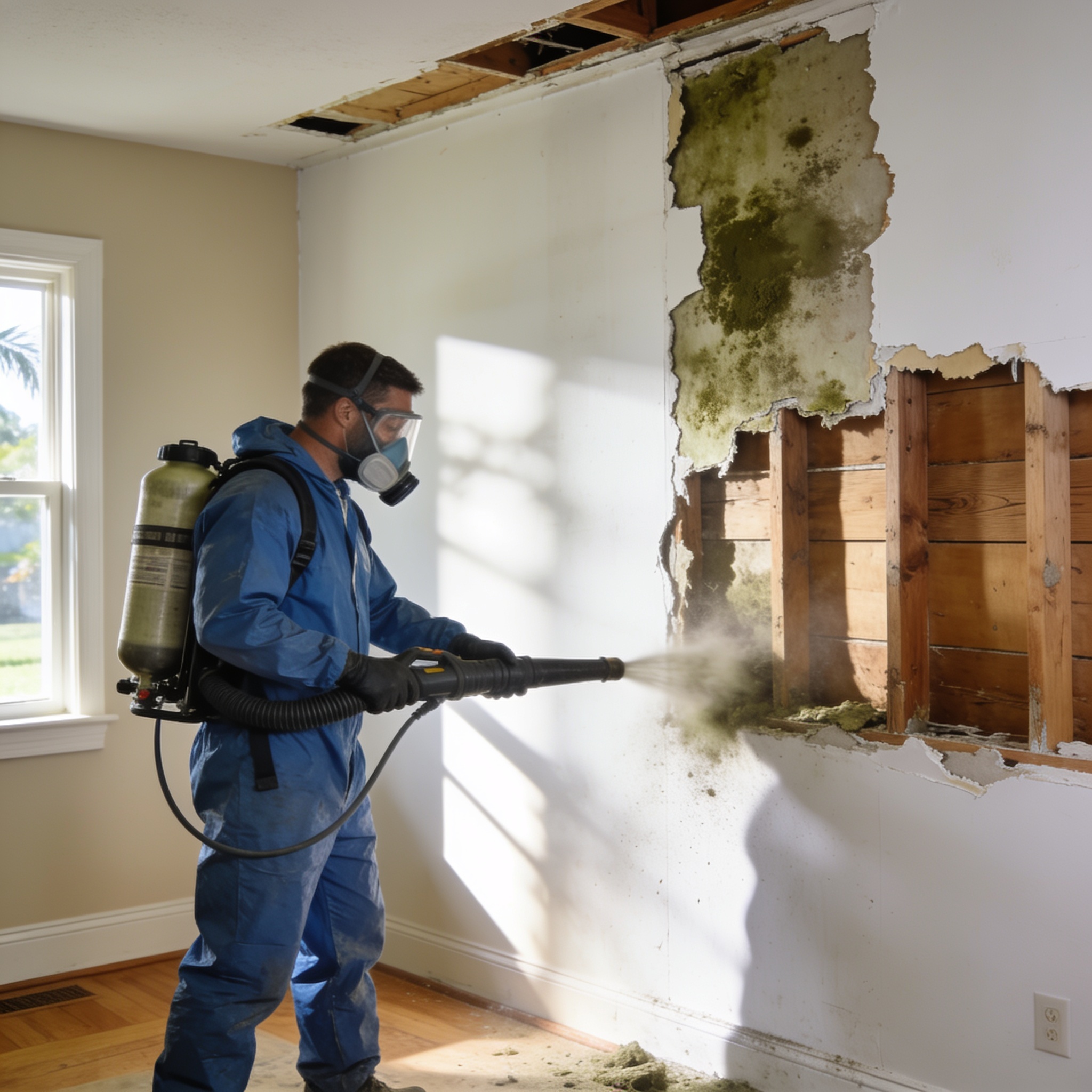
When you hire a professional mold remediation company, you’re paying for a systematic remediation process designed to safely remove mold, prevent mold spores from spreading to unaffected areas, and address the moisture source. Prolonged mold exposure poses serious health risks — including respiratory irritation, allergic reactions, and in severe cases neurological symptoms — which is why removing the mold thoroughly and correctly matters as much as the cost. Here’s what a thorough professional mold remediation project typically includes:
- Initial assessment: A remediation specialist inspects the home, identifies the presence of mold, and determines the scope of remediation needed.
- Containment: Plastic sheeting and negative air pressure containment barriers isolate the affected area from the rest of the home. This is critical to prevent the mold from spreading during removal.
- HEPA air filtration: Industrial HEPA air scrubbers run continuously during the project, capturing airborne mold spores and improving indoor air quality.
- Removal of contaminated materials: Porous materials like drywall, carpet, and insulation that cannot be cleaned are removed, double-bagged, and disposed of per EPA guidelines.
- HEPA vacuuming and antimicrobial treatment: All surfaces in the affected area are HEPA vacuumed and treated with EPA-registered antimicrobial agents to get rid of mold at the surface level.
- Drying and dehumidification: Industrial dehumidifiers reduce humidity levels to prevent future mold growth before reconstruction begins.
- Post-clearance testing: Independent air quality testing confirms that mold spore counts meet acceptable thresholds before the containment is removed.
- Reconstruction: Replacing drywall, insulation, flooring, and other removed materials is often handled by a general contractor, either as part of the remediation company’s services or as a separate contract.
Certified remediation companies operating under IICRC standards follow this process consistently. When evaluating Mold Remediation & Removal Companies in Southwest Florida, always ask whether the company holds current IICRC certification and whether post-clearance testing is included or subcontracted independently.
Does Insurance Cover Mold Remediation?
Whether your homeowner’s insurance will cover mold removal depends on the cause of the mold problem. Most standard home insurance policies cover mold remediation when it results directly from a sudden, covered peril — such as a burst pipe, an appliance leak, or hurricane-driven water intrusion. They typically do not cover mold that results from long-term neglect, chronic high humidity, or poor ventilation.
In Southwest Florida, flood insurance (typically a separate NFIP or private policy) is critical because standard homeowner’s policies exclude rising water. After Hurricane Ian caused catastrophic flooding in Lee County, many homeowners discovered that their standard policy would not cover mold damage resulting from storm surge — only their separate flood policy would. If you’ve experienced water damage from a storm, document everything immediately and contact your insurer before beginning any remediation work.
Key insurance tips for SWFL homeowners:
- File your claim promptly — most policies require notification within a specific window after a loss.
- Photograph all visible mold and water damage before any work begins.
- Get a written estimate from a certified mold remediation company to submit with your claim.
- Ask your insurer specifically whether mold abatement is covered under your policy’s water damage provisions.
- Understand that insurers may send their own adjuster; having an independent mold inspection report strengthens your position.
If your water damage stems from a storm event, our guide to Water Damage Restoration and Water Damage Restoration covers the full restoration process and insurance documentation steps in detail.
The Cost of Mold in Florida’s Climate
Florida’s subtropical climate makes it one of the most mold-prone states in the country. Humidity levels regularly exceed 80%, and the combination of warm temperatures and frequent rain creates near-ideal conditions for indoor mold growth year-round. The average cost of mold remediation in Florida runs 10–20% higher than the national average, largely due to higher labor costs, the prevalence of water damage from hurricanes and heavy rain, and the speed at which mold grows in the heat.
In Southwest Florida specifically — Naples, Fort Myers, Cape Coral, Punta Gorda, and surrounding communities — the post-hurricane remediation market has matured significantly since Hurricane Charley (2004) and Hurricane Ian (2022). Homeowners in Lee and Collier counties should expect to pay $2,000 to $12,000 for most residential mold remediation projects, with post-storm jobs often exceeding that range when structural drying, mold abatement, and reconstruction are bundled together.
How to Minimize Your Mold Remediation Costs
The best way to reduce the cost of mold remediation is to catch the problem early and address the moisture source immediately. Here are practical steps every homeowner can take:
- Fix leaks immediately: A slow plumbing leak or roof leak left unaddressed for weeks is the most common cause of expensive mold infestations. Repair any leak within 24–48 hours of discovery.
- Control humidity: Keep indoor humidity below 60% using air conditioning and dehumidifiers. This is especially important in SWFL, where outdoor humidity is consistently high.
- Improve ventilation: Ensure bathrooms, kitchens, and crawl spaces have adequate ventilation to reduce moisture buildup. Poor ventilation is a leading cause of bathroom mold and attic mold.
- Schedule annual mold inspections: An annual mold inspection costs $300–$700 but can identify mold issues before they become expensive to remediate.
- Act on water damage immediately: After any flooding or significant water intrusion, begin drying within 24 hours to reduce the chance of mold growth.
- Don’t attempt DIY remediation on large areas: Attempting to remove mold covering more than 10 square feet without proper containment and HEPA equipment can spread mold spores throughout your home, dramatically increasing the total cost of professional remediation later.
Why You Should Hire a Professional for Mold Abatement
Some homeowners attempt to handle small mold problems themselves, and for truly minor surface mold on non-porous materials, that can be appropriate. However, for any mold problem larger than 10 square feet, or any mold involving drywall, wood, insulation, or an HVAC system, you should hire a professional. Here’s why:
Professional mold removal companies have the HEPA equipment, containment materials, personal protective equipment, and antimicrobial products needed to safely remediate mold without spreading it. They can identify hidden mold behind walls and under flooring that a homeowner would miss. They carry liability insurance and, when IICRC-certified, follow standardized protocols that protect both the occupants and the structure. In SWFL’s post-hurricane environment, working with a certified mold remediation company also creates the documentation trail that insurance adjusters require to process mold damage claims.
Attempting to remediate severe mold without professional help is one of the most common reasons homeowners ultimately pay more for mold remediation — the initial DIY attempt spreads mold spores, and the professional remediation that follows is far more extensive than it would have been originally.
Frequently Asked Questions
How much does mold remediation cost for an average-sized home in Southwest Florida?
For a typical SWFL home of 1,500–2,500 square feet with a localized mold problem in one or two rooms, most homeowners pay between $2,500 and $7,000 for professional mold remediation. Post-hurricane jobs involving water damage throughout multiple rooms can reach $10,000 to $15,000 or more when structural drying, mold abatement, and reconstruction are included. Getting a mold inspection first — typically $300–$700 — helps define the scope and prevents unexpected cost escalation.
Does homeowner’s insurance cover mold removal in Florida?
It depends on the cause. Florida homeowner’s insurance policies generally cover mold remediation when it results from a sudden covered peril like a burst pipe or roof damage from a named storm. They typically exclude mold caused by long-term humidity, poor ventilation, or neglected maintenance. Flood-related mold damage requires a separate flood insurance policy. Always document the damage thoroughly and notify your insurer before beginning any work to protect your claim.
How long does professional mold remediation take?
A small, contained mold problem — such as bathroom mold or a single wall section — can typically be remediated in one to three days. Larger projects involving crawl spaces, attics, HVAC systems, or multiple rooms may take five to ten days or longer, particularly when structural materials must be removed and replaced. Post-clearance air quality testing adds another one to two days before the containment can be removed and reconstruction can begin.
What is the difference between mold remediation and mold removal?
Mold removal refers specifically to the physical act of removing the mold from surfaces and materials. Mold remediation is the broader, more comprehensive process that includes identifying the moisture source, establishing containment, HEPA air filtration, removing contaminated materials, treating surfaces with antimicrobials, drying the structure, and verifying through post-clearance testing that mold spore levels are acceptable. Professional mold remediation addresses the root cause of mold growth; simple mold removal without remediation often results in the mold returning within weeks.
Our editorial team verifies licensing and reviews for every restoration company in the directory and writes practical, Florida-specific guides to help homeowners act fast and protect their insurance claims after water, fire, mold or storm damage.