Water Damage Restoration Timeline: What to Expect During Repairs
The typical water damage restoration timeline generally spans between three days to two weeks, depending primarily on the square footage affected and the category of water involved. Understanding the process for water damage is essential for homeowners in Southwest Florida, where high humidity and storm surges often complicate moisture removal. By recognizing the phases of the water damage timeline, you can better coordinate with your insurance provider and restoration team to get your property back to normal. Dealing with a water damage emergency requires immediate action to prevent additional damage to your home’s structure.
Key Takeaways
- Most restoration projects for minor leaks are completed within 72 hours, while major flood events can take several weeks.
- The IICRC classifies the types of water damage into three categories, which significantly dictates the speed and safety protocols of the cleanup.
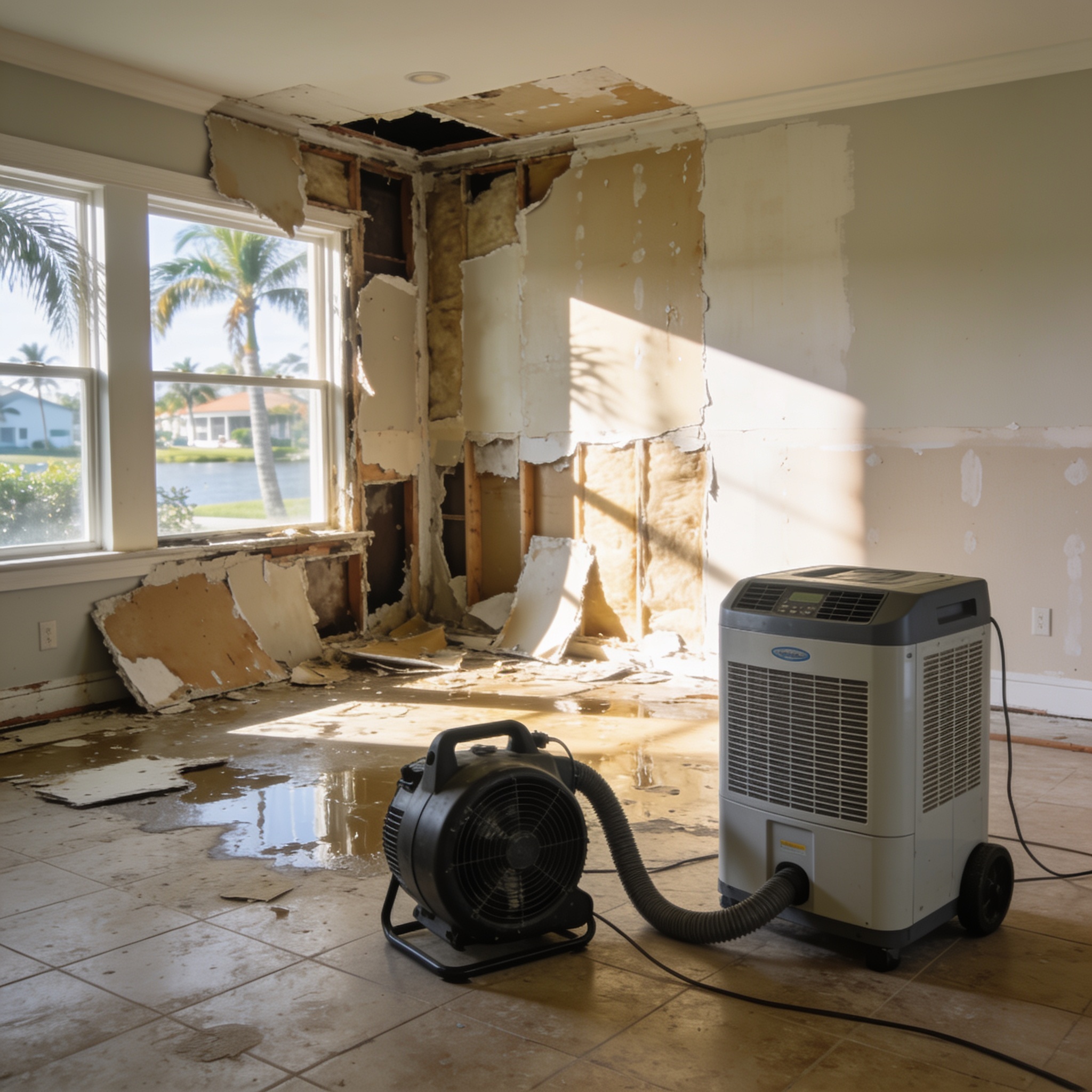
- Professional water damage restoration services utilize industrial-grade dehumidifiers and air movers to accelerate the drying process.
- Documenting the extent of damage immediately with photos and videos is critical for a smooth insurance claims process in Florida.
- Failing to address moisture within 24 to 48 hours drastically increases the risk of secondary damage like mold growth.
What Is the Typical Timeline for Water Damage Restoration?
The realistic timeline for water damage restoration typically takes anywhere from three days for a small pipe leak to several weeks for extensive structural flooding. Every water damage restoration timeline is unique because it depends on the specific moisture content and the materials involved in the affected area. In Southwest Florida, the high ambient humidity can slow down natural evaporation, making the use of commercial-grade equipment mandatory. If you are dealing with a burst pipe in a Lee County home, the cleanup is often faster than a storm surge event involving contaminated water.
What Are the Main Steps in the Water Damage Restoration Process?
The water damage restoration process follows a standardized sequence designed to mitigate loss and restore structural integrity. Professional restoration specialists follow a five-step framework to ensure your home is safely returned to a pre-loss condition.
1. Emergency Assessment and Inspection
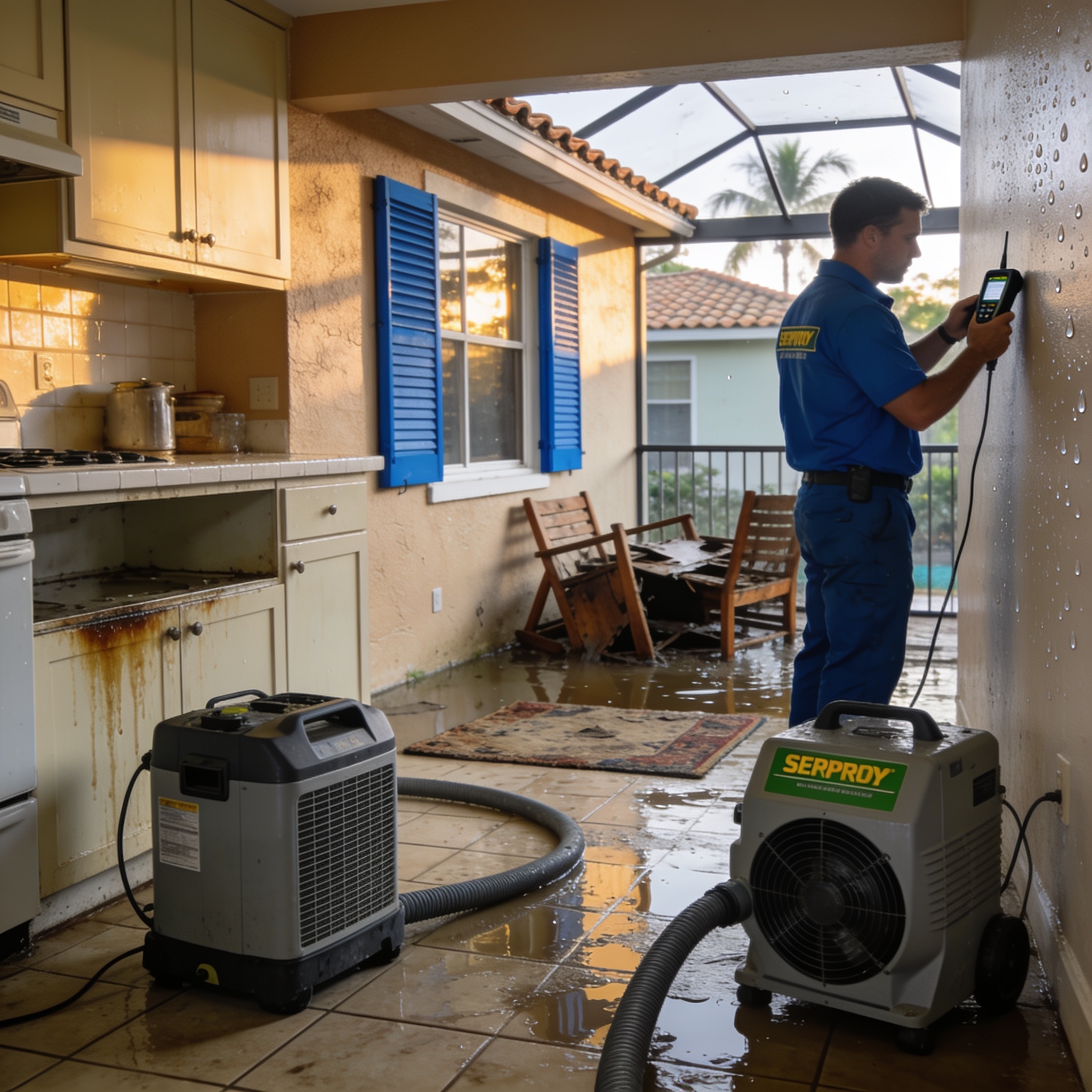
Technicians arrive to identify the source of water intrusion and assess the severity of the damage using moisture meters and thermography. This response to water damage is vital to determine the type of water involved and the extent of the water damage to the surrounding structure.
2. Water Extraction
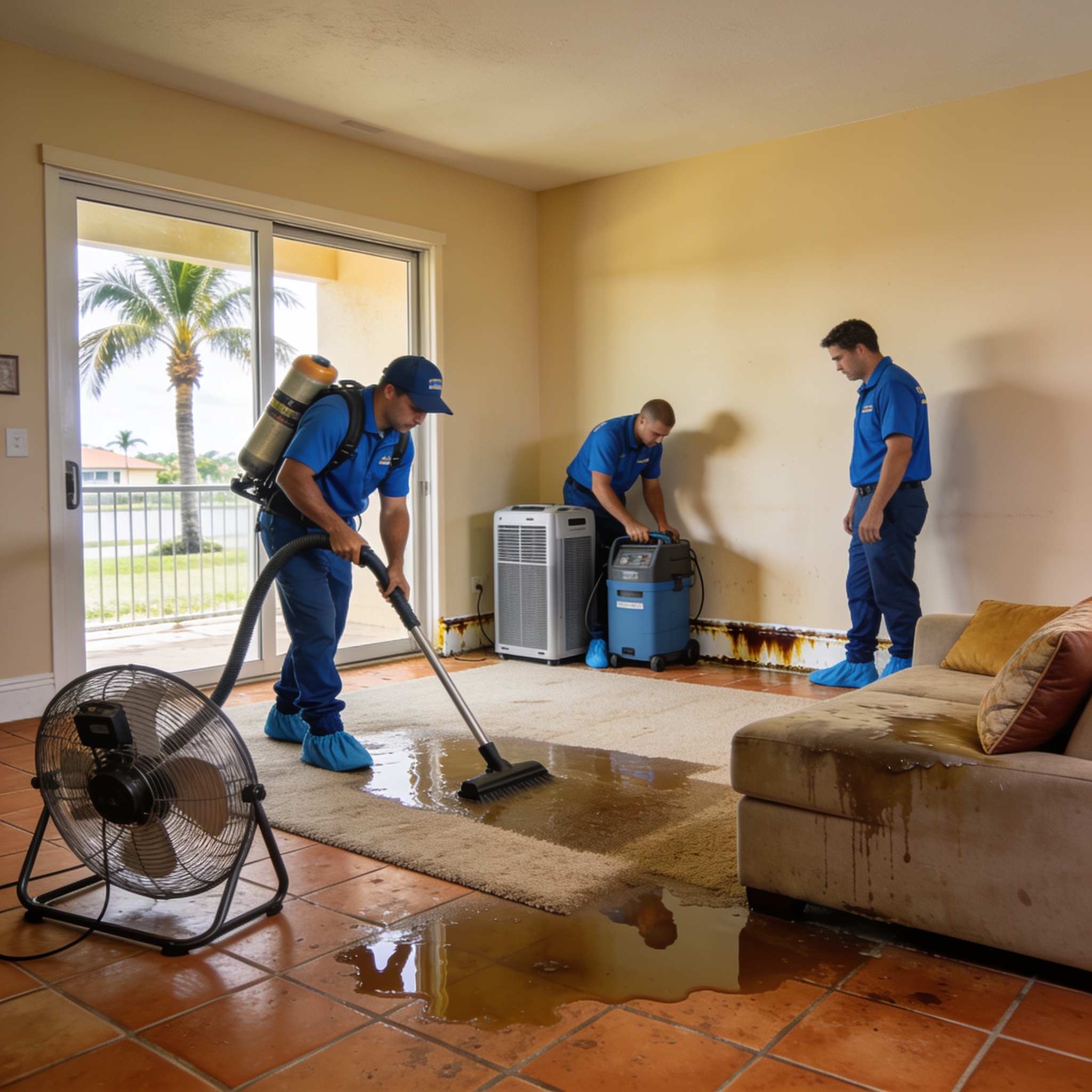
The team uses a heavy-duty pump and specialized equipment to remove standing water from the property. Promptly removing standing water is the single most effective way to prevent long-term structural damage to your floors and walls.
3. Drying and Dehumidification
Once the bulk water is gone, high-velocity air movers and a commercial-grade dehumidifier are placed to evaporate remaining moisture. The drying process can take anywhere from a few days to a week, depending on the saturation levels. This phase is critical in Florida to combat the natural humidity that prevents materials from drying on their own.
4. Cleaning and Sanitizing
Professional mold remediation and water damage cleaning services include treating the affected area with antimicrobial agents. This ensures that the environment is safe for occupants once the repairs are complete and water is removed.
5. Restoration and Reconstruction
The final phase involves the repair or replacement of damaged drywall, flooring, or cabinetry. Completing the final reconstruction phase is necessary to restore your home to its original aesthetic and functional state. Once this is finished, the restoration process can begin to return your home to its pre-loss condition.
How Long Does Water Damage Restoration Take?
The recovery process can take anywhere from three to seven days for most residential properties, provided that professional equipment is utilized correctly. Proper drying is the most important phase of the restoration timeline because trapped moisture leads to hidden rot and structural failure. Factors such as the type of flooring—like hardwood versus tile—will change how long the drying takes. In humid climates like Collier County, relying on open windows is insufficient and can actually invite more moisture into the home.
How Quickly Does Mold Grow After Water Damage Occurs?
Mold and mildew growth can begin in as little as 24 to 48 hours if the environment remains damp and warm. The EPA and other environmental health authorities emphasize that rapid drying is the only reliable way to prevent the onset of these hazards. Once mold spores take root in drywall or insulation, the process shifts from simple drying to professional remediation. This transition significantly extends the restoration timeline and increases the cost of the repair.
What Factors Can Affect the Duration of Water Damage Restoration?
The duration of water damage restoration can vary significantly based on the category of water, the extent of the damage, and the presence of porous materials. Understanding the water damage restoration timeline requires an analysis of how deeply the water infiltrates the home’s structure.
| Factor | Impact on Timeline |
|---|---|
| Category of Water | Black water requires more extensive sanitization than clean water. |
| Materials Affected | Drywall and carpet may require removal, while tile dries faster. |
| Humidity Levels | High Florida humidity slows down the evaporation rate during drying. |
| Insurance Approval | Delays in adjuster inspections can pause the restoration process. |
| Preventative Measures | Steps taken to prevent future water intrusion affect long-term success. |
What Happens If Water Damage Is Left Untreated?
Untreated water damage leads to progressive structural damage, including warped floorboards, corroded electrical systems, and hazardous mold colonies. Ignoring signs of water damage for even a few days can lead to permanent damage that requires expensive reconstruction rather than simple drying. Over time, the moisture can compromise the structural integrity of your home’s foundation or framing. For more information on managing these costs, you can consult a Water Damage Restoration Cost to understand the financial risks of delay.
Efficient Water Damage Restoration
Efficient water damage restoration is the primary factor in minimizing the total cost and time it will take to restore your property. Engaging professional restoration services immediately after a water intrusion event significantly improves the chances of saving your personal belongings and building materials. By turning off the main water supply and initiating extraction, you prevent the secondary damage that often accounts for the majority of insurance claim costs. If you are in the region, seeking Water Damage Restoration or similar areas is a critical first step in an emergency.
Typical Water Damage Repair
Whether you can stay in your home depends on the severity of the damage and the presence of contaminants in the water. Living in a property during the restoration process is generally discouraged if the water is classified as black water due to the high risk of health hazards. If the damage is limited to one room, you may be able to stay, but the noise from the dehumidifier and air movers can be disruptive. Always consult with your Water Damage Restoration to determine if the environment meets safety standards for occupancy.
Damage Repair and Restoration Services
You should hire a professional for water damage cleanup whenever the water source involves sewage, or if the water has affected more than a small, localized area. Professional water damage restoration services are necessary because standard household tools are insufficient to extract moisture from deep within structural components. Certified technicians have the expertise to document the damage for insurance purposes and ensure that the property is properly sanitized. For assistance with Water Damage Restoration, always verify that the provider is IICRC-certified. You can also research the typical water damage costs to ensure you are receiving a fair quote.
Frequently asked questions
Common concerns regarding the restoration process often revolve around insurance coverage and the specific equipment used by technicians.
Does homeowners insurance cover the cost of water damage restoration?
Most standard Florida homeowners insurance policies cover sudden and accidental water damage, such as a burst pipe, but often exclude damage from rising floodwaters unless you have a separate policy through the NFIP.
How do I know if my home is completely dry?
Professional restoration teams use moisture meters and thermal imaging cameras to verify that the moisture content in your walls and floors has returned to normal levels before removing their equipment.
What is the difference between clean, gray, and black water?
Clean water comes from a broken supply line and is safe to handle, gray water contains some contaminants from appliances like dishwashers, and black water is highly contaminated sewage that poses a severe health risk.
Should I turn off the electricity if there is water damage?
Yes, if there is standing water in an area with electrical outlets or appliances, stop the water source by turning off the main water valve and cut the power at the main breaker panel immediately to prevent the risk of electrocution.
How much does professional water damage restoration cost?
The cost varies significantly based on the square footage affected and the level of remediation required, but most projects involve professional fees for extraction, equipment rental, and labor.
Our editorial team verifies licensing and reviews for every restoration company in the directory and writes practical, Florida-specific guides to help homeowners act fast and protect their insurance claims after water, fire, mold or storm damage.