Signs of Water Damage in Attic: How to Spot Roof Leaks Early
Practical, Florida-specific guidance from our restoration team.
Key Takeaways
- Early detection of a roof leak prevents the rapid spread of mold growth in humid SWFL climates.
- Common signs include ceiling stains, soggy insulation, and a musty odor.
- Regular roof inspections should be conducted twice a year, especially before hurricane season.
- Professional intervention is required if you discover structural rot or widespread water intrusion.
- Proper attic ventilation is essential to preventing condensation that mimics a roof leak.
What Are the Common Signs of Water Damage in an Attic?
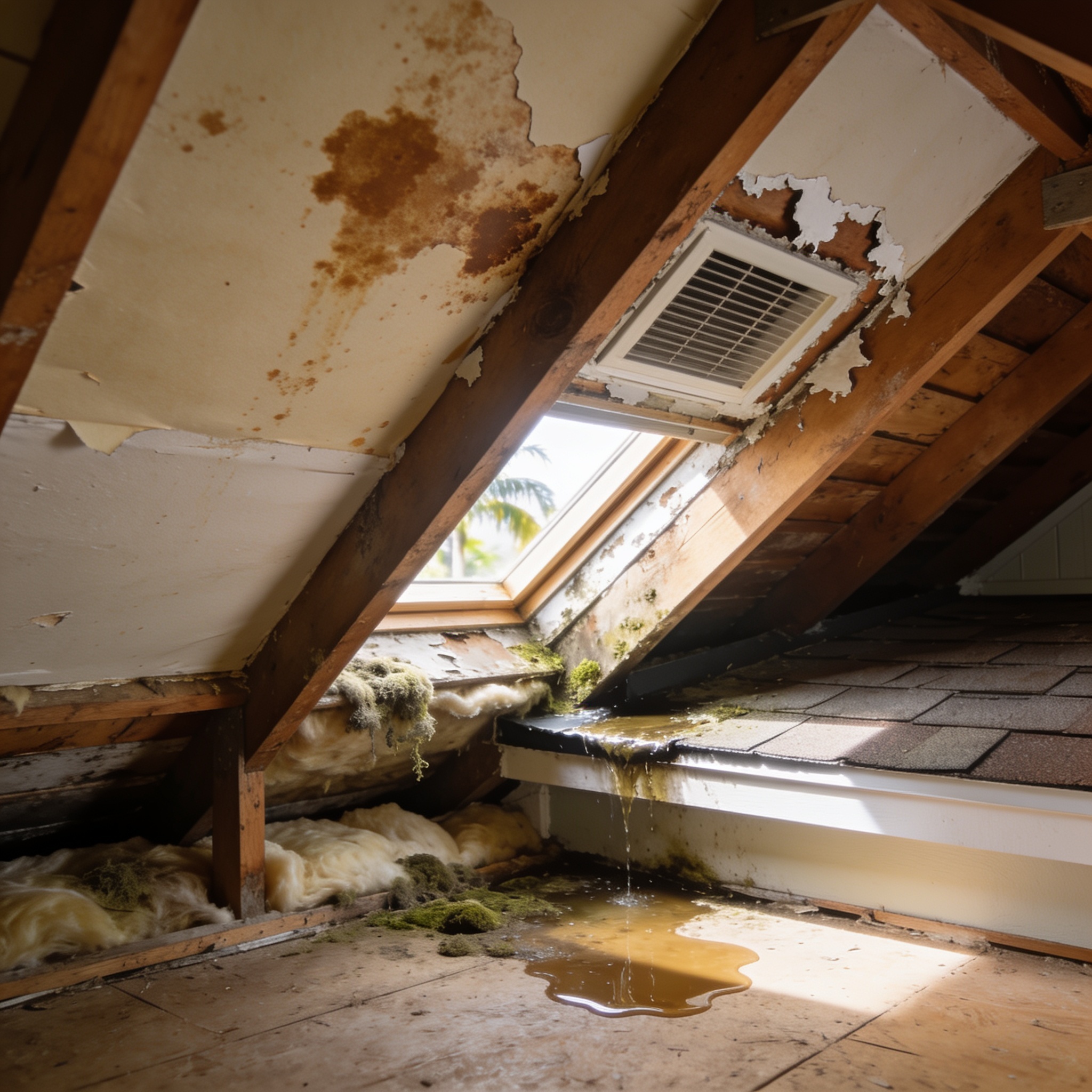
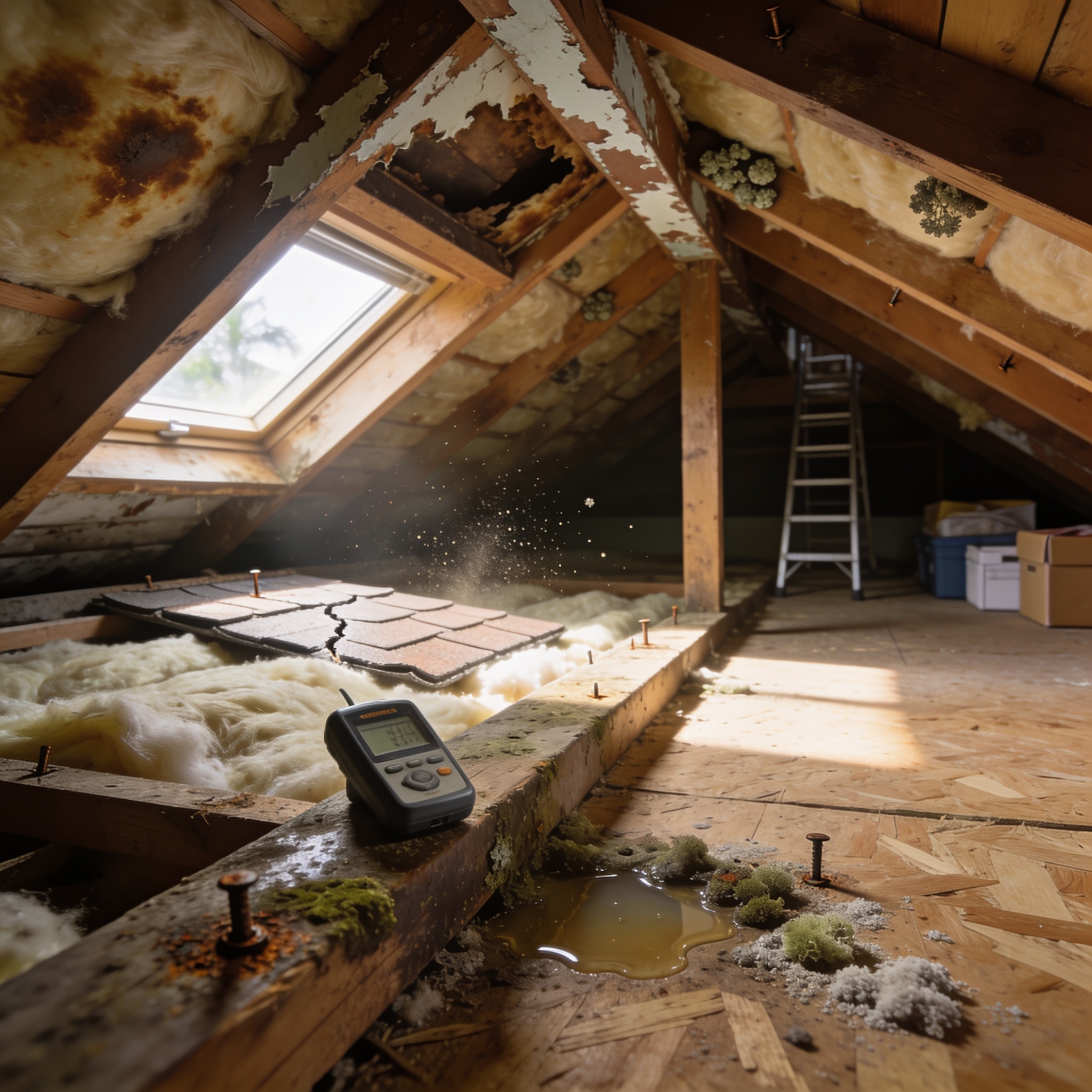
The 7 warning signs to watch for in your attic include water stains, soggy insulation, mold growth, musty odors, rust on metal fasteners, sagging roof decking, and light shining through the roof. Recognizing these telltale signs early helps you detect water damage before it compromises your property.
- Water stains: Dark or brownish rings on the underside of the roof sheathing or rafters indicate a persistent water leak.
- Soggy insulation: Wet attic insulation loses its R-value and becomes a heavy, damp attic breeding ground for mold.
- Mold growth: Black or green fuzzy patches on wood surfaces often indicate chronic moisture issues.
- Musty odors: A lingering musty smell in the attic is a classic indicator of trapped moisture and potential decay.
- Rust on fasteners: Corrosion on nails or staples holding the roof deck together suggests moisture is seeping into the structure.
- Sagging roof decking: Soft or dipping areas in the plywood sheathing are signs of advanced rot from long-term water exposure.
- Light shining through: If you can see daylight through the roof boards from inside the attic, water can easily enter during a storm.
How Can You Check Your Attic for Signs of Water Damage?
Homeowners should perform a visual inspection of their attic using a high-powered flashlight during the daylight hours to spot hidden water damage. If you notice an obvious signs of a bubble in the drywall or paint, it is a sign that there’s water damage accumulating behind the surface. You should focus your search on areas around chimneys, vents, and roof valleys where water infiltrates most frequently. Be sure to check insulation for clumping or discoloration. If you discover water damage, you may need to contact professional Water Damage Restoration services to assess the severity. Always prioritize your safety by using a stable ladder and avoiding walking on exposed ceiling joists.
Common Causes of Roof Leaks
The most common cause of water damage is a damaged roof, compromised flashing, and clogged gutters that force water back under the eaves. High-wind events during heavy rain often lift a shingle, allowing water into the attic. Furthermore, improper flashing around chimneys and skylights can fail over time due to the extreme heat cycles in our region. If you suspect your home has been compromised, professional Water Damage Restoration remediation can help mitigate the risks.
Mold Growth and Structural Integrity
Mold growth can begin in as little as 24 to 48 hours if the attic environment remains damp and lacks proper airflow. While a single minor drip might dry out quickly, the high humidity levels in Florida often prevent the attic from drying completely. This lingering moisture creates a perfect environment for spores to colonize on damp wood or insulation. If you find significant moisture, you should consult a Water Damage Restoration Cost in Fort Myers expert immediately to prevent structural damage and mold from spreading further.
Deal With Water Damage
Water damage occurs when you observe structural rot, widespread mold colonization, or water dripping directly onto your living space ceiling. You can evaluate the situation using the following criteria:
| Indicator | Severity Level |
|---|---|
| Minor ceiling stains | Low (Monitor closely) |
| Wet insulation | Medium (Requires drying) |
| Structural rot | High (Requires repair) |
| Active dripping | Critical (Immediate action) |
| Source of water | Critical (Requires roof repair) |
Protect Your Home From Extensive Damage
Ignoring a leaky roof leads to structural damage that can compromise the structural integrity of your entire roof system. Over time, the moisture will cause the wood rafters and plywood sheathing to rot, potentially leading to a roof collapse. Additionally, the Water Damage Restoration Cost often increases significantly if the damage spreads to the drywall of your ceiling and interior walls. If you notice dripping water, you must act quickly to contain the water with buckets and contact a professional to stop the leak before it causes secondary damage.
Damp Insulation and Ventilation
The most effective way to dry out an insulated attic is to stop the source of the leak and increase ventilation using industrial-grade dehumidifiers and fans. You must remove any saturated insulation, as it will hold moisture for weeks and continue to feed mold. Ensure that your attic vent systems are not blocked by debris or improperly installed insulation. Failure to dry the space correctly can lead to recurring moisture issues and persistent water penetration.
Gutter Maintenance
You should call a professional restoration company whenever you discover standing water, extensive mold, or signs of structural decay in your attic. These experts have the specialized equipment to perform leak detection and ensure that your home is dried to IICRC standards. Attempting to fix major water intrusion yourself can lead to incomplete drying and hidden damage that worsens over time. A professional can also provide documentation for your insurance claim if the damage was caused by a covered storm event.
Frequently asked questions
Here are the answers to the most common questions regarding attic water issues in Florida.
Can a roof leak be fixed from inside the attic?
No, you can only perform temporary patches from the inside, but a permanent roof repair must be done from the exterior of the roof.
How often should I inspect my attic for leaks?
You should inspect your attic at least twice a year and immediately following any major tropical storm or hurricane to check for leaks in the attic.
Does homeowner’s insurance cover attic water damage?
Coverage depends on the cause, as sudden storm damage is typically covered, while damage from long-term neglect or wear and tear is usually excluded.
Why does my attic have a musty smell?
A musty smell is a strong indicator of active mold growth or trapped moisture that has not been properly ventilated.
Can high humidity cause water damage in the attic?
Yes, if your attic ventilation is inadequate, high humidity can cause condensation to form on rafters, which can lead to mold and wood rot.
See also: Water Damage Restoration
Our editorial team verifies licensing and reviews for every restoration company in the directory and writes practical, Florida-specific guides to help homeowners act fast and protect their insurance claims after water, fire, mold or storm damage.