Does Water Damage Laminate Flooring? Here Is What You Need to Know
Water damage is a critical threat to your home because laminate flooring typically begins to sustain irreversible structural degradation within 24 to 48 hours of significant moisture exposure. In the humid climate of Southwest Florida, where hurricanes and tropical storms frequently cause water intrusion, understanding the vulnerability of your floors is essential for property preservation. Protecting your investment requires immediate attention the moment you detect standing water or a hidden leak.
Key Takeaways
- Laminate flooring is composed of a fiberboard core that acts like a sponge when exposed to standing water.
- Most laminate installations are waterproof or water resistant rather than impervious, meaning they cannot withstand prolonged saturation.
- Timely intervention is the primary factor in determining whether you can save your flooring or if you face a complete replacement.
- Professional water damage restoration services are often required to ensure the subfloor is properly dried to prevent secondary mold issues.
- Insurance coverage for water damage varies by policy; always review your specific terms regarding sudden leaks versus gradual seepage.
How Does Water and Laminate
Interact beneath the surface
?
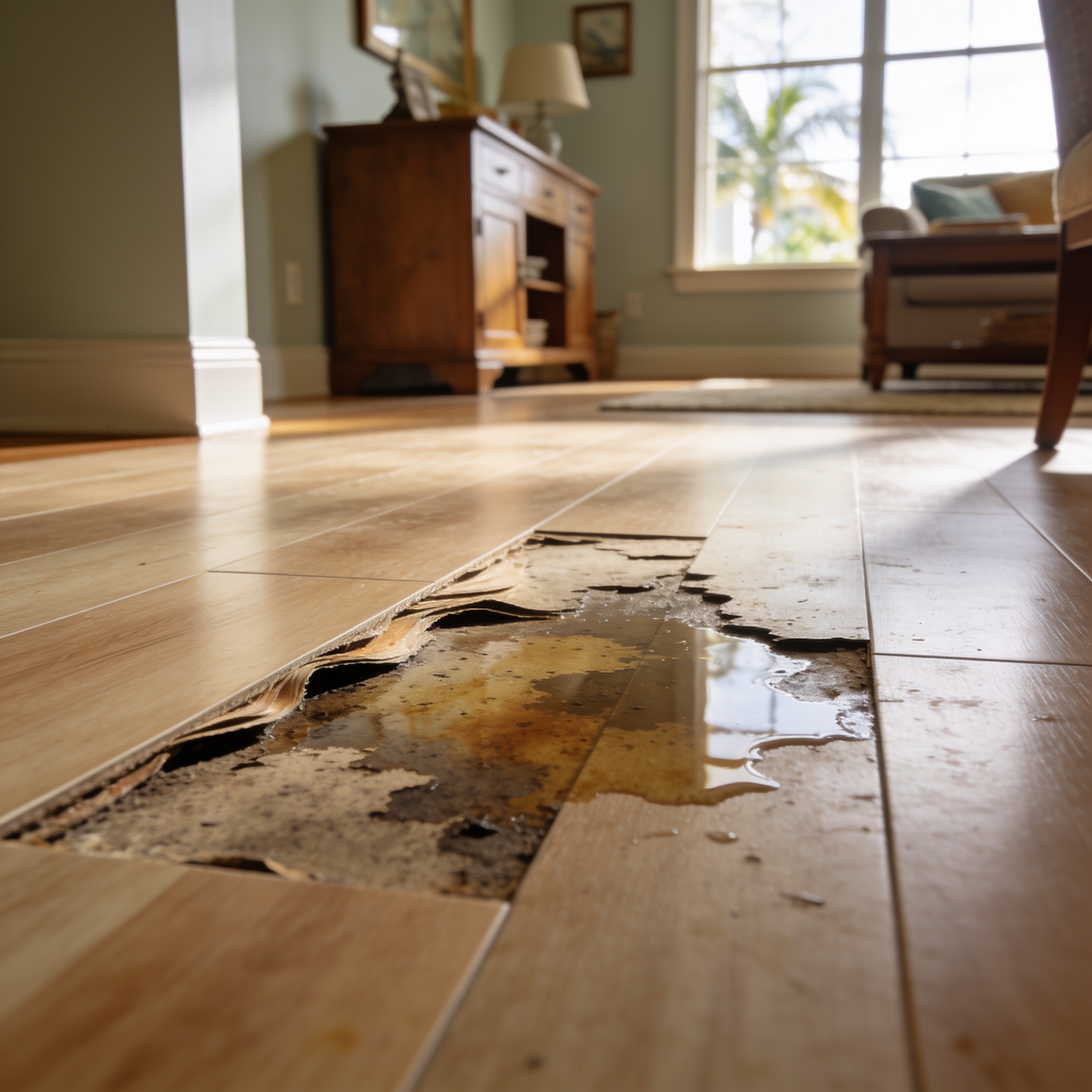
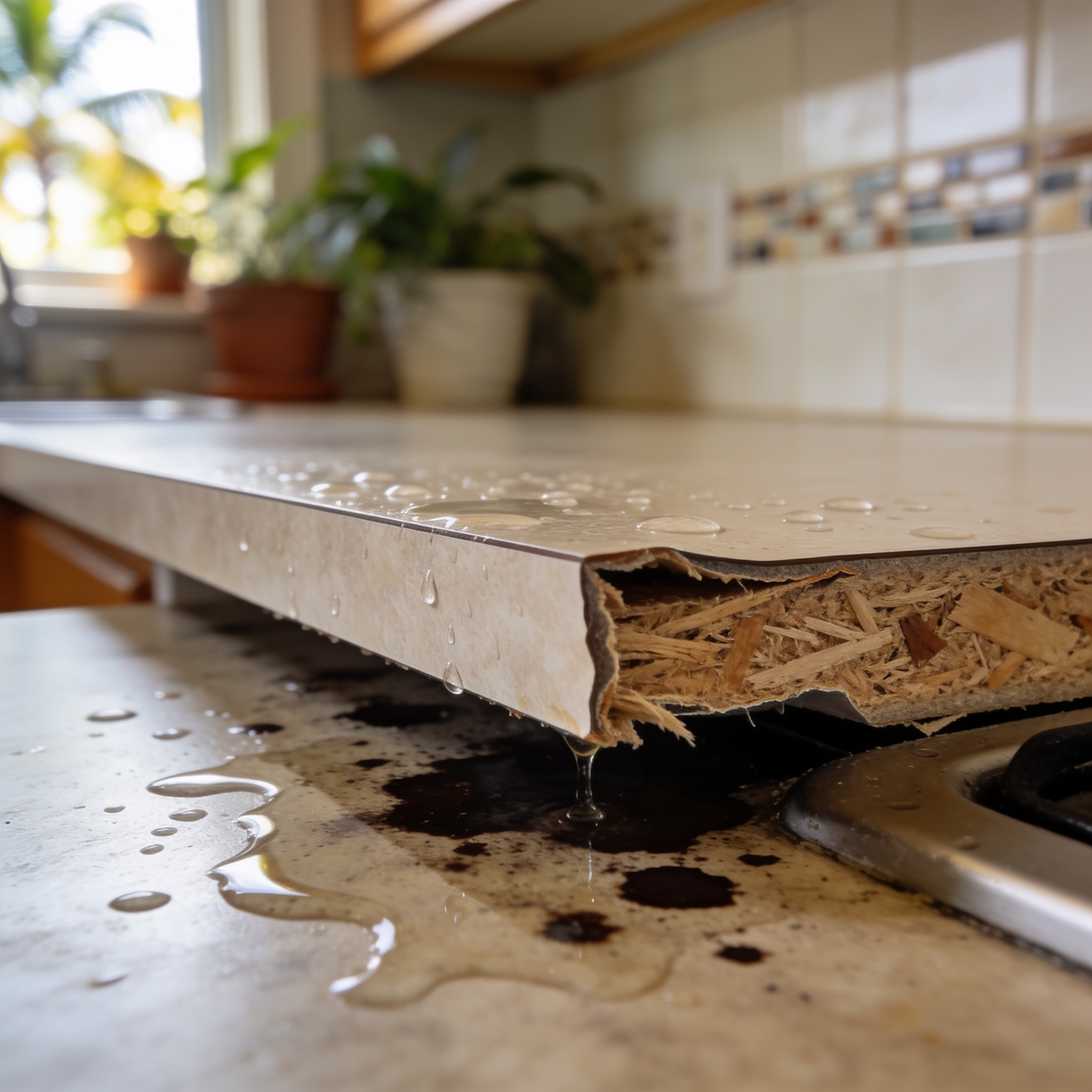
Laminate flooring sustains damage because the inner fiberboard core absorbs moisture rapidly, leading to permanent swelling and warping. Unlike tile, hardwood, or high-end luxury vinyl, standard laminate relies on a compressed wood-based substrate that loses its integrity once it becomes saturated. In SWFL, high ambient humidity levels can exacerbate the issue if water becomes trapped beneath the surface, preventing the material from ever returning to its original shape. When discovering water beneath your laminate, it is vital to act quickly to prevent the core from crumbling. If the moisture is caught early, you may be able to salvage an undamaged section of the floor before the swelling spreads.
How Long Does It Take for Moisture
to Damage Laminate Flooring?
Visible signs of damage to laminate often appear within 24 to 48 hours, though structural compromise begins the moment water penetrates the seams. The tongue and groove joints are the most vulnerable points; once liquid enters these gaps, it reaches the subfloor and the base of the laminate plank. If you experience a burst pipe or flooding in areas prone to moisture like Lee or Collier County, you must respond quickly to mitigate the impact of water beneath your laminate flooring.
What Does Restore your water-damaged floors
Look Like?
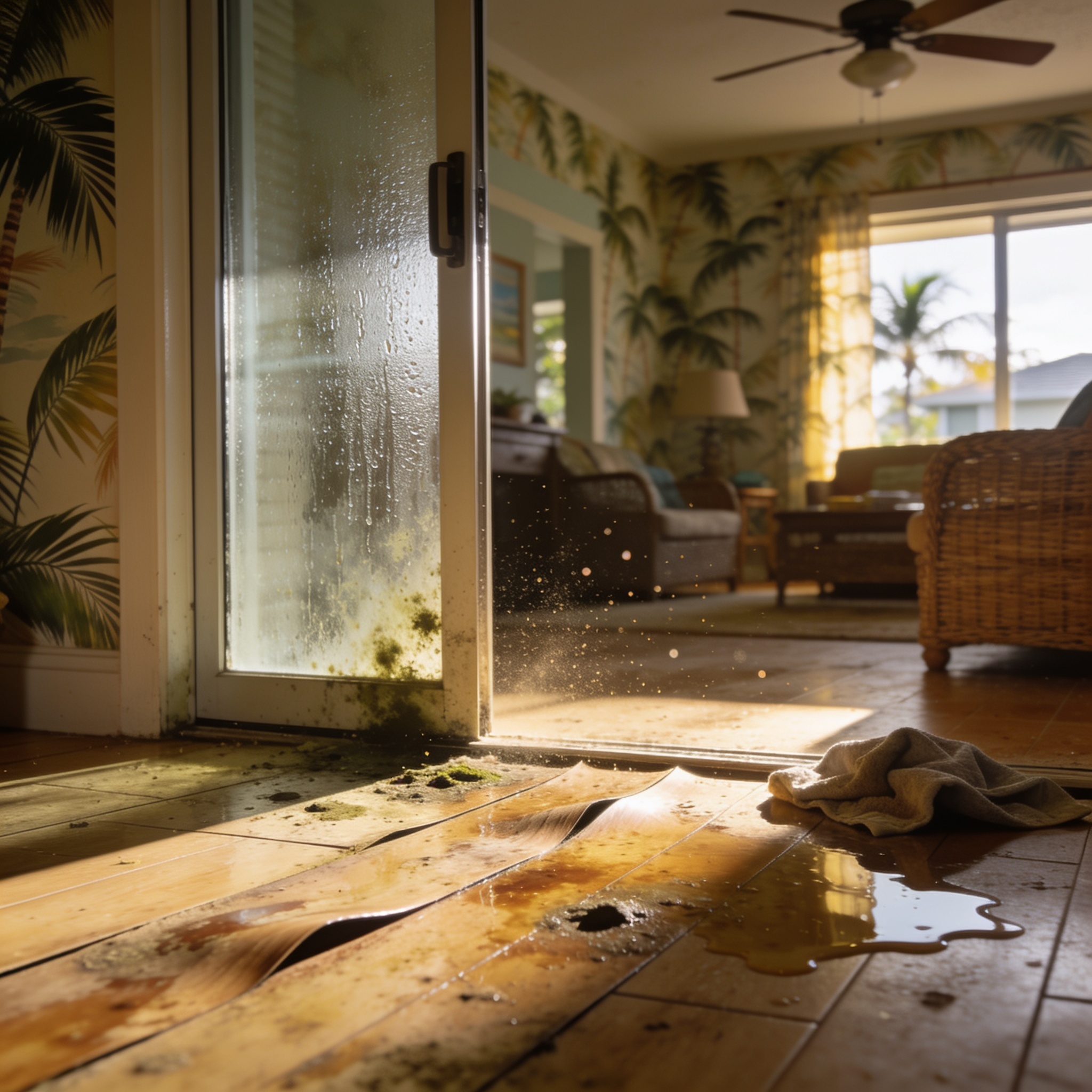
The 5 visual signs of water-damaged laminate flooring include buckling, discoloration, separation at the seams, a soft or spongy feeling underfoot, and the emergence of a musty odor. These indicators serve as a warning that moisture has compromised the material’s structural integrity:
- Buckling: The boards begin to lift or arch upward as the fiberboard core expands, often creating a visible bubble.
- Discoloration: Dark or cloudy spots appear on the surface, indicating water has seeped into the laminate’s decorative layer.
- Seam Separation: The tight joints between planks begin to pull apart or fray at the edges.
- Spongy Texture: The floor feels soft or gives way when you walk over it, signaling that the substrate underneath is saturated.
- Musty Odor: A persistent damp smell suggests that mold or bacteria are developing beneath the surface.
How Long Does It Take for Mold to Grow Under Wet Laminate Flooring?
Mold growth can begin within 48 to 72 hours in the warm, humid environment typical of Florida homes. Once water is trapped beneath your laminate flooring, the dark, stagnant conditions provide an ideal breeding ground for fungal spores. If you suspect water intrusion, seeking professional Water Damage Restoration inspection is vital to prevent long-term indoor air quality issues.
How Do You Dry Laminate Flooring After Water Damage?
You must remove all standing water immediately using a wet-dry vacuum and industrial-grade air movers to circulate air across the affected area. While a homeowner might use towels for minor spills, significant amounts of water require professional equipment to ensure you thoroughly dry the subfloor. Relying on simple evaporation is rarely sufficient in Southwest Florida, where the high outdoor humidity slows the drying process significantly. Avoid the temptation to use heat, as this can cause the boards to warp further.
Can Water Damaged Laminate Flooring Be Fixed or Repaired?
Laminate flooring generally cannot be repaired once the fiberboard core has swollen, as the material is designed for a one-time installation. While you might be able to replace a single damaged plank if the water exposure was extremely localized, widespread saturation usually necessitates a complete remove and replace strategy. If you are uncertain about the extent of the damage, contact a specialist for a Water Damage Restoration Cost assessment to avoid costly mistakes.
When Should Water Damaged Laminate Flooring Be Replaced?
Complete replacement is necessary whenever the planks show visible signs of warping, cupping, or if the subfloor remains damp after professional drying attempts. Leaving compromised flooring in place can lead to structural decay and health risks associated with hidden mold. You will likely need to remove the damaged sections to inspect the adjacent subfloor. For those in Sanibel or Fort Myers, professional Water Damage Restoration can help determine if your flooring needs total removal or if spot treatment is viable.
Can You Mop Laminate Flooring — and Is Dawn Safe to Use?
You should never use a soaking wet mop on laminate flooring, and you must avoid harsh detergents that can leave a film or degrade the protective wear layer. A slightly damp microfiber mop is the only acceptable method for cleaning, as excessive water is the primary enemy of laminate’s durability. If you are planning a home improvement project to install new flooring, visit a local showroom to compare options like composite materials that offer better moisture resistance. Speak with experts at a local shop like Wally ‘s Carpet & Tile to understand how to clean your specific floor type without causing moisture issues.
When Should You Call Professionals for Water Damaged Laminate Flooring?
You should call a restoration professional immediately if the water damage covers a large area, involves sewage, or if you cannot dry the subfloor within 48 hours. Professionals have the moisture meters and industrial dehumidifiers required to handle water intrusion that standard household tools cannot manage. If you must carefully remove the planks, use a pry bar to lift them, as most are click together systems. For reliable service, search for Water Damage Restoration to find local experts who understand the specific challenges of Florida’s climate.
How Can You Prevent Water Damage to Laminate Flooring?
Preventing water damage requires installing high-quality moisture barriers, maintaining your plumbing, and ensuring your home is properly sealed against tropical rain. Many homeowners overlook the importance of checking appliances like refrigerators and dishwashers for slow leaks that can ruin floors over time. By taking these proactive steps, you can significantly extend the lifespan of your flooring and protect your home from the common risks of water intrusion.
| Flooring Type | Water Resistance | Repairability |
|---|---|---|
| Standard Laminate | Low | Low |
| Luxury Vinyl | High | Moderate |
| Ceramic Tile | Very High | High |
Frequently asked questions
Below are common concerns regarding water-damaged flooring in the SWFL region.
Does homeowner’s insurance cover water damage to laminate floors?
Coverage depends on the source of the water; sudden, accidental leaks are often covered, while gradual seepage or flood damage usually requires a separate policy.
Can I reuse laminate planks after they have been wet?
Generally, you cannot reinstall laminate once it has been exposed to significant water because the locking mechanisms and fiberboard core lose their structural integrity; you will need to remove the flooring entirely.
How do I know if the subfloor is wet?
A professional moisture meter is the only way to accurately detect if water has penetrated the subfloor beneath your laminate.
Is a dehumidifier enough to dry my floors?
While a dehumidifier helps reduce ambient humidity, it is rarely enough to dry water trapped beneath the surface of laminate flooring without professional extraction.
What is the cost of professional restoration?
Costs vary based on the square footage and the extent of the damage; you can call for a Water Damage Restoration Cost estimate to get a better idea of your specific situation.
Our editorial team verifies licensing and reviews for every restoration company in the directory and writes practical, Florida-specific guides to help homeowners act fast and protect their insurance claims after water, fire, mold or storm damage.