Can Water in a Basement Damage a Foundation? Understanding the Risks
Yes, water in a basement can damage a foundation, with the decisive factor being hydrostatic pressure which, if left unmanaged, can lead to structural repair costs ranging from $5,000 to over $20,000 depending on the severity of the foundation water damage. Because SWFL homes often sit on high water tables, even minor basement water can signal that your home’s foundation is under significant stress. Understanding how water impacts your home is the first step in effective water damage prevention. Because water is a powerful force, it can compromise the stability of your home if not properly managed.
Key Takeaways
- Hydrostatic pressure is the primary force that pushes against foundation walls, leading to cracks and structural instability.
- SWFL’s frequent tropical storms and high water tables make basement flooding a common but serious concern for local homeowners.
- Early intervention is critical, as ignoring moisture often leads to expensive repairs and potential mold growth.
- Proper drainage, including functional gutters and downspouts, is the most effective way to keep water away from the foundation.
- Consulting a professional to schedule a free inspection can help identify whether your water issues are superficial or indicative of major structural problems.
Can Water in the Basement Actually Damage Your Foundation?
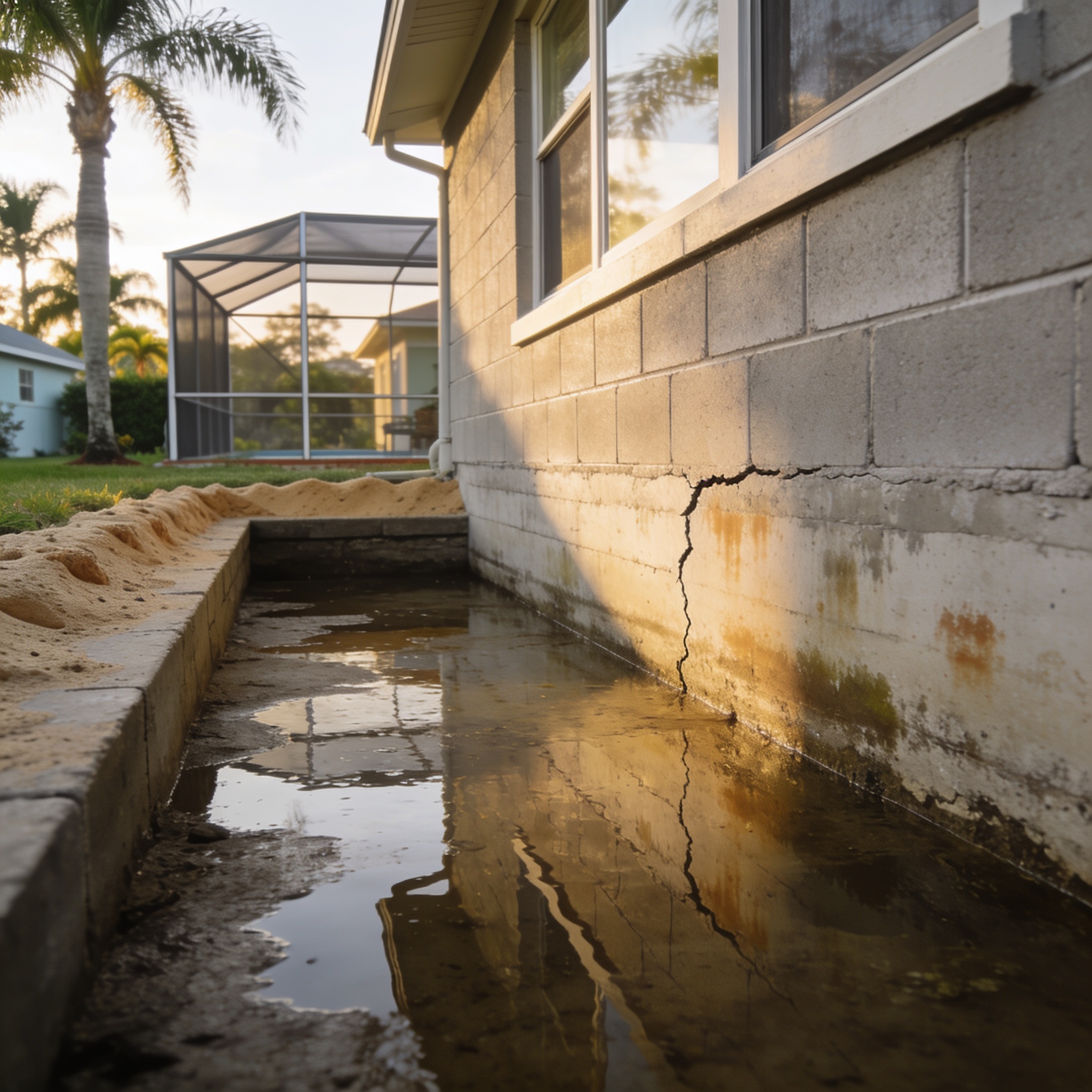
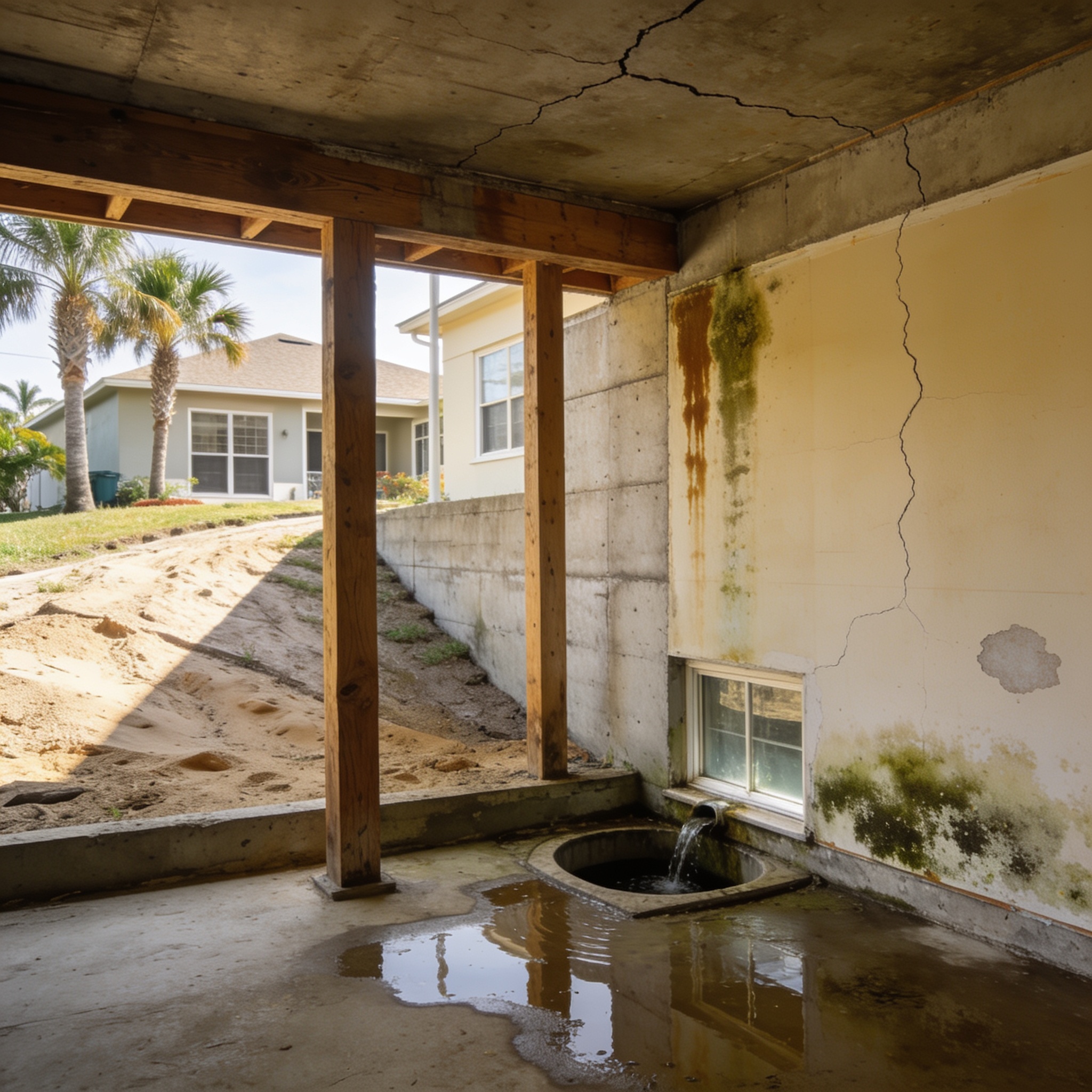
Water in your basement can indeed compromise the structural integrity of your home by exerting immense pressure against foundation walls. When the soil around your foundation becomes saturated with water, it expands and exerts force, commonly known as hydrostatic pressure against foundation walls. In Southwest Florida, where heavy rainfall is frequent, this pressure can cause a concrete wall to bow or develop a severe crack. Once the structural seal is broken, further water intrusion becomes much easier, creating a cycle of damage that weakens the concrete over time. Water can cause significant deterioration, and persistent water coming into the basement often indicates that the footing is being undermined. To protect your home, you must ensure you direct water away from the house using extended downspouts.
Does Water in the Basement Always Mean You Have Foundation Issues?
Not every instance of basement water indicates a structural failure, as some leaks may be caused by simple surface runoff or poor drainage. A minor water leak might only be a result of a clogged gutter or a downspout that is not directing rainwater away from your foundation. However, any persistent water issue should be treated with caution, as it could eventually lead to foundation problems if the source is not addressed. You should verify if the water is coming from a localized leak or if it is a symptom of broader hydrostatic pressure affecting the entire perimeter. Common signs of trouble include damp spots near the foundation or unexplained humidity in the crawl space.
How Quickly Can Water Damage a Foundation — And How Long Until It’s Serious?
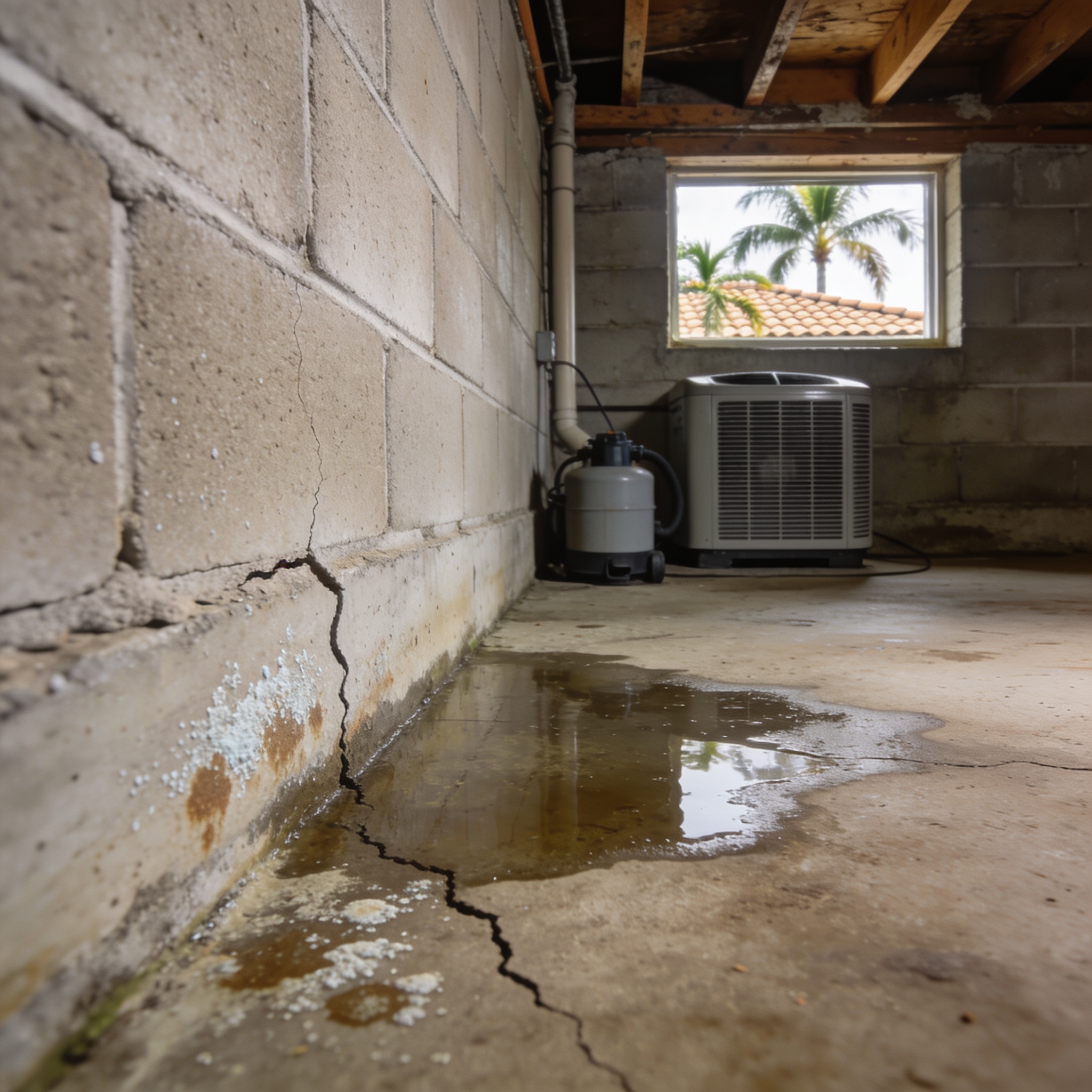
Foundation damage can begin almost immediately upon exposure to high-pressure water, though significant structural deterioration often takes months or years to manifest. While concrete is durable, it is also porous, meaning it can absorb moisture that eventually leads to the corrosion of steel reinforcements within the slab. If you notice standing water in your basement after a storm or heavy snowmelt, it is vital to initiate water damage restoration quickly to prevent the soil from remaining saturated for extended periods. In the humid climate of Lee and Collier counties, prolonged water exposure also accelerates the growth of mold on drywall and other porous materials, which can lead to wood rot in floor joists.
What Are the 5 Warning Signs of Water Damage to Your Foundation?
Identifying the early signs of foundation distress is essential for any homeowner looking to protect their property investment.
- Visible foundation cracks: These are often the most concerning, as they suggest the basement wall is bowing inward due to external pressure.
- Sticking doors or windows: When a foundation shifts, the frame of the house moves with it, causing doors and windows to become misaligned and difficult to operate.
- Uneven or sloping floors: A noticeable tilt in the basement floor is a clear indicator that the foundation settlement is uneven and requires immediate professional assessment.
- Water stains or efflorescence: White, powdery deposits on the basement wall indicate that water is seeping through the concrete and leaving behind mineral salts.
- Separation between the wall and floor: If you see a gap forming where the wall meets the floor, it suggests that the foundation is shifting away from its original position.
What Are the Most Common Causes of Basement Water That Lead to Foundation Damage?
The most common causes of basement water include poor drainage, failed sump pump systems, and high groundwater levels typical of Florida’s geography. When the slope of your yard directs water toward your home instead of away from the house, you are inviting moisture into your basement. Additionally, if your downspouts are not extending at least five to ten feet away from the foundation, you are essentially concentrating rainwater right where your home is most vulnerable. A failing sump pump can also leave your basement susceptible to basement flooding during the intense rain events common in Charlotte County. Excess moisture contributes to foundation degradation over time.
What Are the Long-Term Consequences of Ignoring Basement Water Damage?
Ignoring water damage in your basement can lead to catastrophic structural failure, hazardous mold growth, and a significant decrease in your home’s resale value. Over time, the constant moisture exposure weakens the lime mortar and concrete, eventually leading to major structural instability. Beyond the physical damage, the presence of indoor mold can create health hazards for your family. By the time you notice severe bowing or large foundation cracks, the cost of professional services will be exponentially higher than if you had addressed the issue early, as water damage restoration is often a complex, multi-stage process.
What Are the Most Effective Methods for Foundation Repair and Waterproofing?
Repair options for a water-damaged foundation generally focus on stabilizing the structure and implementing a robust drainage system to prevent future water intrusion. Depending on the severity, a professional might recommend installing a french drain or a new sump pump to manage groundwater. For more severe cases involving structural movement, piers or wall anchors may be necessary to restore the stability of the foundation walls. You can look into water damage restoration cost fort myers to get an idea of the financial investment required for these professional services.
| Repair Method | Primary Benefit |
|---|---|
| Perimeter Drain Installation | Diverts groundwater away from the foundation perimeter. |
| Wall Anchors | Stabilizes bowing walls against hydrostatic pressure. |
| Sump Pump Upgrade | Provides automated water removal during heavy rain. |
| Foundation repair and waterproofing | Comprehensive solutions to seal and stabilize the structure. |
When Should You Call a Professional for Basement Water and Foundation Problems?
You should call a professional if you observe active basement flooding, notice new foundation cracks, or detect musty odors that suggest hidden mold growth. A qualified water restoration company can perform a thorough assessment to determine the source of the water and recommend the appropriate course of action. Do not wait for the next hurricane season to address these issues, as the damage will only worsen with time. If you are unsure about the severity of your situation, many experts offer a free inspection to help you understand your specific risks, as water that might be coming from the exterior often affects your home’s foundation in ways that are not immediately visible.
Will Homeowners Insurance Cover Basement Water Damage and Foundation Repairs?
Most standard homeowners insurance policies in Florida do not cover damage caused by gradual water seepage or foundation settlement, though they may cover sudden, accidental pipe bursts. It is crucial to review your policy carefully, as flood damage typically requires a separate policy through the National Flood Insurance Program (NFIP). If you suspect your foundation issues are related to a covered peril, contact your insurance provider immediately to document the damage. For general assistance with recovery, you might explore Water Damage Restoration services to help mitigate further losses and avoid damage to foundation integrity.
How Can You Prevent Water Damage to Your Foundation?
The most effective way to ensure water damage prevention is to ensure that all surface water is directed away from the foundation through proper grading and gutter maintenance. Regularly clean your gutters to ensure they are not overflowing and verify that your downspout extensions are directing water far from the structure. Installing a high-quality sump pump and maintaining a consistent water damage restoration cost prevention plan will significantly reduce your risk. If you are concerned about the state of your home, reach out to a Water Damage Restoration to assess your current drainage setup, as ignoring these issues will lead to costly repairs.
Frequently asked questions
Common inquiries regarding basement integrity and maintenance are addressed below to help you navigate your home repair needs.
Can a small basement crack cause major structural damage?
Yes, even a small crack can allow water to enter, which over time can lead to the erosion of soil around the foundation or the rusting of steel reinforcements, eventually causing major structural damage.
Is it normal for a basement to have some moisture after a storm?
While some humidity is common, standing water or visible seepage is not normal and suggests that your current waterproofing or drainage systems are failing to protect your foundation.
How often should I check my basement for signs of water?
You should inspect your basement at least twice a year, and specifically after any major storm event or period of heavy, sustained rain in the SWFL area.
What is the difference between waterproofing and foundation repair?
Waterproofing is designed to keep water out of your basement, while foundation repair focuses on fixing structural issues like cracks, bowing walls, or settlement that have already compromised the home.
Does landscaping affect my foundation’s health?
Yes, improper landscaping that slopes toward your house can direct significant amounts of surface water toward your foundation, contributing to hydrostatic pressure and potential water damage.
See also: Water Damage Restoration
Our editorial team verifies licensing and reviews for every restoration company in the directory and writes practical, Florida-specific guides to help homeowners act fast and protect their insurance claims after water, fire, mold or storm damage.