How to Remove Black Mold Safely: A Comprehensive Homeowner’s Guide
Professional mold remediation is the safest way to remove black mold, especially if the infestation covers more than 10 square feet or results from significant water damage. SWFL homeowners should prioritize professional services because our high humidity makes DIY attempts risky if the underlying moisture source isn’t addressed. Because mold thrives in damp environments, taking immediate action is essential to protect your property and health. Addressing these issues early helps you protect your health and prevents the growth from spreading to other areas in your home.
Key Takeaways
- Black mold thrives in the high-humidity environments common across Lee, Collier, and Charlotte counties.
- Always wear protective gear like N95 respirators, gloves, and safety glasses before starting any cleanup.
- Avoid using bleach on porous surfaces like drywall, as it fails to kill roots and may promote further growth.
- Consult a professional mold remediation company if you have weakened immune systems in your household.
- Focus on moisture control to prevent mold from returning after the initial cleanup.
- Be aware that mold can grow rapidly in hidden areas, so inspect your home regularly to avoid health concerns.
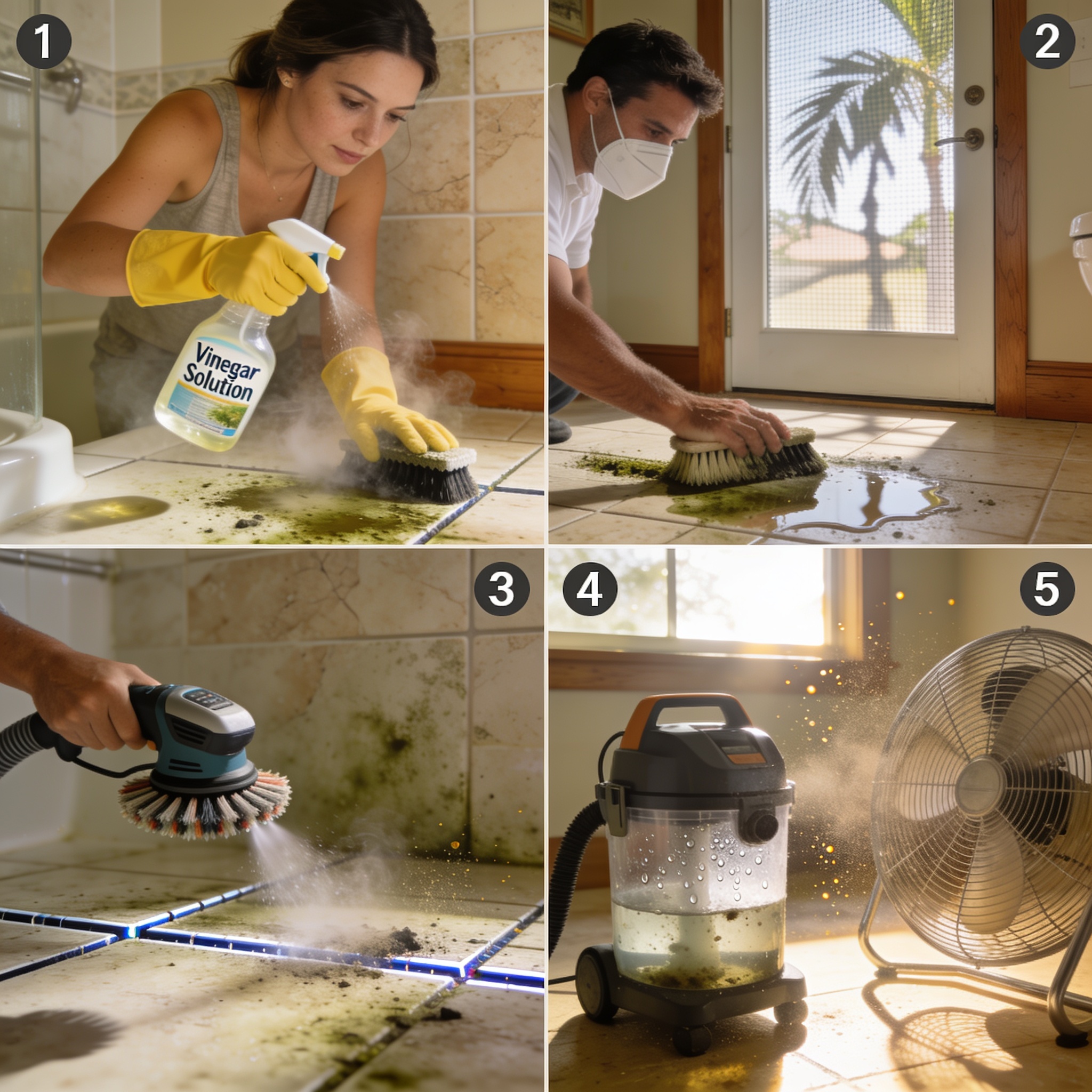
5 Step-by-Step Cleaning Tips to Remove Mold
Following a structured process ensures you remove black mold effectively without spreading spores into the air throughout your home environment.
- Step 1: Isolate the area by sealing off doorways with plastic sheeting to prevent the spread of mold to unaffected rooms.
- Step 2: Wear protective equipment, including safety glasses, gloves, and an N95 respirator, to minimize your personal exposure to mold spores.
- Step 3: Scrub the affected area using a solution of water and detergent, or a specialized non-toxic mold remover, to lift the fungus from the surface.
- Step 4: Dry the area completely using industrial fans or a dehumidifier to ensure no moisture remains to fuel future mold growth.
- Step 5: Dispose of all cleaning materials and contaminated porous items in sealed heavy-duty plastic bags to avoid re-contamination.
What are the health risks associated with black mold, and who should never attempt to remove it?
Mold exposure can cause respiratory issues, including a persistent cough, especially in individuals with asthma or weakened immune systems. According to the EPA, those with chronic lung conditions or severe allergies should avoid contact with moldy areas entirely, as they may pose serious health risks. If you live in areas prone to dampness, consider checking for professional mold remediation to ensure your home remains safe.
Can I remove black mold myself, or is it too dangerous to DIY?
You can safely perform a mold clean yourself only if the infestation is small and isolated to non-porous surfaces. Small, localized patches of mold can often be managed by homeowners who follow strict safety protocols and use proper cleaning products. If your home recently experienced flooding, you may need Water Damage Restoration to address the root cause and prevent the mold from causing further damage your home.
What safety precautions should you take before cleaning black mold?
Safety is the most critical factor when you decide to clean mold in your home. Always wear protective gear including a respirator, safety glasses, and rubber gloves to prevent skin contact and inhalation of spores. Proper ventilation is also essential; keep windows open while working to improve airflow and ensure fresh air circulates through the space.
What kills black mold immediately — and what kills it permanently?
Surface cleaners often kill the visible mold immediately, but permanent removal requires eliminating the moisture source. Using bleach is often ineffective on porous materials because it cannot penetrate deep enough to kill the roots of the fungus. For a more effective way to kill mold, use tea tree oil, hydrogen peroxide, or distilled white vinegar to penetrate into the material.
What are the best methods and solutions for removing black mold effectively?
The most effective method involves physical removal combined with a solution that inhibits future growth. You should mix a solution of water and detergent rather than relying on harsh chemicals alone. If you are unsure about the extent of the damage, research how much mold remediation it cost to hire an expert before starting.
How do you remove black mold from different surfaces like walls, wood, and bathroom ceilings?
Treating different surfaces requires specific approaches to ensure the mold is fully extracted. Porous materials like drywall that have been saturated by water damage often require professional removal rather than simple surface cleaning. For hard surfaces like tile or non-porous wood surfaces, a solution of water and baking soda can be applied; use a scrub brush or sponge to gently scrub mold away. Always remember to dry completely after the cleaning process.
When should you call a professional for black mold removal instead of doing it yourself?
You should contact a professional mold remediation company if the mold infestation is extensive or hidden within wall cavities. Poor ventilation in crawlspaces or attics often leads to hidden growth that requires expert intervention. If you are in the northern part of our region, consider Water Damage Restoration services to handle major structural issues.
How can you prevent mold growth and keep your home safe?
Preventing mold growth requires consistent management of indoor humidity levels, which should ideally stay below 60%. Regularly clean and maintain your home to ensure that moisture does not accumulate in damp environments like bathrooms or basements. Using a dehumidifier during the humid SWFL summer months is one of the best ways to keep your home dry and help prevent future issues.
Frequently asked questions
Understanding the nuances of mold management helps homeowners maintain a healthy indoor environment.
Does using bleach kill mold?
Bleach is generally ineffective at killing mold on porous surfaces like wood or drywall because it only treats the surface.
Is black mold always toxic?
While some mold species produce mycotoxins, all indoor mold growth should be treated as a potential health hazard.
How do I get rid of mold safely?
To get rid of mold, ensure you have proper ventilation, use safe removal techniques, and always wear protective gear.
What is the best mold remover?
The best mold remover is often a mixture of vinegar or hydrogen peroxide, combined with a thorough cleaning process to remediate the area.
How to clean mold effectively?
To clean mold, spray the moldy area with your chosen solution, let it sit, and then use a scrub brush to lift the growth.
| Method | Best Surface | Effectiveness |
|---|---|---|
| Vinegar | Non-porous | High |
| Hydrogen Peroxide | Porous/Non-porous | High |
| Tea Tree Oil | Small patches | High |
| Bleach | Non-porous only | Low (Root survival) |
See also: Water Damage Restoration
Our editorial team verifies licensing and reviews for every restoration company in the directory and writes practical, Florida-specific guides to help homeowners act fast and protect their insurance claims after water, fire, mold or storm damage.