How to Prevent Mold in Your Garage: A Comprehensive Maintenance Strategy
You can effectively prevent mold in your garage by maintaining indoor humidity levels below 60% and ensuring consistent airflow, which typically costs between $150 and $500 for basic moisture control equipment. Implementing these strategies is critical in Southwest Florida, where tropical humidity and seasonal storm surges create a constant breeding ground for mold. By following a proactive maintenance schedule, you can protect your property value and avoid the significant expenses associated with professional remediation. Dealing with a mold problem is a common problem for many homeowners, but it is manageable with the right tools. Because the average garage is often ignored during routine home maintenance, it is vital to understand that garages often lack the climate control found in living areas, making them environments that are damp and prone to issues.
Key Takeaways
- Maintaining humidity levels between 30% and 50% is the most effective way to prevent mold in your garage.
- Regularly inspecting your garage door seals and roof flashing prevents water intrusion during Florida’s heavy rainy seasons.
- Proper ventilation and the use of a high-capacity dehumidifier are essential for garages in Lee, Collier, and Charlotte counties.
- Early detection of mold on garage walls or ceilings can save homeowners thousands in structural repair costs.
- Professional intervention is recommended if mold contamination exceeds 10 square feet or involves significant water damage.
What Are the Signs of Garage Mold, and How Do You Identify It?
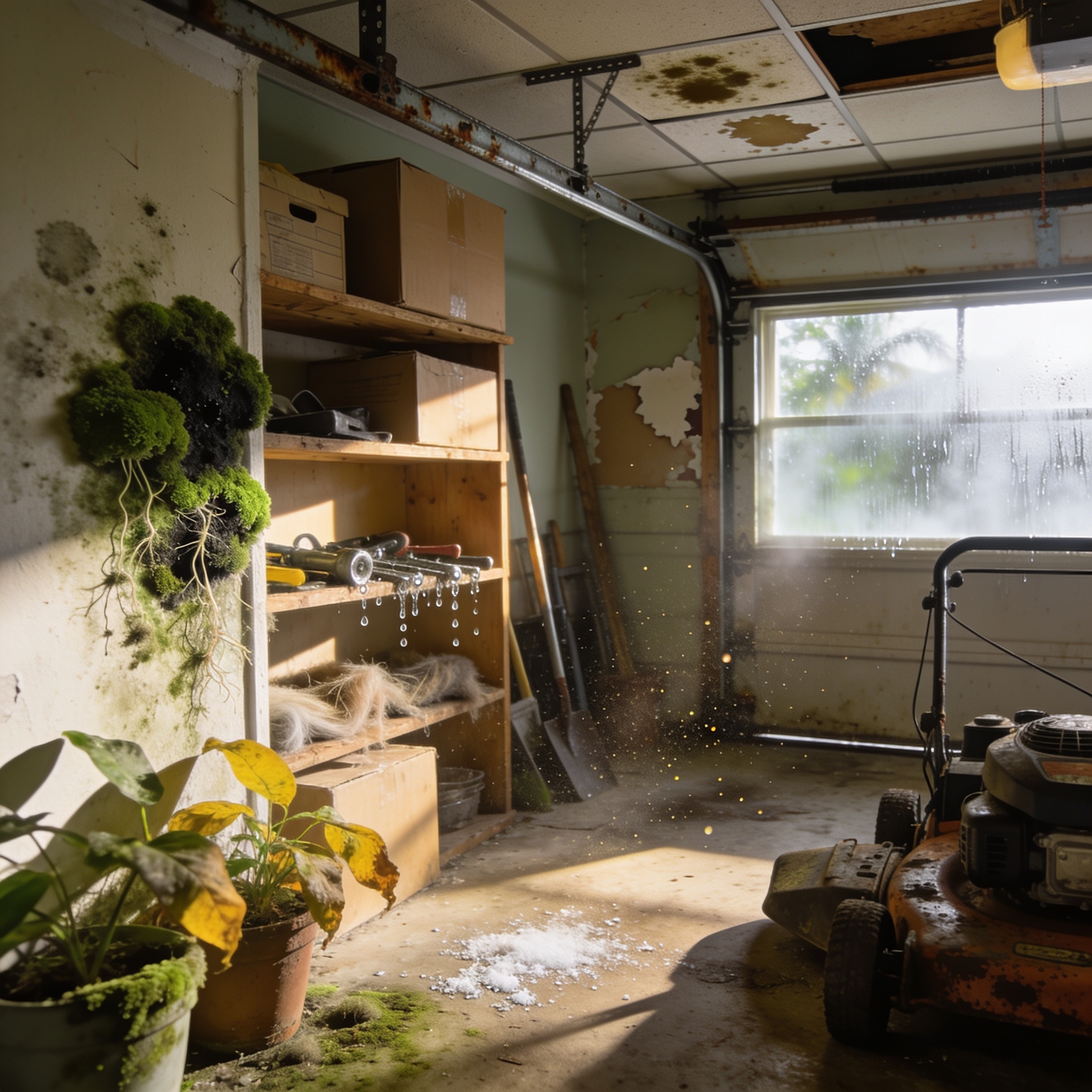
Identifying garage mold early relies on recognizing visual discoloration and distinct musty odors. Common signs include dark spots on drywall, fuzzy growth on cardboard boxes, or persistent dampness on the concrete floor. If you notice these indicators, you should research mold remediation companies near me to assess the severity of the infestation. Because an unfinished garage often lacks climate control, it is particularly vulnerable to mold growth. To effectively get rid of mold, you must first identify the moisture source, such as a hidden leak from the roof or plumbing.
Visual Indicators of Black Mold
Mold often appears as black mold, green, or white patches on surfaces like wood framing or the garage ceiling. You might also see bubbling paint or warped drywall, which indicates moisture trapped behind the surface. These signs often point to a deeper issue that requires immediate attention to prevent further spread. When you see mold growing on the ceiling or walls, it is a sign that spores have already begun to travel through the air, potentially affecting other items inside the garage.
What Are the Causes of Garage Mold, and What Conditions Does It Need?
Mold growth in a garage is primarily caused by high ambient humidity and moisture accumulation from poor drainage or roof leaks. According to the EPA, mold needs moisture, oxygen, and a food source—such as wood, drywall, or paper—to thrive. In Southwest Florida, the combination of high temperatures and frequent rain makes the garage a particularly vulnerable to mold environment. Mold thrives when these organic materials are exposed to consistent moisture, and it only takes 24 to 48 hours for mold to thrive once moisture is present.
Environmental Factors
Condensation occurs when warm, humid air meets cooler surfaces like concrete floors or metal garage doors. This moisture creates the perfect environment for mold growing on your belongings. If your garage is attached to the house, airborne mold spores can travel through HVAC systems, potentially impacting your indoor air quality. Monitoring mold levels is essential, especially when the garage door is opened frequently, allowing outside humidity to enter.
What Time of Year Is Worst for Mold in a Garage?
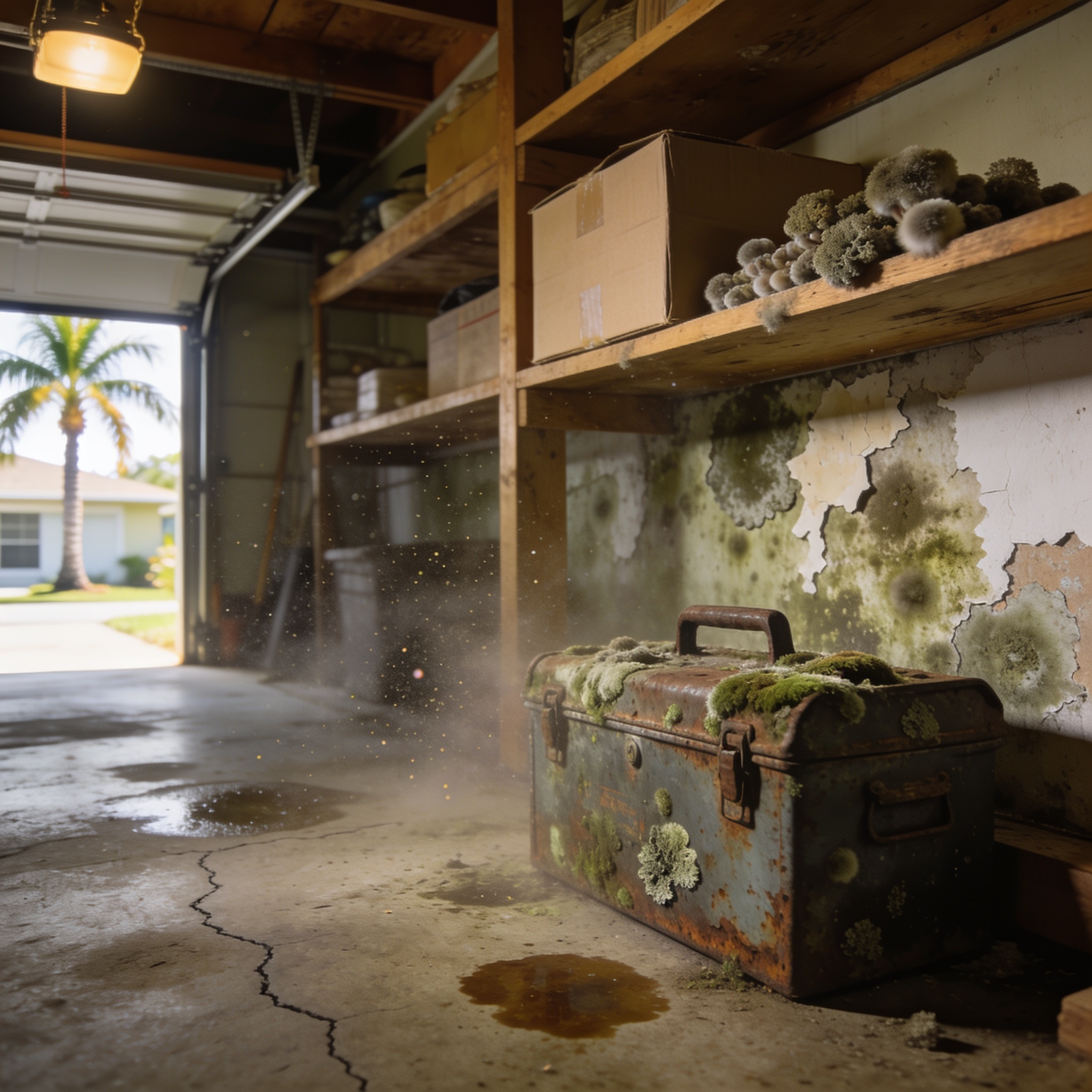
The summer months, specifically June through September, represent the worst time for mold in a garage due to peak humidity and hurricane season. During these months, the Florida climate experiences extreme heat and frequent heavy rainfall that can lead to water damage. If your property is in a flood zone, you may need to consult experts regarding Water Damage Restoration mitigation to ensure your structure remains dry. Garages housing cars in the garage are also vulnerable to mold if the vehicle is parked while wet.
Is Mold in the Garage Dangerous — and What Are the Signs of Mold Toxicity?
Exposure to mold in the garage can pose a health risk to sensitive individuals, particularly those with asthma or severe allergies. While the EPA does not set specific exposure limits, they emphasize that any mold inside a building should be addressed promptly. Symptoms of mold toxicity may include chronic coughing, sneezing, skin irritation, or headaches. Taking steps to prevent mold in the garage is essential for your family’s health.
What Can You Put in Your Garage to Absorb Moisture and Prevent Mold?
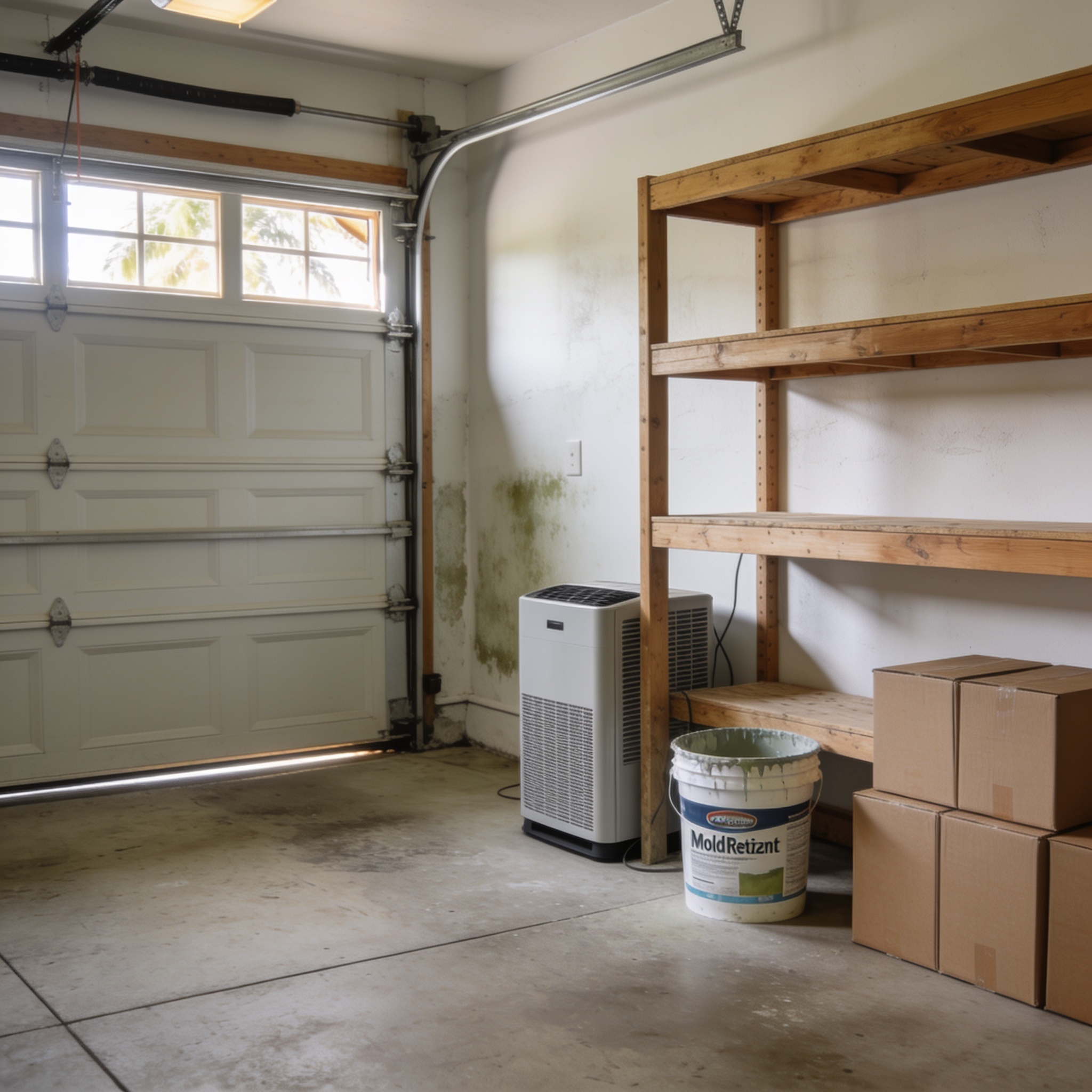
To use a dehumidifier is the most effective way to keep your garage dry and prevent mold from taking hold. You should use a dehumidifier to keep the humidity levels below 60% to help prevent fungal colonization. Additionally, placing moisture-absorbing desiccant bags in closets or storage bins can help protect specific items from mold growth.
How Can You Improve Ventilation in Your Garage to Prevent Mold?
Improving ventilation involves creating a path for moist air to escape while allowing drier air to circulate. Installing a high-quality exhaust fan in the garage ceiling or near the roofline can significantly reduce stagnant air. Use an exhaust fan to keep the air moving, and ensure your garage is well-ventilated to avoid the pockets of stagnant air where mold thrives.
How Can You Prevent and Remove Mold in Your Garage (Complete Prevention Plan)
Following these 7 proven steps will create a robust defense against moisture and fungal contamination in your home.
- Inspect your roof or plumbing monthly to ensure no water is leaking into the structure and fix leaks promptly.
- Keep the humidity levels low by using a dehumidifier to keep the environment dry.
- Store items properly on metal shelving rather than directly on the floor where moisture settles.
- Install vents or an exhaust fan to facilitate consistent airflow and prevent the buildup of trapped, humid air.
- Seal any cracks in the concrete garage floor or exterior walls to prevent groundwater seepage during heavy storms.
- Avoid storing organic materials like cardboard boxes or untreated wood that serve as food sources for mold.
- Clean and dry any wet surfaces immediately after a storm to prevent mold spores from colonizing the area and stop spores from spreading.
How Do You Get Help With Garage Mold — DIY vs. Calling a Professional?
Deciding whether to remove mold yourself or hire a professional depends on the size and location of the contamination. Small areas of mold covering less than 10 square feet can often be cleaned using a mixture of water and a mild detergent or distilled white vinegar. To effectively scrub the area, use a stiff brush, then rinse the area thoroughly and dry it completely. However, if the mold has penetrated the drywall or is the result of significant water damage, you must contact a professional mold expert to ensure safe mold removal. You can learn more about the financial implications by researching How Much Does Mold Remediation Cost before starting a project. Always wear proper protective gear, including gloves and a respirator, when attempting to remove mold in your garage.
Comparison of Remediation Methods
| Method | Best For | Risk Level |
|---|---|---|
| DIY Cleaning | Small, surface-level patches | Low |
| Certified mold Specialist | Large areas, structural damage | High |
| Ways to prevent | Routine maintenance | None |
Frequently asked questions
Addressing common concerns helps homeowners maintain a healthy garage environment throughout the year.
Can I use bleach to kill mold on garage walls?
Bleach is generally ineffective on porous surfaces like drywall because it only kills the surface mold while leaving the roots intact.
How often should I check for mold in my garage?
You should perform a visual inspection of your garage at least once a month, especially after heavy rainfall or hurricane events, as the area is vulnerable to mold growth.
Does an attached garage increase the risk of mold in my home?
Yes, an attached garage can act as a pathway for mold spores to enter your living space if the shared walls are not properly sealed.
Is it necessary to insulate my garage to prevent mold?
Insulating your garage helps regulate temperature and reduces the likelihood of condensation forming on walls and ceilings.
What should I do if I find mold on my car in the garage?
You should immediately have the vehicle professionally detailed and address the underlying moisture issue in your garage to prevent recurrence.
See also: Water Damage Restoration
Our editorial team verifies licensing and reviews for every restoration company in the directory and writes practical, Florida-specific guides to help homeowners act fast and protect their insurance claims after water, fire, mold or storm damage.