How to Get Rid of Mold in an Attic: A Complete Removal Guide
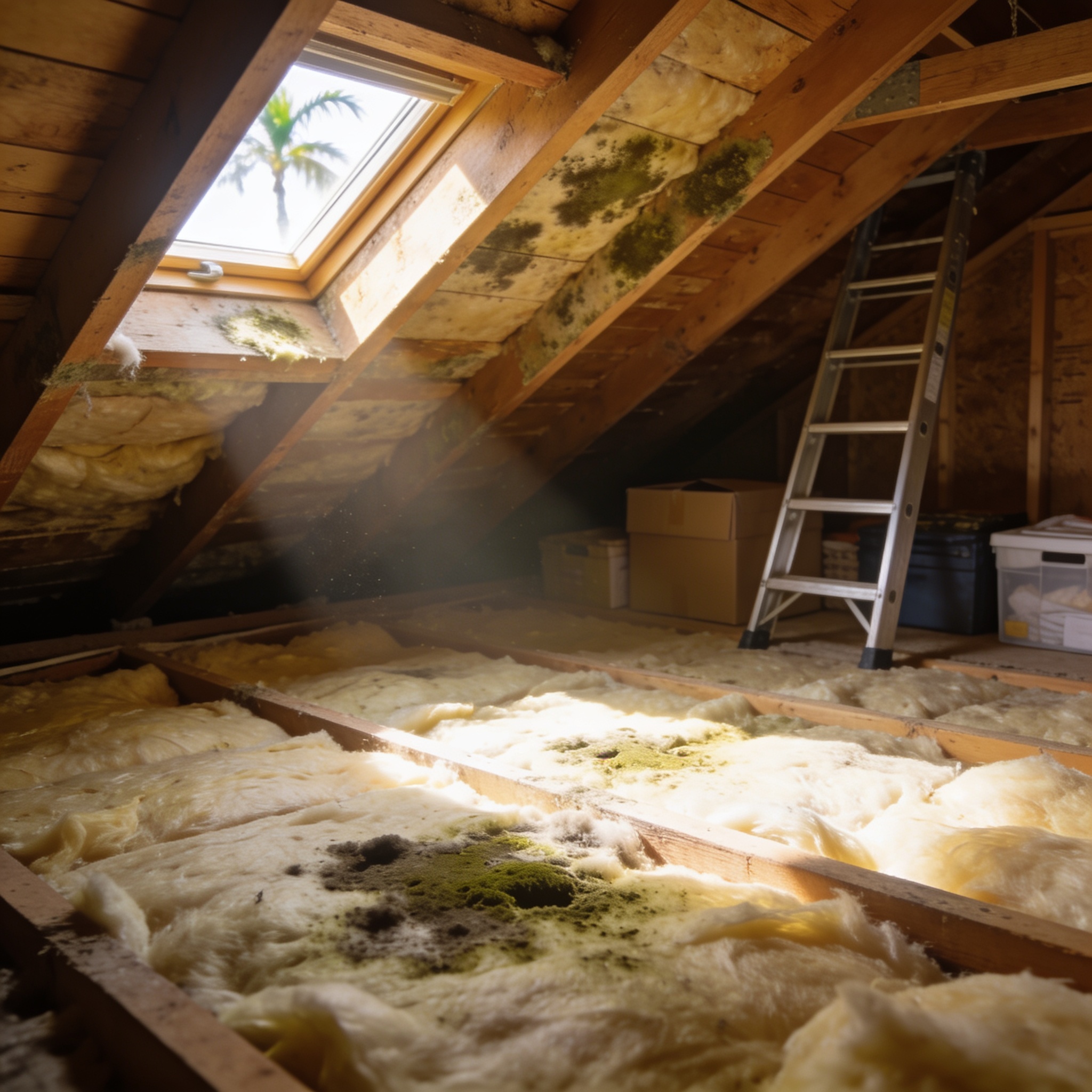
Professional attic mold removal typically costs between $1,500 and $4,500 depending on the severity of the infestation and the square footage of the affected area. When you need to know how to get rid of mold in an attic, the primary factor is identifying the moisture source before attempting any physical removal of the fungal growth. Dealing with mold requires a systematic approach to ensure you effectively clean the mold and protect your home’s structural integrity. Taking action now provides peace of mind that your home remains a safe environment.
Key Takeaways
- Attic mold is almost always a symptom of an underlying moisture problem, such as a roof leak or poor ventilation.
- Never use bleach to clean mold on porous surfaces like plywood or attic insulation, as it can actually feed the fungi.
- Professional remediation is required if the mold covers more than 10 square feet or if the underlying cause involves structural damage.
- Southwest Florida’s high humidity levels make proper attic ventilation essential for preventing future growth.
- Always prioritize safety by wearing N95 respirators and protective clothing when inspecting your attic for mold.
What Are the Signs of Mold in an Attic?
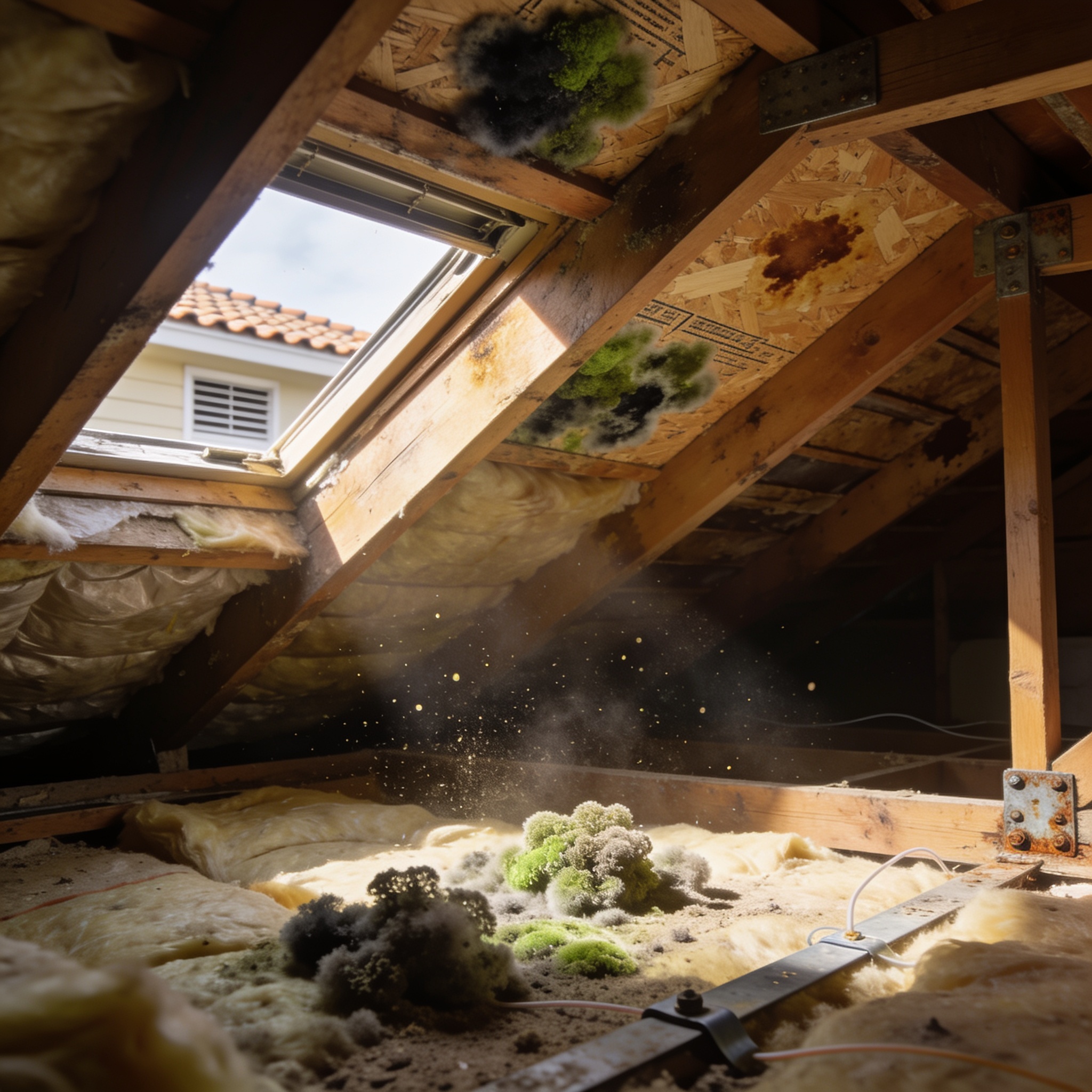
The 5 visual signs of mold in an attic include distinct indicators that suggest a moisture imbalance within your home’s structure. You should regularly inspect your attic to catch mold early before it spreads to your living space. If you notice something that looks like mold, it is vital to contact a professional mold removal company to assess the extent of the mold damage. Identifying mold stains on your rafters or decking is a common warning sign that requires immediate attention.
- Black spots or discoloration: Look for dark, circular patches on the underside of your roof decking or rafters.
- Musty, damp odor: A persistent earthy smell often indicates that mold spores are active and circulating in the attic air.
- Water staining: Visible streaks or dark water marks on the wood sheathing suggest a roof leak or condensation buildup.
- Frost or damp insulation: During cooler months, moisture trapped in the attic space can cause the attic insulation to appear wet or matted.
- Peeling paint or rusted nails: Excessive humidity can cause metal fasteners to corrode and paint on gable ends to bubble or peel away.
What Causes Mold Grow in an Attic?
Attic mold is often caused by a failure in the building envelope that allows moisture to accumulate in a stagnant environment. Mold often develops when humidity levels remain high for extended periods. Understanding the causes of mold is the first step in successful mold prevention. In Southwest Florida, the intense heat and humidity can turn a small leak into a significant mold problem within weeks, causing mold in your attic to spread rapidly. If left unchecked, mold growth may lead to even more mold throughout the structure.
The Role of Ventilation of the Roof and Attic Insulation
Proper attic ventilation is the most critical factor in keeping your attic dry. If your soffit vents are blocked by excessive attic insulation, air moving through the attic cannot escape through the ridge vent, trapping moist air inside. This lack of airflow creates an ideal environment for mold to grow on the wood sheathing. You must ensure the ventilation of the roof is designed to sheathe the roof deck in a way that prevents condensation and helps prevent future problems.
Structural Moisture Sources and Roof Leak
A roof leak is the most common external cause of moisture intrusion. When shingles or flashing fail, water seeps into the plywood, providing the hydration mold needs to thrive. If you suspect structural water damage, you may need to consult professionals specializing in Water Damage Restoration to address the root cause. Proper mold removal and remediation will stop the cycle of moisture from causing mold in the attic.
How Serious Is Mold in Your Attic — and What Are the Health Risks?
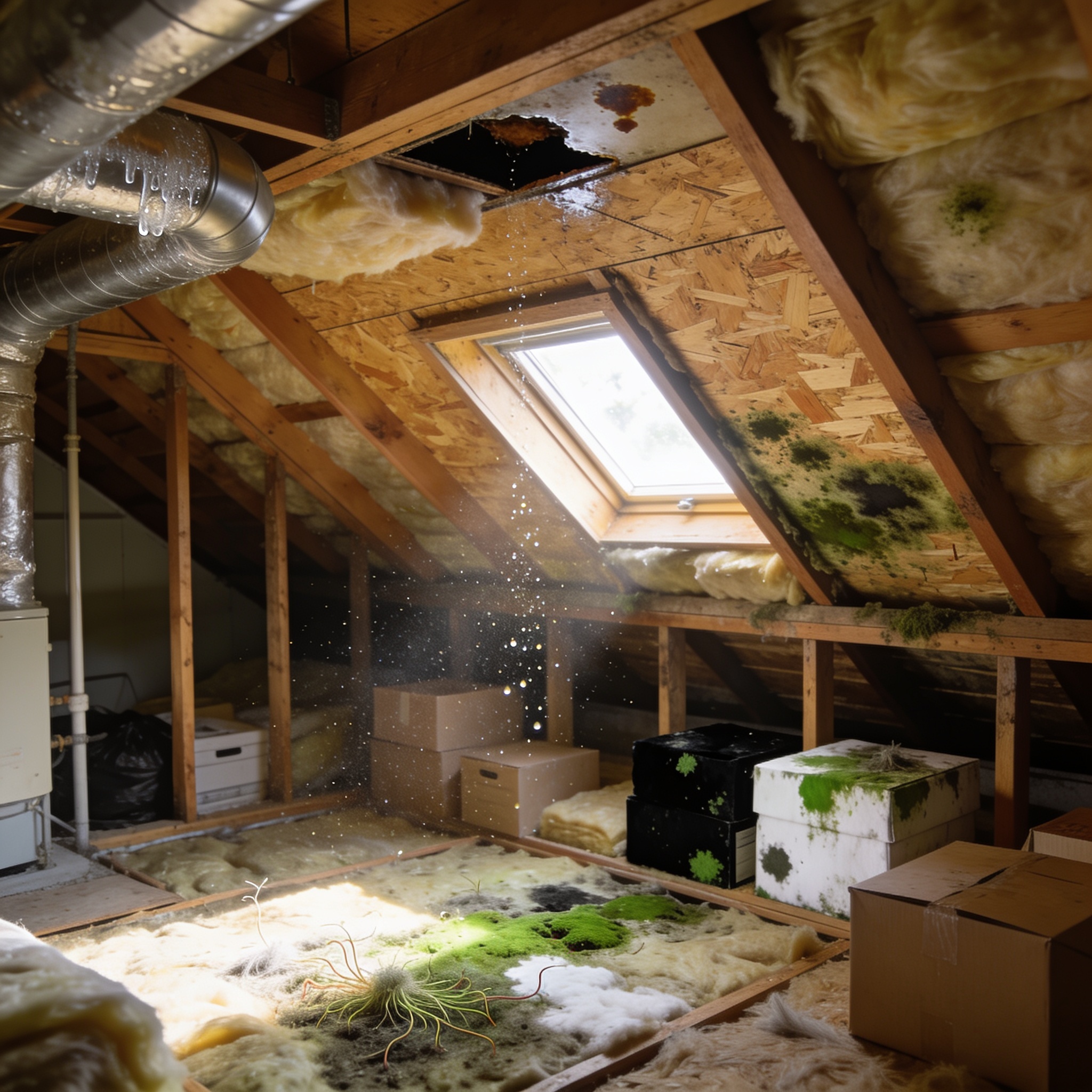
The severity of attic mold depends on the extent of the colonization and whether the spores are infiltrating your indoor air quality. While not all mold is toxic, the presence of black mold can trigger respiratory distress, especially for individuals with asthma or those who are allergic to mold. According to the EPA, mold spores present in the attic can migrate through HVAC systems, affecting the health of occupants throughout the entire home.
Can Mold in the Attic Be Fixed, or Is It a Lost Cause?
Most attic mold issues are fixable provided you address the moisture source and properly clean or replace affected materials. If the wood structure remains sound, professional remediation can often save the plywood and rafters. However, if the wood has begun to rot or soften, you may need to remove and replace the damaged sections with new plywood to ensure structural integrity. Understanding how to remove attic mold works is essential to get rid of the mold permanently.
Can I Remove Mold from Attic by Myself — and What Cleaning Solutions Actually Work?
You should only attempt to remove mold from attic surfaces if the affected area is small and you have the proper personal protective equipment. Many homeowners mistakenly believe bleach is the best way to clean mold, but the EPA warns that bleach is ineffective on porous materials like wood and insulation. Instead, use an EPA-registered antimicrobial solution specifically designed for mold treatment to effectively away mold. If you find the job is larger than expected, you should search for mold remediation companies near me to avoid spreading spores further.
When Should I Hire a Professional Attic Mold Removal (and What Does the Process Look Like)?
Professional attic mold removal is necessary when the infestation covers a large area, involves HVAC contamination, or requires structural repairs. A professional mold expert will first perform a thorough inspection to determine the cause of the moisture. The remediation process typically involves containment, HEPA vacuuming to remove dead mold, and the application of professional-grade antimicrobial agents to kill the mold at the root.
| Step | Action |
|---|---|
| 1. Containment | Seal off the attic access to prevent spores from entering the living space. |
| 2. Removal | HEPA vacuuming and physical removal of moldy insulation or debris. |
| 3. Treatment | Application of fungicidal coatings to resist mold growth on wood. |
| 4. Ventilation | Repairing soffit vents and ensuring air moving through the attic is unobstructed. |
| 5. Prevention | Implement strategies to prevent future growth and remove mold from your attic. |
What Is the Cost of Professional Attic Mold Removal?
The cost of professional remediation typically ranges from $1,500 to $4,500, though major structural repairs can push costs higher. Factors influencing the final bill include the square footage of the attic, the amount of insulation that must be discarded, and the complexity of the roof structure. For those dealing with storm-related damage in Charlotte County, contacting experts for Water Damage Restoration can provide an accurate assessment of remediation vs. replacement costs.
How Do I Prevent Mold Growth in My Attic?
Preventing future mold growth requires a combination of moisture control and consistent attic ventilation. You must ensure that no bathroom or kitchen exhaust fans are vented into the attic, as this is a leading cause of moisture buildup. Regularly inspect your attic after heavy storms to ensure no roof leak has developed, and keep your soffit vents clear of attic insulation to maintain proper airflow. To prevent mold from ever returning, ensure that your attic sheathing is treated with an antimicrobial sealant. If you are concerned about the cost of these long-term solutions, you can research How Much Does Mold Remediation Cost guides to understand the value of preventative maintenance.
Frequently asked questions
Understanding the nuances of attic care helps homeowners maintain a healthy, dry home environment.
Does homeowners insurance cover attic mold removal?
Most standard homeowners insurance policies in Florida do not cover mold remediation unless it is the direct result of a covered peril, such as a sudden roof leak caused by a hurricane.
How long does the mold removal process take?
A typical professional attic mold removal project takes between two to five days, depending on the size of the attic and the extent of the remediation required.
Is it safe to live in the house during mold removal?
In most cases, it is safe to remain in the home during the process, provided the professional remediation team uses proper containment to keep spores out of the living space.
What happens if I ignore mold in my attic?
Ignoring mold will almost certainly lead to structural wood decay, decreased indoor air quality, and significantly higher costs for future repairs or potential health-related issues.
How often should I inspect my attic for mold?
It is recommended to inspect your attic at least twice a year, specifically before and after the peak of the Florida hurricane season, to ensure no moisture problems have developed.
Our editorial team verifies licensing and reviews for every restoration company in the directory and writes practical, Florida-specific guides to help homeowners act fast and protect their insurance claims after water, fire, mold or storm damage.