How Far Can Mold Spores Travel in the Air? Understanding Indoor Spread
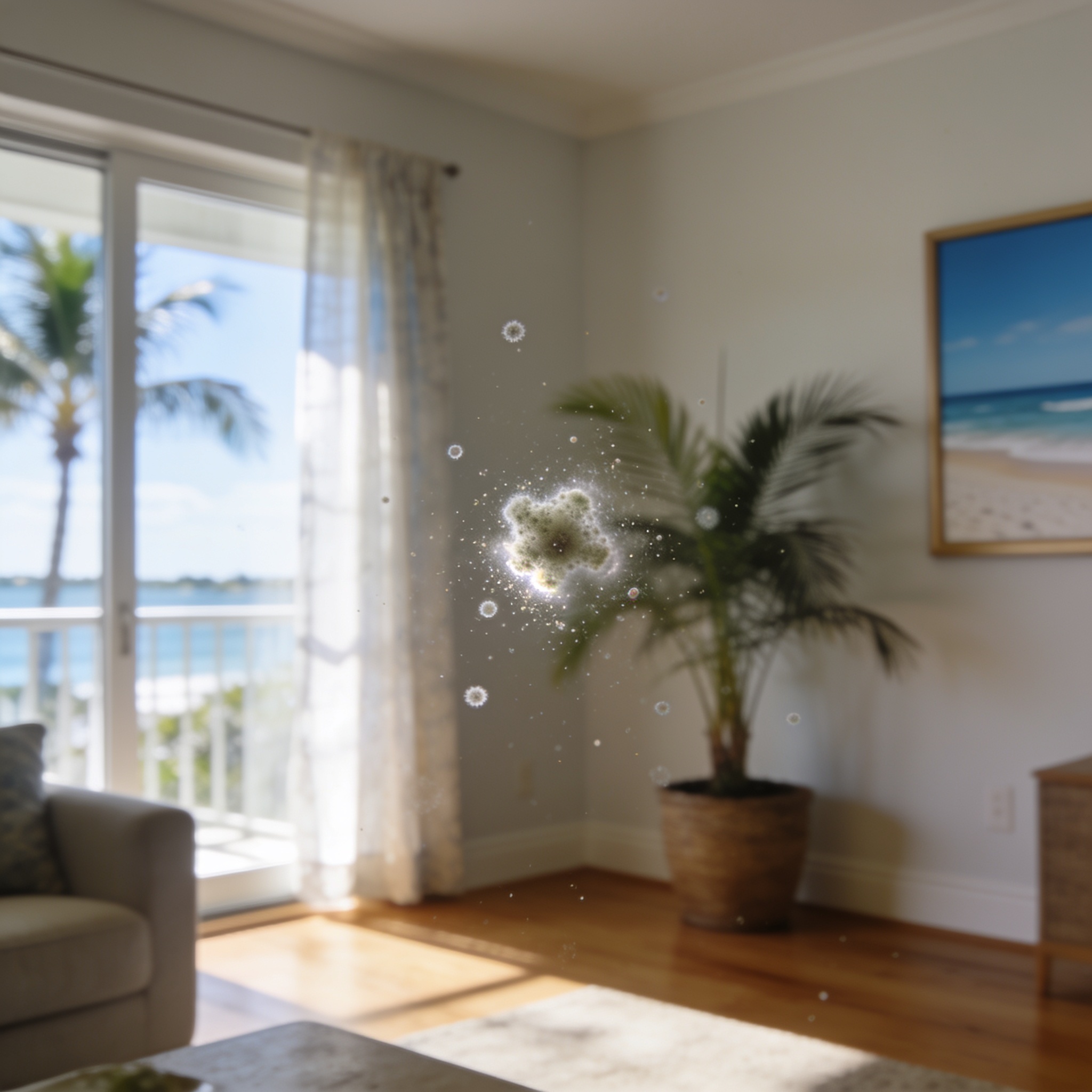
Mold spores travel across entire rooms and through HVAC systems in seconds, with the potential to migrate from a single affected area to the rest of a home within minutes depending on air currents. Because SWFL humidity often exceeds 70%, these microscopic particles can settle on new surfaces and initiate mold growth in your home almost immediately after landing. Because spores are invisible to the naked eye, homeowners often do not realize that mold is present until it has already spread. Understanding how mold spores can travel is the first step in protecting your property and ensuring healthy indoor air.
Key Takeaways
- Mold spores are microscopic and spores are easily carried through air currents, HVAC vents, and even on clothing.
- High humidity levels in Southwest Florida create the perfect environment for mold colonies to colonize new areas.
- Professional mold remediation is often necessary when spores have infiltrated air ducts or large living spaces.
- Hepa air purifiers are effective at capturing airborne spores, but they do not eliminate the source of the growth.
- Understanding how mold travel works helps homeowners in Lee and Collier counties implement mold prevention strategies after water damage events.
How Far Can Mold Spores Travel in the Air?
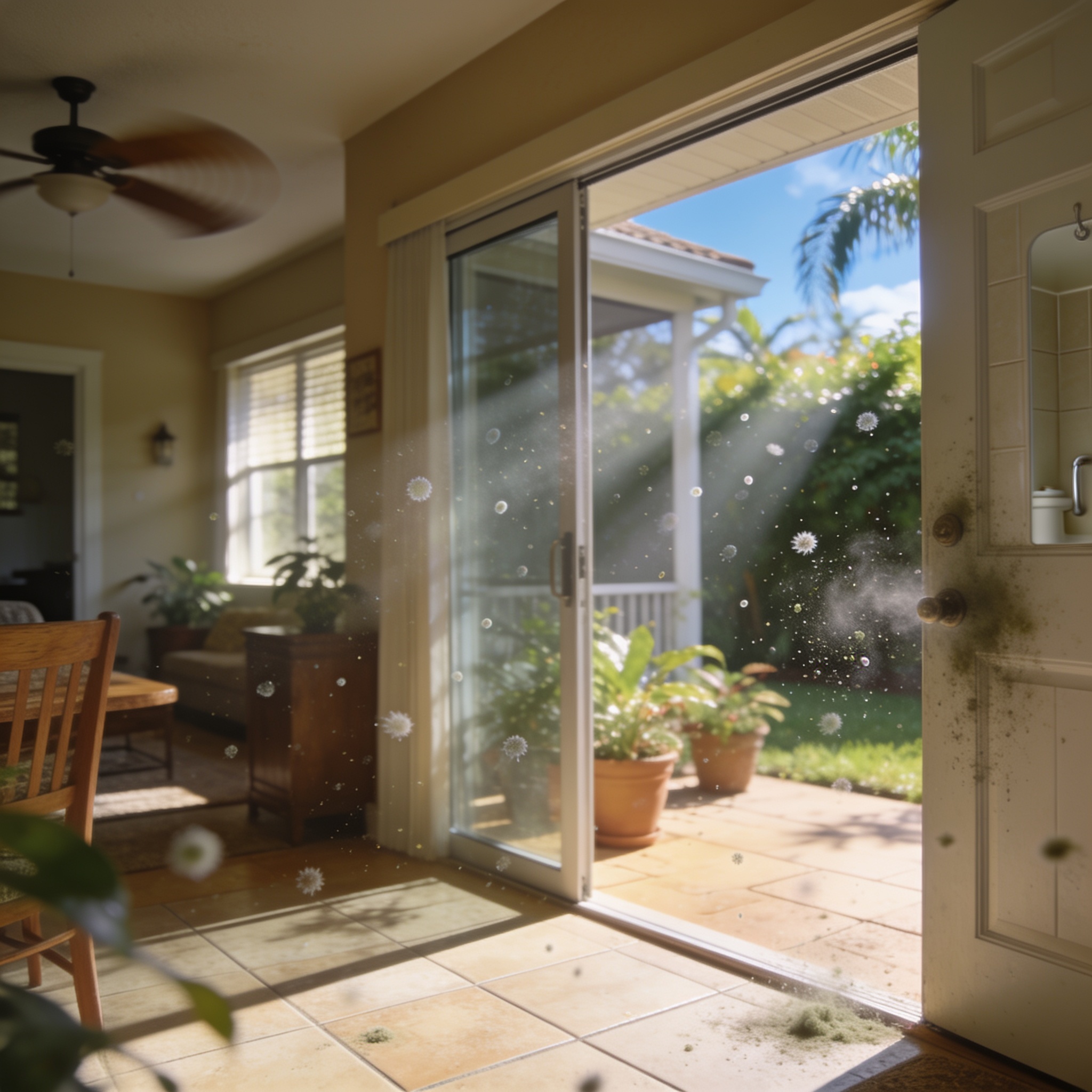
Mold spores travel indefinitely as long as there is sufficient air movement to keep them suspended in the indoor and outdoor air. In a typical Florida residence, mold spores can travel from a laundry room to a bedroom in under ten minutes if the HVAC system is running. The distance spores travel is primarily dictated by air currents and the speed of your home’s air circulation. Because spores move through open doorways and ventilation, mold can grow in rooms far from the original moisture source, often leading to mold throughout the entire structure.
The Role of SWFL Humidity
Because our regional humidity remains high, spores do not need to travel far to find a viable substrate. Once a mold spore lands on a damp surface, such as drywall affected by a roof leak or high condensation, it begins the process of colonization. According to the EPA, maintaining humidity levels and prevent mold growth by keeping indoor humidity between 30% and 50% is essential. This moisture control allows spores to be kept in check, as mold thrives in damp, stagnant environments.
How Do Mold Spores Spread Throughout a Home or Building?
Mold spores spread throughout a home by hitching a ride on air currents, pets, and human movement between rooms. Your HVAC system acts as a primary distribution network that can carry mold spores from a damp basement or bathroom to every corner of your house. When you experience water damage, the air pressure changes caused by fans and dehumidifiers can inadvertently push spores into the air and into unaffected areas. Because spores get trapped in forced air systems, the problem can quickly escalate into residential mold problems.
Mechanical Distribution and HVAC
The heating, ventilation, and air conditioning (hvac) system is the most efficient way for mold to travel. If a mold colony exists inside your air ducts, the system will continuously cycle spores into your living space. This is why professional mold remediation often includes duct cleaning to ensure the source is fully removed. Additionally, warm air rises through the home, and central air units can push spores along the ductwork, spreading contamination to every room.
How Long Do Mold Spores Stay in the Air?
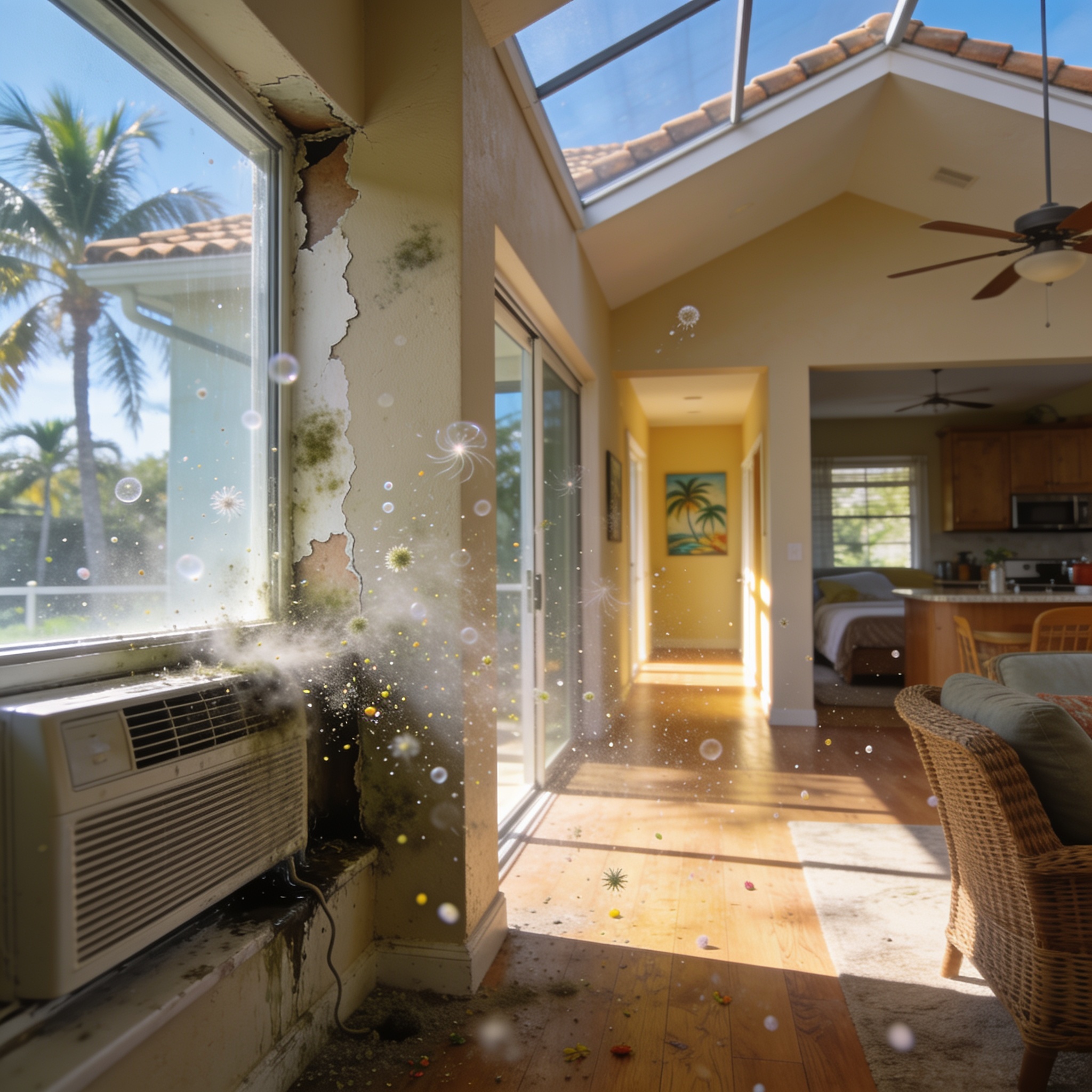
Mold spores can stay in the air for several hours or even days if the indoor environment remains stagnant and undisturbed. Microscopic spores are light enough to remain suspended in the air until they eventually land on a surface or are captured by air filters. In homes with high foot traffic, mold spores can remain airborne as they are constantly being kicked back into the air from carpets and furniture. Regular maintenance of air filters is crucial to eliminate spores before they settle.
| Factor | Impact on Spore Suspension |
|---|---|
| Air Circulation | High; keeps spores moving longer. |
| Humidity | High; causes spores to clump and settle faster. |
| Indoor and outdoor exchange | High; outdoor air introduces new spores. |
| Air sampling | Essential for detecting if indoor mold growth is active. |
Can Airborne Mold Spores Travel on Clothing or Personal Items?
Airborne mold spores travel on clothing, shoes, and bags, effectively acting as a transport mechanism between different locations. You can easily track mold spores from an area of active mold growth into a clean room simply by walking through the house. Because humans carry spores on their clothes, it is vital to perform a professional mold inspection to identify the source. When spores land on fabrics, they can be easily moved to new, clean environments.
What Are the Health Effects of Airborne Mold Exposure?
Mold exposure can trigger various respiratory symptoms. Health professionals note that mold spores can lead to allergic reactions, asthma attacks, and irritation of the eyes, nose, and throat. If you suspect mold and believe your health is being affected by indoor air quality, consult a medical professional rather than relying on DIY tests. A certified mold remediation specialist can help assess if your air quality is compromised.
Understanding Sensitivity
The Occupational Safety and Health Administration (OSHA) emphasizes that individuals with existing respiratory conditions are at a higher risk of experiencing symptoms. If you are dealing with significant water damage, consider Water Damage Restoration mitigation immediately to prevent these health risks and cause mold issues from escalating.
Is Black Mold Airborne and How Dangerous Is It?
Black mold, often identified as Stachybotrys chartarum, produces airborne spores just like any other common mold species. While all mold can be hazardous to sensitive individuals, the danger of black mold is often exaggerated in popular media compared to the risks posed by other common indoor fungi. The primary concern with any mold is the potential for structural damage and the impact on indoor air.
What Kills Airborne Mold Spores in a House?
Killing airborne mold spores requires a combination of air filtration and the total removal of the source of the mold. You cannot simply spray a disinfectant into the air to get rid of mold, as this does not address the colonies growing on walls or furniture. Professional remediation teams use specialized equipment to scrub the air while physically removing contaminated materials. This process of eliminating mold often involves mold testing to verify that the air is clean.
The Role of Negative Air Pressure
During a professional cleanup, technicians use air scrubbers to create negative air pressure. This process ensures that spores are pulled into a hepa air filter rather than escaping into the rest of the building. If you are wondering how much does mold remediation cost, remember that this specialized equipment is a major factor in the final price of mold removal.
Do Air Purifiers Help Remove Mold Spores from the Air?
Air purifiers equipped with true HEPA filters are highly effective at capturing airborne mold spores as they pass through the device. An air purifier will improve your indoor air quality by reducing the concentration of spores, but it will not stop mold from growing if moisture remains present. These units are best used as a supplemental tool during and after the remediation process.
How Can You Prevent Mold Spores from Spreading in Your Home?
Preventing mold spread requires immediate moisture control and the isolation of any affected areas. The most effective way to stop mold is to address water leaks and maintain low humidity levels consistently throughout your property. If you live in a coastal area like Sanibel, Water Damage Restoration experts recommend checking your home for hidden mold after every major storm event.
The 5 Steps to Prevent Mold Spores from Spreading
- Control Moisture: Fix leaks in roofs, windows, and pipes immediately to prevent the foundation for mold growth.
- Improve Ventilation: Use exhaust fans in bathrooms and kitchens to vent moisture directly outside.
- Monitor Humidity: Keep indoor humidity levels below 50% using high-quality dehumidifiers.
- Isolate Affected Areas: If you find visible mold growth, seal the room with plastic sheeting to prevent spores from traveling to other areas.
- Professional Inspection: Hire a certified mold professional to conduct air quality testing if you suspect hidden mold behind walls or under flooring.
Frequently asked questions
Common concerns regarding mold spread often center on how quickly it can affect a home’s air quality.
Do mold spores die if they are not in a damp environment?
Most mold spores remain dormant in dry conditions and can survive for years until they encounter the moisture needed to activate growth.
Can I see mold spores in the air?
No, individual mold spores are microscopic and cannot be seen with the naked eye, though large colonies of mold are often visible.
Does bleach kill mold spores on porous surfaces?
Bleach is generally ineffective on porous surfaces like drywall because it does not penetrate deep enough to kill the roots of the mold.
How often should I have my air ducts cleaned?
If you have experienced water damage or have an active mold problem, you should have your ducts inspected and cleaned by a professional.
Is it safe to stay in a house with mold?
If there is significant mold growth, it is recommended to consult with a professional to assess the safety of your home based on the extent of the contamination.
Our editorial team verifies licensing and reviews for every restoration company in the directory and writes practical, Florida-specific guides to help homeowners act fast and protect their insurance claims after water, fire, mold or storm damage.