Is Water Damage From AC Covered by Insurance? A Homeowner’s Guide
Whether water damage from an AC is covered by insurance depends primarily on whether the leak was caused by a sudden, accidental event rather than long-term neglect, with typical claim payouts ranging from $2,000 to over $10,000 depending on the extent of the damage. In Southwest Florida, where high humidity levels accelerate condensation, understanding your specific homeowners insurance policy language is the most critical factor in determining if your claim is approved. If you are unsure about your current protection, you can get a quote for a more comprehensive plan to help protect your home.
Key Takeaways
- Most standard policies only cover damage resulting from sudden and accidental failures, not gradual leaks.
- General wear and tear or lack of maintenance is almost never covered by your insurance company.
- Equipment breakdown coverage is an optional add-on that can protect your system from mechanical failures.
- Documenting the damage immediately with photos and professional assessments is essential to a successful claim.
- Water damage and mold resulting from an AC leak may be subject to specific sub-limits within your policy.
- Knowing what’s covered before an emergency occurs can save you significant out-of-pocket costs.
Does homeowners insurance cover water damage from an AC leak?
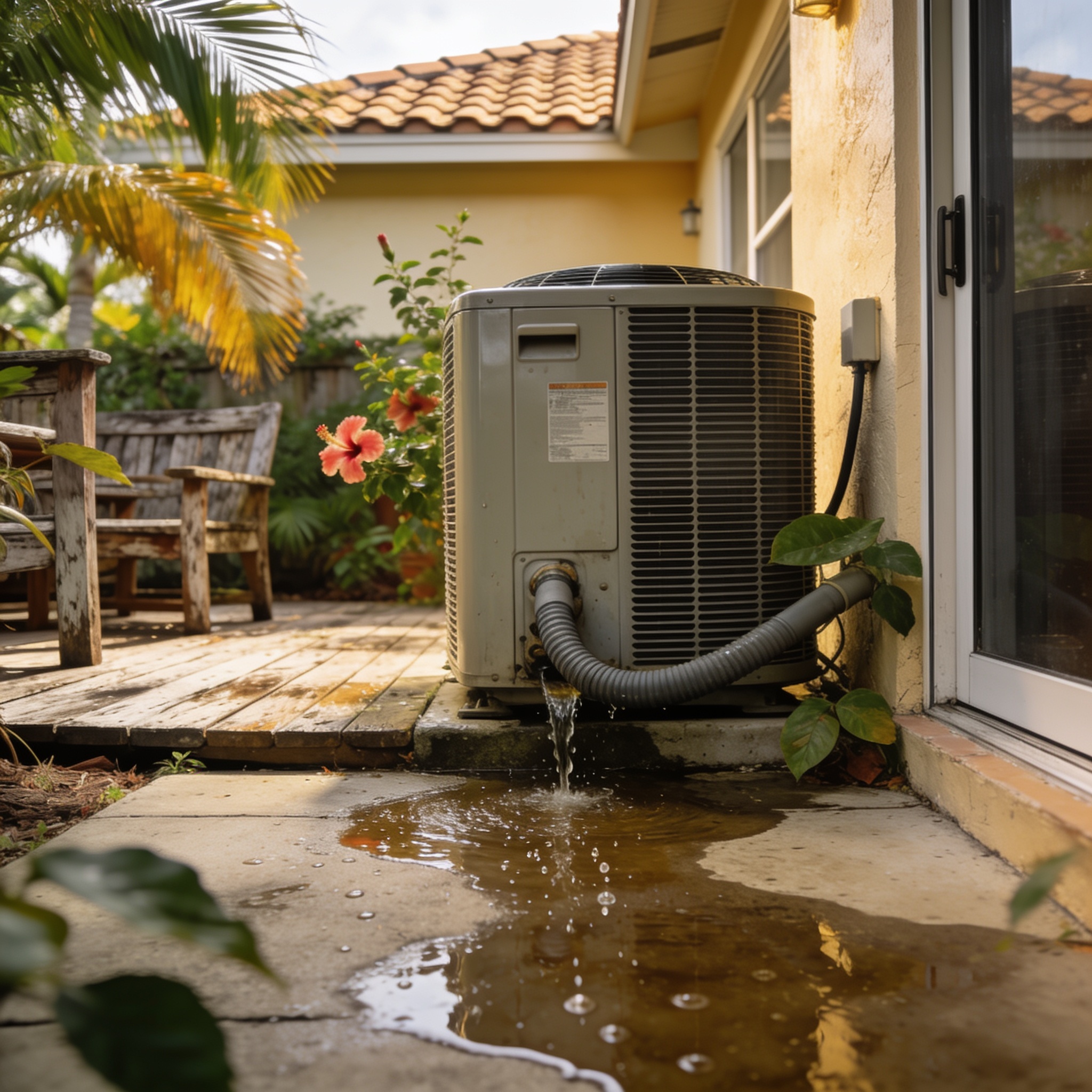
Homeowners insurance cover typically applies only when the water damage is caused by a sudden and accidental failure of the air conditioner. If your hvac unit leaks because of a burst pipe or a sudden mechanical malfunction that releases water into your home, the resulting damage to your walls, floors, or ceilings is often a covered event. However, if the leak is the result of years of neglect or poor maintenance, the insurer will likely deny the claim. Under your personal property coverage, internal components like the air handler may also be evaluated if the ac unit is damaged by a covered peril. Note that many standard policies don’t cover the unit itself, as these hvac failures are often viewed as maintenance responsibilities.
What is considered sudden and accidental water damage (and why it matters for AC claims)?
Sudden and accidental water damage refers to an abrupt, unforeseen event that causes immediate destruction to your property. For an air conditioner, this might mean a drain pan that suddenly cracks or a pump that fails instantly, causing water to overflow into your living area due to a covered peril. In contrast, seepage or leakage that occurs over weeks or months is categorized as a maintenance issue. In Lee and Collier counties, where salt air and high humidity can corrode components, adjusters are trained to distinguish between a fresh rupture and long-term corrosion. It is important to remember that your policy won’t cover damage that could have been prevented through routine service.
What types of water damage are not covered by insurance?
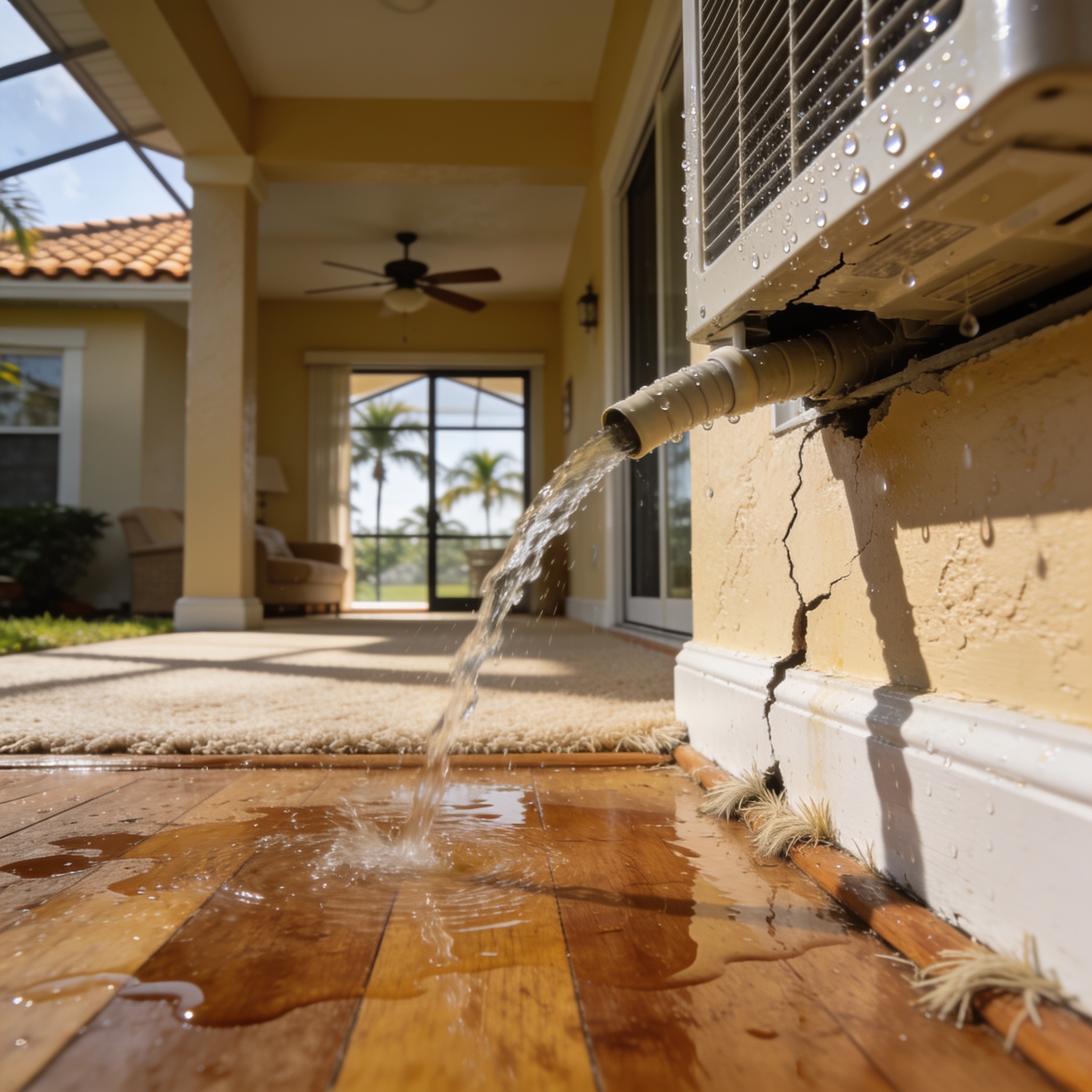
Insurance policies generally exclude any damage caused by normal wear and tear, lack of maintenance, or gradual seepage. If you fail to change your filters or clear your condensate lines, the resulting water damage is considered preventable and therefore not a covered loss. Additionally, damage caused by floods—specifically rising water from outside sources—is not covered under standard home insurance and requires a separate policy through the National Flood Insurance Program (NFIP). Be aware that your insurer won’t cover damage that stems from ignored warning signs, and many components aren’t covered if they have reached the end of their functional lifespan.
| Category | Insurance Status |
|---|---|
| Sudden pipe burst | Typically covered |
| Gradual condensation leak | Not covered |
| Mechanical failure (sudden) | May be covered |
| Lack of maintenance | Not covered |
| Insurance coverage for components | Varies by policy |
| Portable AC units | fall under personal property coverage |
Will homeowners insurance pay for AC repair or replacement?
Standard homeowners insurance policies usually cover the damage caused by the AC unit to your home, but they rarely pay to repair or replace the air conditioner itself. Your dwelling coverage is intended to restore your property to its pre-loss condition, not to upgrade or fix your mechanical appliances. However, homeowners insurance may pay for repairs if the damage is covered under specific endorsements. If you need coverage for the unit itself, you should look into home warranties or specific equipment breakdown coverage. Remember that standard homeowners insurance cover hvac systems only for collateral damage; the unit itself isn’t covered under basic dwelling protection.
What is equipment breakdown coverage for HVAC systems?
Equipment breakdown coverage is an optional endorsement you can add to your policy to cover the mechanical or electrical failure of your HVAC system. While your standard policy covers the water damage to your home, this endorsement bridges the gap to cover mechanical failures and cover HVAC systems by helping to pay to replace the unit. This is highly recommended for residents in Southwest Florida, where extreme heat puts constant stress on your hvac or ac equipment. This specialized hvac insurance is the best way to ensure you are protected against the high costs of sudden system replacement.
Why would an AC water damage claim be denied?
A claim for a damaged HVAC system is most frequently denied because the insurer determines the damage resulted from long-term neglect rather than a sudden event. If an adjuster finds evidence of mold that has been growing for months, they will conclude the leak was gradual. Furthermore, if you cannot provide proof of regular maintenance to address hvac issues, the insurance company may argue that the failure was due to normal wear and tear. If your request to cover ac units is denied, you may need to review your policy for specific exclusions, as many insurers explicitly state they won’t cover systems that have not been serviced annually.
Does ac coverage include mold resulting from an AC leak?
Insurance may cover mold damage if it is a direct result of a sudden and accidental water leak, but many policies include strict sub-limits for mold remediation. Because mold can start growing within 24 to 48 hours in the humid climate of Florida, you must act quickly to mitigate the damage. If you need professional help, consider reaching out for Water Damage Restoration services to prevent further spread. Always verify what’s covered regarding mold, as some policies have very low caps on remediation expenses.
What is the $5000 rule for AC water damage claims?
The $5000 rule refers to the common sub-limit many insurers place on mold remediation costs, which can leave a homeowner responsible for expenses exceeding that amount. While your policy might cover the initial water damage, the cost to remediate mold is often capped at a lower threshold than the general dwelling coverage. Always check your policy declarations page to see if your coverage for mold-related repairs is sufficient for the size of your home.
How do I file an insurance claim (and strengthen my case)?
To successfully file a claim, you must document everything, mitigate further damage, and provide proof of professional maintenance for your AC unit. Start by take photos of the leak and the damaged areas, then contact a professional for Water Damage Restoration to stabilize the environment. When the adjuster arrives, have your maintenance records ready to prove that the unit was well-cared for, which helps differentiate the event from general neglect. You must demonstrate that the damage would be covered under the terms of your specific agreement.
Frequently asked questions
The following answers address common concerns regarding HVAC-related insurance claims in Southwest Florida.
Does my home warranty cover water damage from an AC leak?
Home warranties typically cover the repair or replacement of the AC unit itself, but they rarely cover the collateral water damage to your home’s structure. You should check if your homeowners insurance cover ac policy has any overlap with your warranty.
Should I call a plumber or an AC technician first?
You should contact an AC technician to stop the leak and a restoration company to address the Water Damage Restoration immediately.
Will my insurance premium increase if I file a claim?
While every insurer is different, filing a claim can lead to a premium increase or a loss of “claims-free” discounts, which is why you should only file for significant damages.
How does the deductible affect my AC water damage claim?
Your settlement will be the total cost of the covered repairs minus your deductible, so ensure the damage exceeds your deductible before filing.
Does insurance cover window AC units?
Most policies treat window AC units as personal property rather than part of the dwelling, meaning they are covered under different terms than a central air conditioner.
Our editorial team verifies licensing and reviews for every restoration company in the directory and writes practical, Florida-specific guides to help homeowners act fast and protect their insurance claims after water, fire, mold or storm damage.