Fire Damage Restoration Guidelines: A Step-by-Step Recovery Plan
Professional fire damage restoration guidelines dictate that the total recovery cost typically ranges between $3,000 and $30,000 depending on the severity of the fire and the square footage involved. This comprehensive guide provides a structured, step-by-step approach to mitigate long-term structural issues and ensure your SWFL property is safe for habitation. Because fire is one of the most devastating events a homeowner can face, adhering to industry-standard protocols allows property owners to navigate the complex process of fire and smoke damage restoration while minimizing property damage costs and overall financial loss.
Key Takeaways
- Immediate mitigation is essential to prevent mold and secondary damage from moisture and acidic soot residues.
- Professional documentation of all fire damaged items is required to support your fire damage claim.
- SWFL properties face unique risks, including high humidity that accelerates mold growth after firefighting efforts.
- Hiring an IICRC-certified restoration company ensures that cleanup meets safety and health standards.
- The fire damage restoration timeline varies significantly based on the extent of structural damage and local permit requirements.
What Should You Do Immediately After a House Fire?
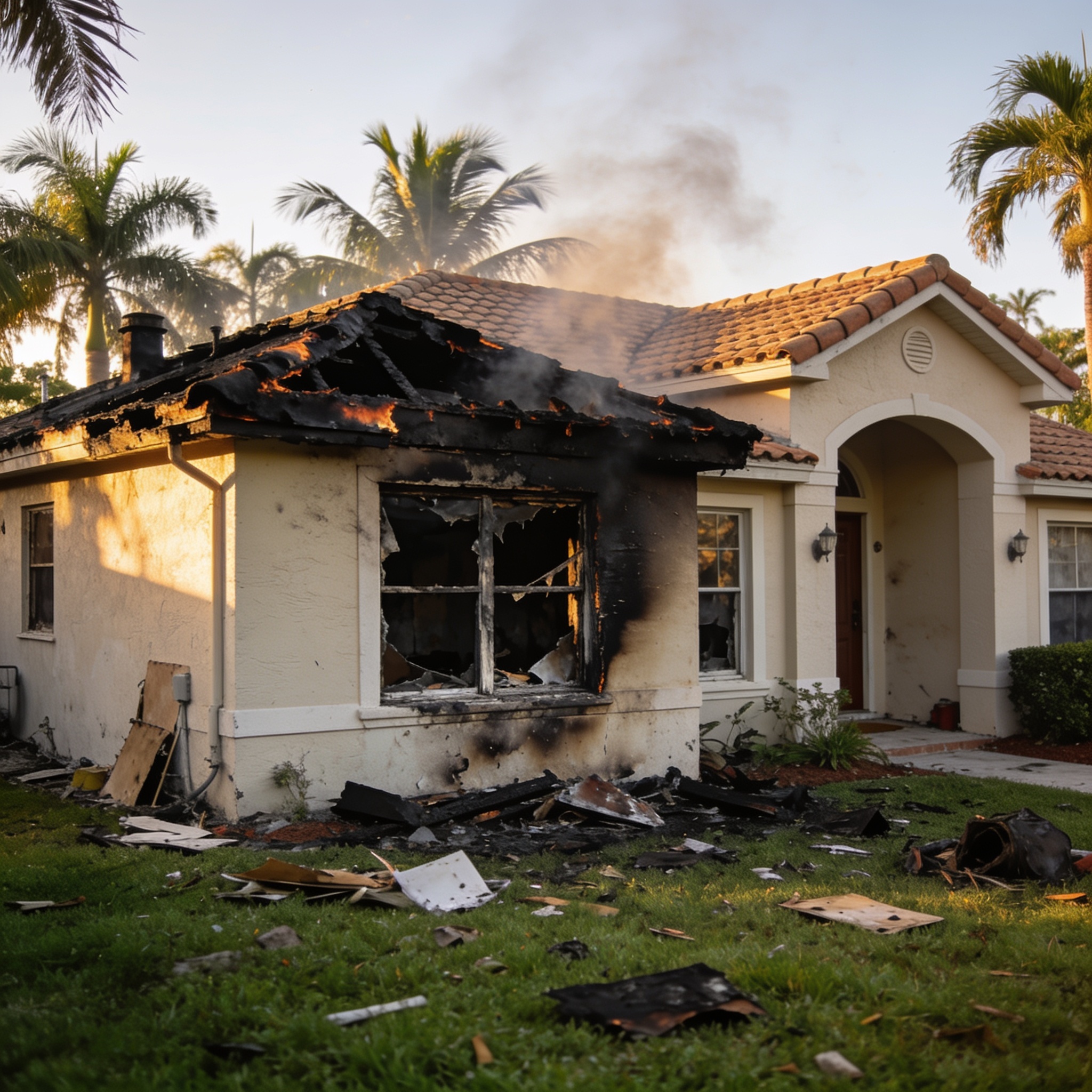
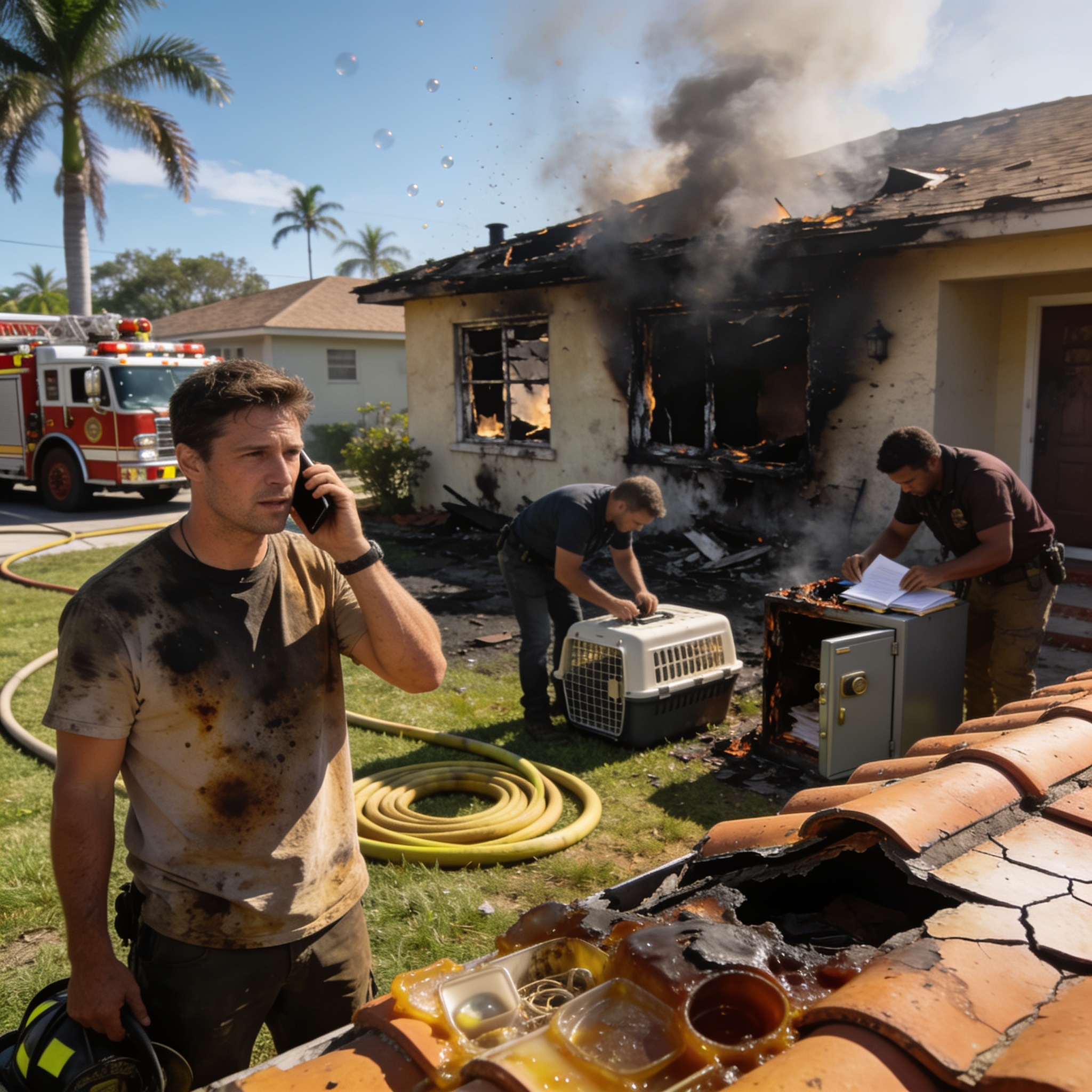
Securing the property is the most critical first step to prevent unauthorized access and protect the structure from further environmental exposure. Once the fire department clears the scene, contact your insurance company to initiate the damage insurance process. Avoid entering the home until officials confirm the fire damaged property is safe, as weakened floors or a compromised ceiling pose significant risks. In Southwest Florida, where tropical humidity is high, you must also consider the impact of water damage caused by firefighting efforts, which requires immediate water damage mitigation to prevent rapid indoor mold growth.
What Are the Different Types of Damage Caused by a Fire?
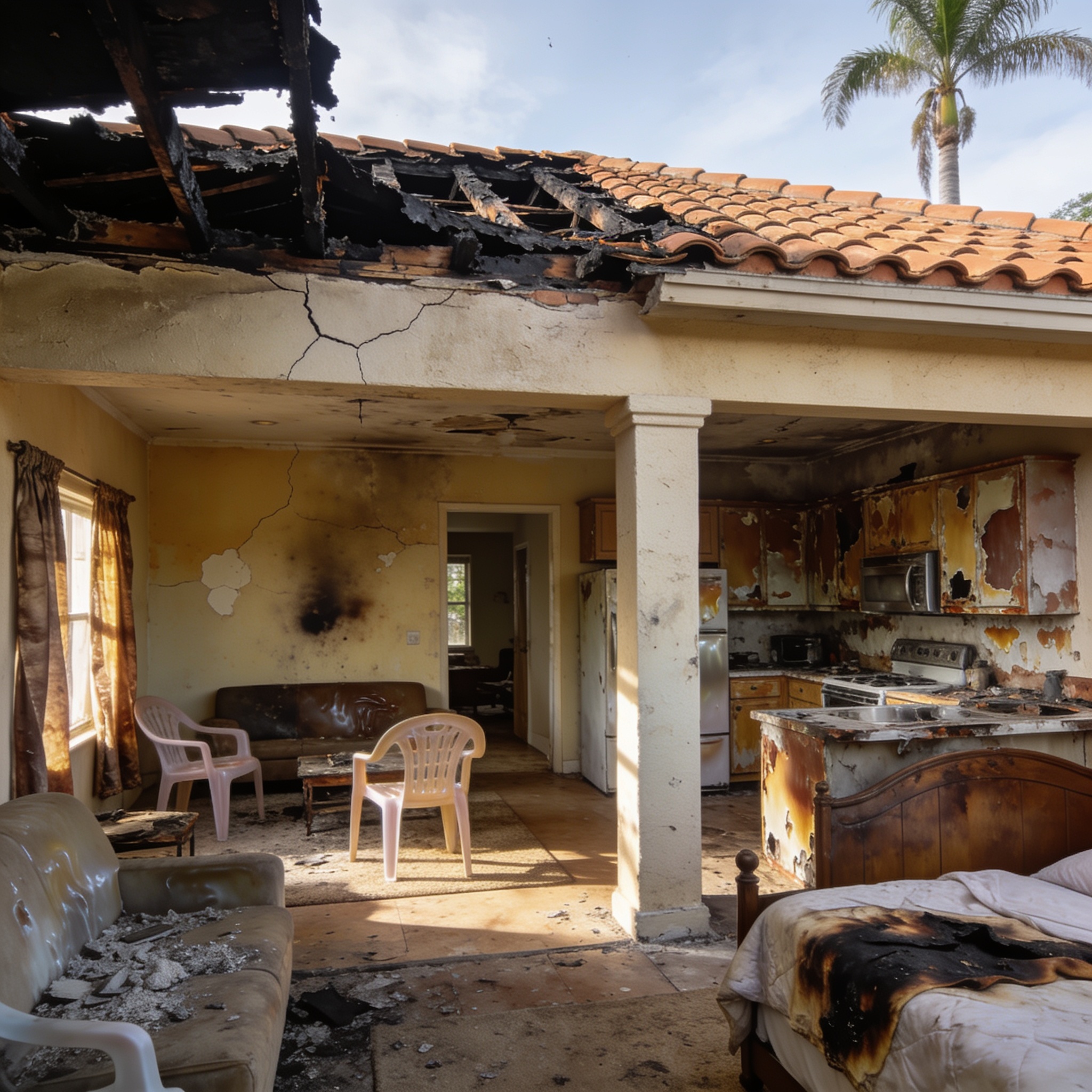
Fire damage manifests in three distinct forms: direct flame damage, smoke damage, and water damage caused by firefighting. Direct flame damage destroys structural components like drywall and framing, while smoke and soot damage permeate porous materials throughout the building. Acidic soot can cause rapid corrosion on metal surfaces, including appliances and electronics, if not cleaned immediately. Furthermore, water from firefighting creates a secondary disaster that requires professional water damage restoration to prevent additional damage and long-term structural decay.
What Are the Key Steps in the Fire Damage Restoration Process?
The fire damage restoration process follows a predictable sequence starting with emergency mitigation and ending with final reconstruction. First, the restoration team performs an assessment of the damage to identify safety hazards. Next, they conduct water extraction to remove standing water from firefighting. Third, the team performs structural cleaning and odor removal using specialized equipment like HEPA filters and ozone generators. Finally, they execute the necessary restoration work and rebuild to restore fire damage and return your property to its pre-loss condition.
The 5 Steps of Professional Fire Restoration
- Emergency Assessment: Professionals evaluate the structural integrity and document the extent of fire damaged areas.
- Water Mitigation: Removing water from firefighting prevents mold growth and structural rot.
- Soot and Smoke Removal: Specialized cleaning agents are used to remove hazardous soot damage from walls and ceilings.
- Content Cleaning: Personal belongings are inventoried, cleaned, and restored off-site through professional content restoration.
- Reconstruction: General contractors replace damaged drywall, flooring, and electrical systems to complete the rebuild.
What Items Can Typically Be Salvaged After a Fire?
Most non-porous items, such as metal, glass, and hard plastics, can often be salvaged if they are cleaned promptly by a professional restoration service. Porous materials like upholstered furniture, mattresses, and some textiles may hold a stubborn smoke odor that is difficult to remove. A professional fire damage restoration contractor will conduct a thorough inspection to determine which items are cost-effective to restore versus those that must be discarded due to contamination. For residents in Lee, Collier, or Charlotte counties, high-humidity environments make the salvage of porous items even more time-sensitive.
| Item Category | Salvage Potential | Cleaning Requirement |
|---|---|---|
| Metal/Appliances | High | Corrosion mitigation needed |
| Glass/Ceramics | High | Standard soot removal |
| Upholstery/Fabrics | Moderate | Odor neutralization/Dry cleaning |
| Drywall/Insulation | Low | Usually requires replacement |
What Are the Potential Health Risks After a Fire, and How Can You Stay Safe?
Exposure to hazardous soot and smoke residues poses significant respiratory risks to occupants long after the flames are extinguished. These particles can easily become airborne, leading to severe irritation of the lungs and throat. Additionally, the moisture left behind by firefighting efforts creates a perfect environment for mold growth, which can cause allergic reactions and other health issues. Always wear appropriate personal protective equipment if you must enter a fire damaged property, and rely on professionals to perform the final cleanup and remediation.
Can Smoke Damage Be Completely Removed from a Home?
Smoke odor can be effectively neutralized through professional remediation techniques, though complete removal depends on the severity of the fire and the materials affected. Smoke particles are microscopic and can travel through HVAC ducts to reach every room in the house. Restoration experts use thermal fogging, ozone treatment, and HEPA air scrubbing to address these hidden particles. If you are struggling with lingering smells, you may need a water damage restoration near me specialist who is also trained in advanced smoke and soot odor control.
Why Is Professional Fire Damage Restoration Important, and When Should It Start?
Professional intervention should start within 24 hours to prevent the rapid progression of secondary damage like structural corrosion and mold growth. While a small kitchen fire might seem manageable, the hidden smoke residue and damage repair needs often require specialized tools that a standard homeowner does not possess. Engaging a qualified fire damage restoration contractor ensures that the property is properly stabilized and that all safety protocols are followed. In SWFL, where hurricane-related moisture and storm damage are already a concern, delaying the fire damage restoration cost naples process can lead to widespread damage and catastrophic loss.
What Are the Industry Standards and Certifications for Fire Restoration Professionals?
Reputable restoration professionals must hold certifications from the Institute of Inspection, Cleaning and Restoration Certification (IICRC) to ensure compliance with industry standards. These standards dictate how to properly handle fire and smoke damage, including the use of specific cleaning agents and containment procedures. By hiring a certified firm, you ensure that your water damage restoration cost fort myers and fire remediation efforts meet the rigorous requirements set by the State of Florida. Always verify the credentials of your contractor before signing any service agreements.
How Do Fire Damage Restoration Companies Handle Insurance Claims?
A professional restoration company acts as a liaison between the homeowner and the insurance company to ensure all damage is properly documented for the insurance claim. They provide detailed estimates, photographs, and inventory lists that substantiate the extent of the fire loss. This documentation is vital for securing coverage for both the cleanup and the subsequent rebuild. If you are in the region, seeking Water Damage Restoration in Immokalee or Water Damage Restoration providers can often simplify the claims process due to their familiarity with local adjuster requirements.
How Long Does Fire Damage Restoration Usually Take?
The fire damage restoration timeline typically spans from a few weeks for minor smoke damage to several months for a complete structural rebuild. Factors influencing these restoration service steps include the size of the property, the complexity of the damage, and the lead times for construction materials. Swift action during the initial mitigation phase can help shorten the overall restoration timeline by preventing secondary issues. Consistent communication with your restoration company will help you manage expectations throughout the recovery process.
Frequently asked questions
Below are common inquiries regarding the recovery process for fire damaged homes in Southwest Florida.
Can I clean fire damage myself?
While you can handle minor surface cleaning, professional remediation is necessary to address hidden soot and smoke residue that can cause long-term health and structural issues.
Does homeowners insurance cover fire damage?
Most standard homeowners insurance policies cover fire damage, but you must document the damage thoroughly and file your insurance claim immediately to ensure coverage.
How does humidity affect fire restoration in SWFL?
High humidity levels in Florida accelerate the growth of mold on water-damaged materials, making professional dehumidification a mandatory part of the restoration process.
What is the difference between fire cleanup and restoration?
Cleanup focuses on the removal of debris and soot, whereas restoration involves the full repair and reconstruction of the property to its pre-fire state.
How do I know if my electronics are salvageable?
Electronics exposed to fire and smoke often suffer from acidic soot corrosion, which requires specialized electronic restoration services to assess and potentially save the equipment.
Our editorial team verifies licensing and reviews for every restoration company in the directory and writes practical, Florida-specific guides to help homeowners act fast and protect their insurance claims after water, fire, mold or storm damage.