Water Damage Restoration in Sanibel, FL
Sanibel homeowners face elevated water, fire and storm damage risk from Southwest Florida’s hurricane season and humid subtropical climate. When disaster strikes, water damage restoration needs a fast, professional response to limit secondary damage.
Water Damage Restoration in Sanibel typically involves rapid assessment, water extraction or debris removal, structural drying and dehumidification, and coordination with your insurance carrier. Acting within the first hours dramatically reduces mold growth and the total cost of repairs.
The 4 local providers below serve Sanibel and the surrounding area, document losses for insurance claims, and offer 24/7 emergency response. Compare ratings and call directly, or request a free quote.
Water Damage Restoration providers in Sanibel
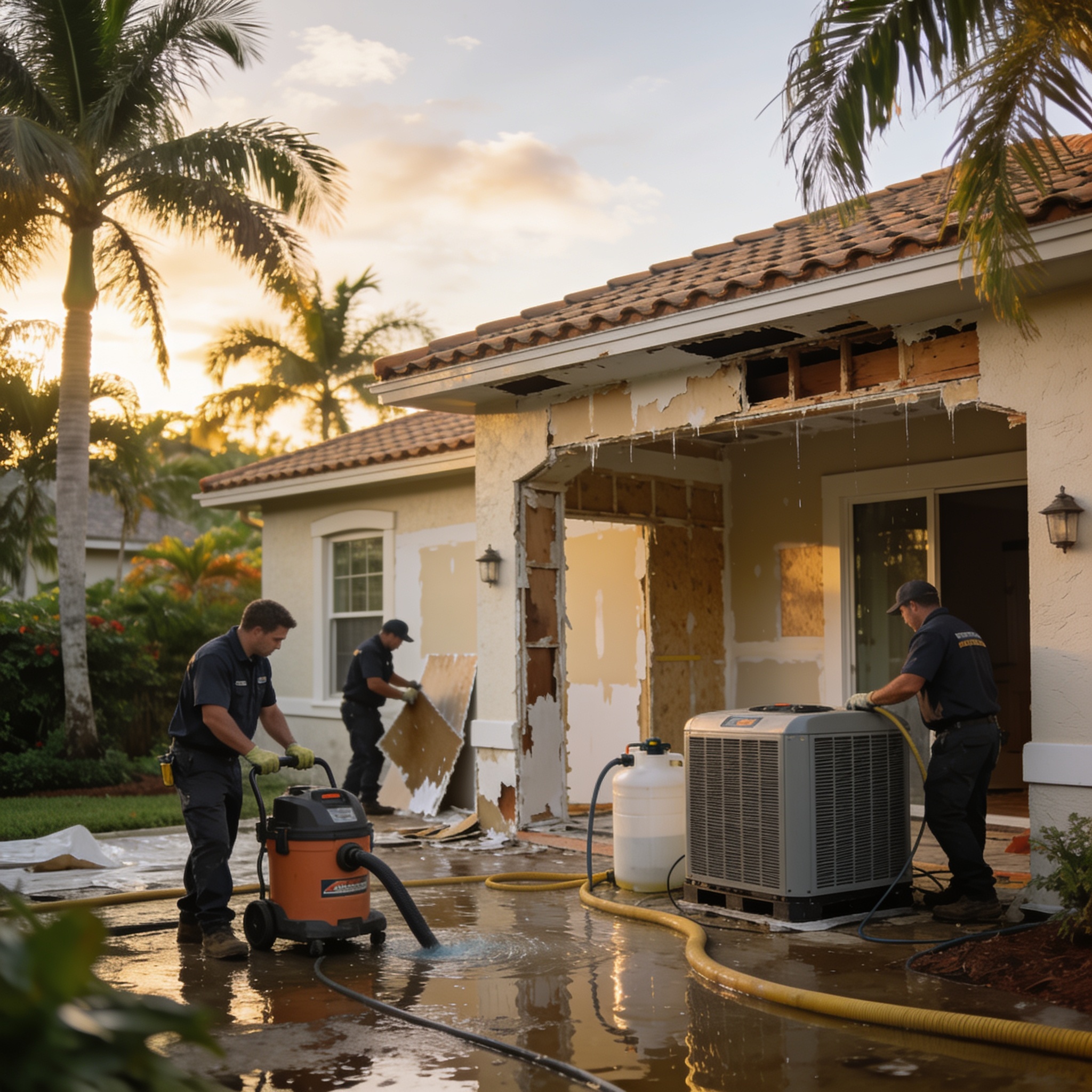
What Types of Water Damage Can Restoration Companies Handle in Sanibel?
Restoration companies serving Sanibel Island address every category of water intrusion recognized by the IICRC S500 standard, from clean-water supply-line breaks to hazardous Category 3 sewage and floodwater. Sanibel’s position as a barrier island in Lee County, FL, makes it uniquely vulnerable to storm damage and storm surge, which the National Flood Insurance Program (NFIP) classifies as one of the most destructive flood sources a coastal home or business can face. Hurricane Ian’s 2022 landfall pushed surge levels exceeding 12 feet across parts of Sanibel Island, saturating structural assemblies with contaminated Gulf water and causing widespread structural damage throughout the community.
Common water loss events handled by a local restoration company include burst pipes, appliance failures, roof intrusions, sewage backups, and catastrophic flood water damage from named storms. High humidity in Southwest Florida accelerates secondary damage, meaning even a slow leak behind a wall can trigger mold growth within 24 to 48 hours according to FEMA guidance. Certified technicians use moisture meters and thermal imaging cameras to map the full extent of the damage and mold risk before any cleanup begins. Reliable restoration in Sanibel Island depends on this thorough assessment process to ensure nothing is overlooked before work begins.
What Water Damage Restoration Services Are Available in Sanibel, FL?
A full-service restoration company operating on Sanibel Island typically provides emergency water extraction, structural drying, licensed mold remediation, sewage cleanup, contents packout, and complete reconstruction under one project umbrella. Having integrated damage services in Sanibel matters because the Causeway creates logistical constraints — every crew, piece of equipment, and drying system must be staged and transported efficiently to prevent delays that worsen damage. A skilled restoration team coordinates each phase to restore your home or business quickly to its pre-damage condition as efficiently as possible.
Residential Water Extraction and Cleanup
Residential services cover water extraction from flooring, wall cavities, crawlspaces, and attic assemblies common in Sanibel’s older coastal construction. Technicians deploy industrial dehumidifiers and air movers calibrated to the island’s ambient humidity levels, which routinely exceed 80 percent during summer months. The goal is to return moisture readings to the dry standard defined by the IICRC before any damage repair or reconstruction begins.
Commercial Water Damage Restoration
Commercial properties — including the hotels, retail shops, and restaurants along Periwinkle Way — require an emergency restoration response that minimizes business interruption. Providers experienced with Lee County’s commercial building stock understand the combination of concrete-block construction and tile flooring that traps moisture in ways standard drying protocols must account for. Coordinated packout and contents restoration protects inventory and equipment during the remediation service process.
Sewage Cleanup and Mold Removal
Sewage cleanup requires EPA-registered disinfectants and full personal protective equipment because Category 3 water carries pathogens that pose serious contamination risks. Working with a qualified mold remediation company is frequently necessary following sewage events on Sanibel because floodwater deposits organic material that feeds mold spores rapidly in the subtropical climate. Certified mold inspectors conduct post-remediation verification to confirm clearance before reconstruction.
How Quickly Can Water Damage Restoration Companies Respond to Emergencies in Sanibel?
Most professional water damage restoration providers serving Sanibel offer 24/7 emergency water removal with an on-island or Fort Myers-staged crew that can arrive within one to two hours under normal road conditions. The Sanibel Causeway is the single access point, and post-storm closures — as occurred after Hurricane Ian — can extend response times significantly. Choosing a restoration company with pre-positioned equipment caches or relationships with Captiva Island and Fort Myers staging yards reduces that risk and improves emergency response for water damage situations across the island.
FEMA recommends beginning water mitigation within 24 hours to prevent mold growth and limit structural deterioration. Every hour standing water remains in contact with drywall, insulation, or wood framing increases the scope of the cleanup process and the ultimate cost of the project. Acting quickly is the most reliable way to prevent further damage to your home or business and to get your life back to normal as soon as possible.
What Is the Step-by-Step Process for Water Damage Restoration in Sanibel?
The restoration process follows a defined sequence: emergency contact, inspection and damage assessment, water extraction, structural drying, mold inspection and testing services, cleaning and sanitizing, and final reconstruction. This cleanup process aligns with IICRC S500 and S520 standards and ensures nothing is skipped in the rush to restore a home or business after a flood event. For all FL water damage needs in Sanibel, this structured approach is essential to achieving a thorough and lasting result.
Technicians begin with leak detection and thermal imaging to locate hidden moisture pockets behind walls and under slabs. Water extraction and structural drying run concurrently once the source is controlled, with daily moisture readings logged to track drying progress. The affected area is cleared for reconstruction only after readings meet the regional dry standard, which accounts for Sanibel’s baseline ambient humidity.
What Are the Signs of Mold Growth After Water Damage and How Is It Remediated in Sanibel?
Visible mold growth appearing as black or green discoloration, a persistent musty odor, and worsening allergy symptoms inside a home or business are the primary indicators that mold has taken hold after a water loss event in Sanibel. The State of Florida’s Department of Health notes that indoor mold can begin colonizing porous materials in as little as 24 to 48 hours when relative humidity exceeds 60 percent — a threshold Sanibel Island regularly surpasses without active climate control. Property owners who spot mold on walls, ceilings, or flooring after a water event should contact a certified remediation professional immediately rather than attempting to clean it themselves.
Professional mold remediation follows the IICRC S520 standard, which requires containment of the affected area, HEPA filtration, physical removal of contaminated materials, and application of antimicrobial treatments. Mold remediation services on Sanibel must account for the island’s salt-air environment, which can compromise standard building materials and create additional substrate for mold damage. Post-remediation clearance testing by certified mold inspectors confirms that mold spores have been reduced to acceptable indoor air quality levels.
Why Choose a Professional for Water Damage Restoration in Sanibel Instead of DIY?
Professional water damage restoration technicians carry IICRC certifications, commercial-grade drying equipment, and the documentation systems that insurance carriers require — none of which a DIY approach can replicate. Sanibel’s high humidity means that consumer-grade fans and dehumidifiers cannot achieve the drying rates necessary to prevent mold growth within the critical 48-hour window. Incomplete drying hidden behind walls or under flooring often results in mold damage discovered months later, at far greater cost.
A professional water damage restoration service also produces a detailed moisture log, photo documentation, and a scope of work that supports a smoother insurance claim process. Attempting to restore your property without this paper trail can result in claim denials or underpayment. For a barrier island community where rebuild costs already run higher than mainland Lee County averages, that financial risk is significant. Beyond the financial considerations, professional restoration in Sanibel Island preserves the unique character of island living that makes these properties so valuable in the first place.
Do Water Damage Restoration Companies in Sanibel Assist With Insurance Claims?
Most established restoration companies offering water damage restoration in Sanibel work directly with your insurance carrier, providing adjuster coordination and detailed damage documentation as a standard part of their service. Given that a large share of Sanibel properties carry NFIP flood policies in addition to standard homeowners coverage, navigating dual-claim scenarios is a routine part of the restoration process for experienced local providers. Accurate moisture readings, thermal imaging reports, and itemized scopes of work are the documents adjusters need to process claims efficiently.
Homeowners and business owners should notify their insurer immediately after a water loss and request that the restoration company document all damage before any materials are removed. FEMA advises policyholders to keep receipts for all emergency mitigation expenses, as these costs are often reimbursable under both NFIP and private flood policies.
How Much Does Water Damage Restoration Cost in Sanibel, FL?
Water damage restoration costs on Sanibel Island typically range from $1,500 for a minor contained leak to well over $50,000 for whole-home flood damage requiring full structural drying, mold remediation, and reconstruction. The national average for water damage cleanup sits near $3,000 according to industry benchmarks, but Sanibel water damage projects involving island logistics, elevated labor costs, and the frequency of Category 3 storm-surge events push local projects toward the higher end of that range.
| Damage Scope | Estimated Cost Range | Key Variables |
|---|---|---|
| Minor leak / single room | $1,500 – $4,000 | Category 1 water, limited materials affected |
| Moderate flood / multiple rooms | $5,000 – $20,000 | Structural drying, flooring and drywall removal |
| Severe storm surge / whole home | $25,000 – $100,000+ | Category 3 contamination, mold remediation, full rebuild |
Factors that increase cost include the presence of black mold requiring full mold remediation, sewage contamination, the need for contents packout, and reconstruction of load-bearing elements. Always obtain a written estimate that separates mitigation from reconstruction so each phase can be submitted to the appropriate insurance policy.
What Areas Do Water Damage Restoration Services Cover Near Sanibel, FL?
Restoration services in Sanibel typically extend across the greater Southwest Florida region, including Captiva Island, Fort Myers, Cape Coral, Bonita Springs, and communities throughout Lee County and into Collier and Charlotte counties. Providers based in or near Fort Myers can reach Sanibel Island via the Causeway and often serve Captiva Island as a natural extension of the same barrier-island corridor. This regional reach matters during large-scale disaster events when local crews are overwhelmed and mutual-aid resources from Fort Myers-area staging yards must be deployed.
Residents of Sanibel searching for a remediation company should confirm that the provider has active experience on the island specifically, not just general Lee County coverage. Island-specific knowledge — including familiarity with Sanibel’s flood zone maps, building department requirements, and Causeway logistics — directly affects how efficiently flood cleanup and restoration in Sanibel Island proceeds after a major water loss. The communities in Lee County that recover most successfully from water damage events are those whose residents act quickly and partner with restoration professionals who understand local conditions.
Frequently Asked Questions About Water Damage Restoration in Sanibel
The following frequently asked questions about water damage restoration address the concerns property owners most commonly raise when dealing with a water loss event on Sanibel Island. These questions about water damage restoration cover topics ranging from response times to mold risks, and the asked questions about water damage below reflect real scenarios encountered by homeowners and business owners throughout the island community.
How do I know if my Sanibel home has hidden water damage?
Warped flooring, peeling paint, staining on ceilings or walls, and a musty odor are common indicators of concealed moisture. A professional inspection using thermal imaging and moisture meters can identify hidden saturation that visual checks miss entirely. If you spot mold or detect an unusual odor after a water event, scheduling mold inspection and testing services promptly can prevent the problem from spreading further.
Is Sanibel water damage covered by standard homeowners insurance?
Standard homeowners policies typically cover sudden and accidental losses such as burst pipes but exclude rising floodwater. Sanibel water losses caused by storm surge generally require a separate NFIP or private flood policy for coverage. Smoke damage from fires that occur alongside or after a water event may be covered under a separate peril in your homeowners policy, so review your coverage carefully with your agent.
What should I do immediately after discovering water damage?
Shut off the water source if possible, document the damage with photos and video, contact your insurer, and call a professional restoration service immediately. Taking these steps quickly helps prevent further damage and supports a stronger insurance claim. Storm damage cleanup should begin as soon as conditions are safe, as delays allow moisture to penetrate deeper into structural assemblies and increase overall restoration costs.
What Should You Do to Prepare for Potential Flood and Water Damage in Sanibel?
Proactive preparation is the most effective way to limit damage to your home or business on Sanibel Island, where FEMA designates the majority of the island as Special Flood Hazard Area Zone AE or VE. Zone VE properties face the highest risk, with wave action compounding storm surge, and NFIP requires flood insurance for federally backed mortgages in these zones. Reviewing your policy limits annually and confirming that both building and contents coverage are adequate for current rebuild costs is a critical first step.
Before storm season, document your property with photos and video, store important documents off-island or in waterproof containers, and identify a vetted restoration company to call the moment a water loss occurs. Installing backflow preventers, maintaining gutters and roof penetrations, and elevating HVAC and electrical systems above base flood elevation all help prevent mold growth and reduce the scope of any future cleanup. The charm of island living comes with real weather risks, and being prepared means you can get your life back to normal far more quickly after a damaging event. Having the contact information for a trusted professional FL water damage restoration service saved in your phone means you can initiate emergency response within minutes of discovering damage — a head start that can save tens of thousands of dollars in secondary losses and give you the best chance of returning your property to its pre-damage condition.