How to Stop a Ceiling Leak: A Step-by-Step Emergency Repair Plan
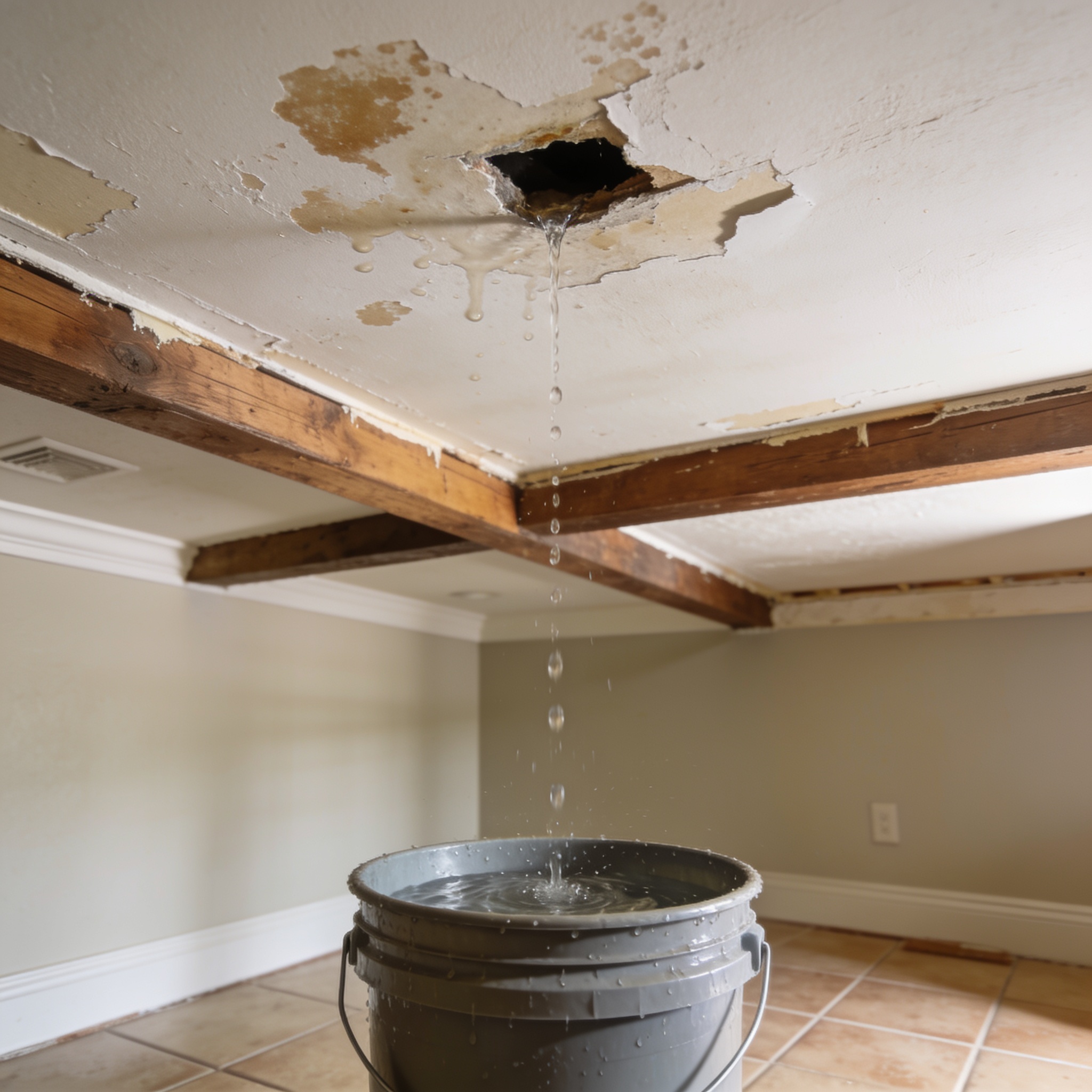
You can stop a ceiling leak immediately by placing a bucket under the drip and puncturing the center of the bulge with a screwdriver to relieve pressure, which typically costs between $150 and $500 for professional leak repairs in Southwest Florida. Taking these steps you should take to stop a ceiling leak prevents the water from spreading across your drywall and causing secondary structural issues. Understanding how to stop a leak in the ceiling quickly is essential for homeowners in Lee, Collier, and Charlotte counties, where sudden tropical downpours often expose vulnerabilities in roofing systems, including various roof-related issues that require immediate attention.
Key Takeaways
- Immediate containment using a bucket and pressure relief is the first step to prevent ceiling collapse.
- Identifying the source of the leak requires checking both the roof exterior and the plumbing system above.
- Professional restoration company services are necessary if the water damage covers a significant area or involves electrical components.
- Florida homeowners should document all damage with photos before beginning any emergency repairs for insurance purposes.
- Preventative maintenance, such as annual roof inspections, is the most effective way to avoid costly water damage restoration.
What Are the Common Causes of Ceiling Leaks?
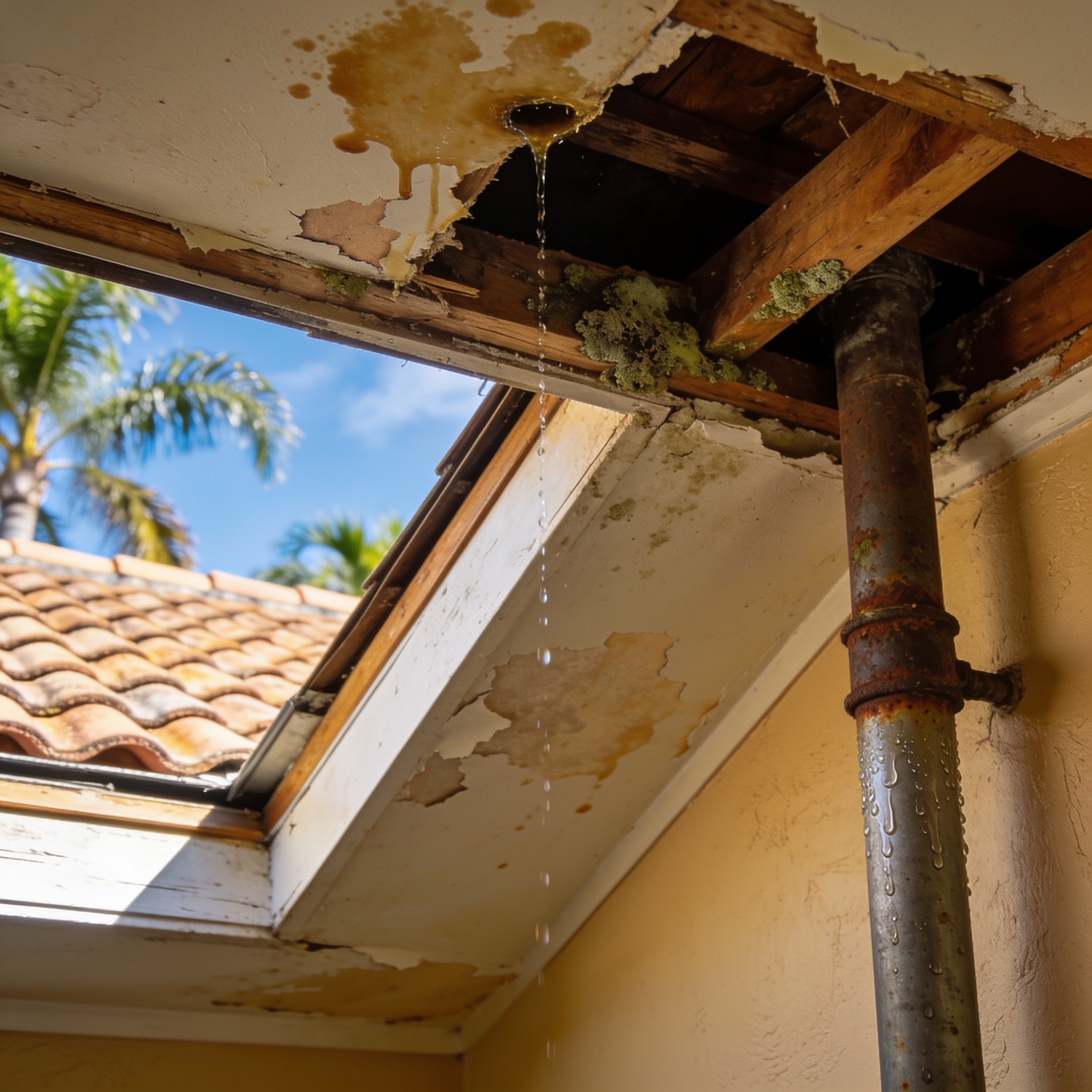
Common causes of a leak in the ceiling in SWFL include compromised roof shingles from hurricane winds, clogged gutters, or a faulty plumbing pipe in an upstairs bathroom. In our humid climate, condensation from HVAC ducts can also mimic a roof leak by saturating insulation. High-velocity winds during hurricane season frequently lift roof tiles, allowing water to penetrate the underlayment and saturate the ceiling, potentially leading to indoor flooding.
What Are the Signs of a Serious Ceiling Leak?
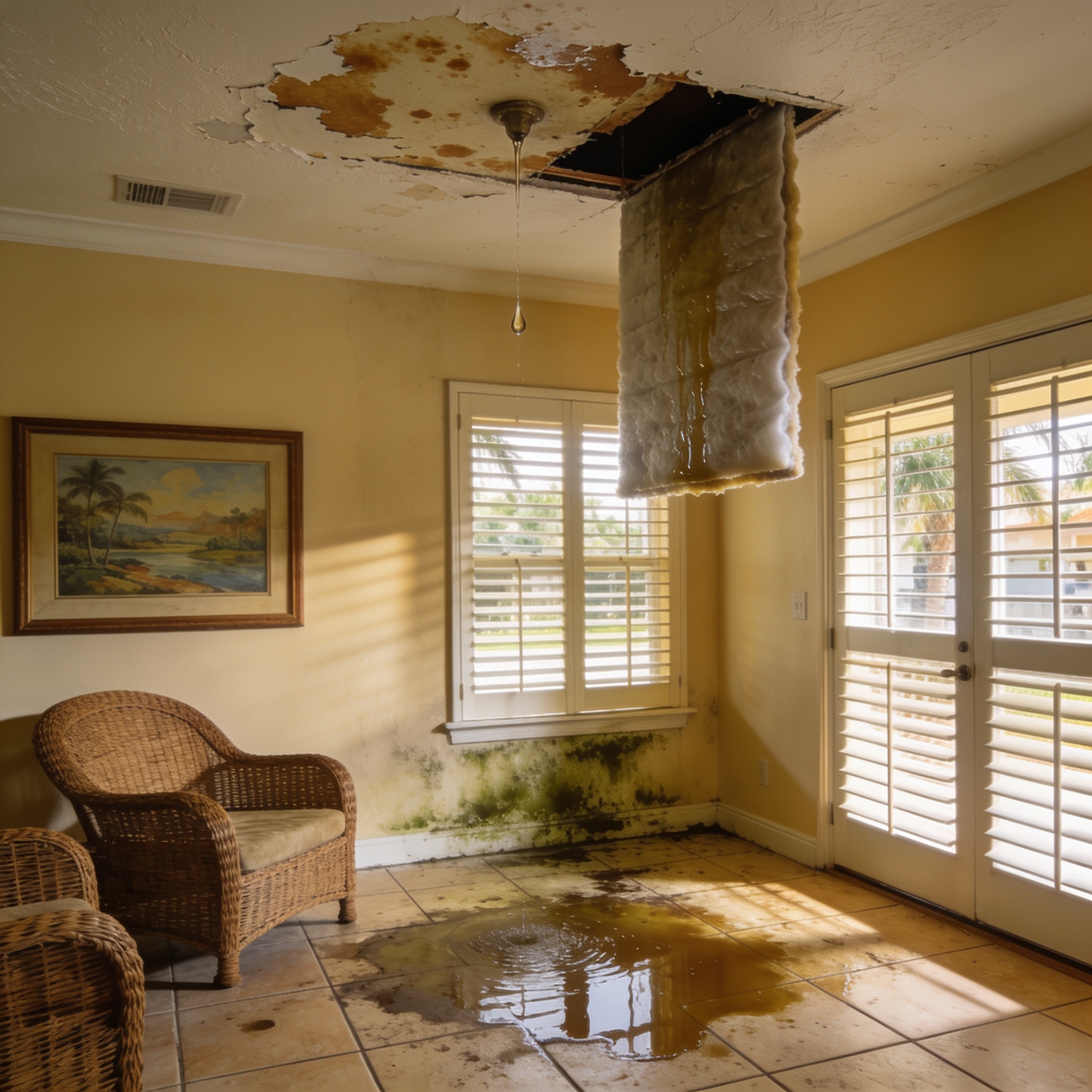
Warning signs of a serious leak in the ceiling include discolored brown rings, a musty odor, or visible sagging drywall that indicates water pooling above the surface. If you notice a crack forming in the plaster or your ceiling is bulging, it is a critical structural hazard that requires immediate attention. You must act quickly because mold can begin to grow within 24–48 hours of moisture exposure.
How Do You Find the Source of a Leak in the Ceiling?
Finding the source of the leak involves tracing the path of the water from the ceiling upward to the roof or plumbing line. If the leak occurs during a rainstorm, the issue is likely a roof leak, whereas a steady drip suggests a plumbing issue. Consulting a professional roofer or plumber is the safest way to ensure the source is fixed permanently.
What Should You Do Immediately If Water Leaks Through Your Ceiling?
The 5 steps to fix water damage when a ceiling starts leaking are as follows:
- Contain the water: Place a bucket directly under the water dripping to protect your floors and furniture.
- Relieve pressure: Use a screwdriver to puncture the center of the sagging drywall to prevent a larger collapse.
- Protect your home: Move belongings away from the area and cover electronics to avoid water and electricity hazards.
- Shut off utilities: If water is near a light fixture, turn off the power at the breaker box and call an electrician.
- Document the damage: Take clear photos of the ceiling water and the source for your insurance provider.
What Can You Put on Your Ceiling to Temporarily Stop a Leak?
You can temporarily stop a leaky area from the top side by using a heavy-duty tarpaulin secured with sandbags or wood strips. Never attempt to patch a leak from the inside with tape or caulk, as this traps water and leads to further structural decay. Applying a tarp over the exterior roof area is the only effective temporary fix before a professional arrives.
How Do You Stop a Ceiling from Leaking Water Permanently?
Permanent leak repairs require replacing damaged shingles, sealing roof flashing, or repairing a leaky pipe behind the wall. Once the source is fully resolved, you must remove wet insulation and perform thorough drywall restoration to ensure the area is completely dry. Professional restoration services are often required to ensure the repair meets local building codes and prevents future mold growth.
Can You Ignore a Small Ceiling Water Leak?
Ignoring a minor drip is dangerous because water damage in your ceiling often hides extensive rot and mold growth behind the surface. Even a small leak can compromise the structural integrity of a joist over time. Small stains are often just the tip of the iceberg regarding the total water damage behind the drywall.
Is It Safe to Repair a Ceiling Leak Yourself, or Should You Call a Professional?
It is generally safer to call a professional restoration expert for a leaky ceiling repair because of the risks associated with electrical wiring and mold remediation. If you are not experienced with roofing or plumbing, you risk personal injury or worsening the damage. Professional water damage restoration experts have the specialized equipment to dry out your home effectively.
Will Your Home Insurance Cover Water Damage from a Ceiling Leak?
Home insurance typically covers sudden, accidental water damage, but coverage for a water leak in your ceiling often depends on whether the damage resulted from a lack of maintenance. You should review your policy regarding roof-related claims and contact your provider immediately after the incident. Documentation of the initial leak is vital for a successful claim process under your Florida homeowner’s policy.
| Repair Type | Estimated Cost Range | Urgency Level |
|---|---|---|
| Minor Pipe Patch | $150 – $400 | High |
| Roof Shingle Repair | $300 – $800 | High |
| Drywall Restoration & Repaint | $200 – $600 | Medium |
How Can You Prevent Future Ceiling Leaks?
Preventative maintenance, such as cleaning gutters and scheduling annual roof inspections, is the best way to protect your property from future water damage. Ensure your plumbing pipes are insulated and check your attic for signs of moisture after heavy storms. Regular inspections by a licensed contractor are the most effective strategy to prevent mold and structural failure in your home.
Frequently asked questions
Below are common concerns regarding water damage and ceiling maintenance in Southwest Florida.
How long does it take for mold to grow after a ceiling leak?
Mold can begin to colonize damp surfaces within 24–48 hours, making prompt water damage restoration essential for your health and home safety.
Should I turn off my water if I see a ceiling leak?
Yes, if the leak is constant and appears to be coming from a plumbing source, shutting off your main water supply will stop the flow until a plumber arrives.
Can I paint over a ceiling water stain?
You should only repaint over a stain once the source is fixed and the area is completely dry, otherwise, the moisture will continue to damage the plaster.
Is a ceiling leak considered an emergency?
Yes, any active water leak in your ceiling is an emergency because of the potential for electrical shorts, ceiling collapse, and rapid mold development.
Do I need a permit for ceiling repairs?
Minor drywall repairs usually do not require permits, but significant structural repairs or roof replacements in Florida require adherence to local building codes and permitting.
See also: Water Damage Restoration
See also: Water Damage Restoration
See also: Water Damage Restoration
Our editorial team verifies licensing and reviews for every restoration company in the directory and writes practical, Florida-specific guides to help homeowners act fast and protect their insurance claims after water, fire, mold or storm damage.