How Do You Control Humidity in Your Home Effectively?
You can effectively control humidity in your home by maintaining an indoor relative humidity between 30% and 50%, which is the optimal range recommended by the EPA to prevent structural damage and health risks in Southwest Florida. Managing the moisture in your home is critical for residents in Lee, Collier, and Charlotte counties, where the humid subtropical climate often pushes outdoor humidity well above 80% during hurricane season. By balancing your HVAC system settings and targeted ventilation, you can successfully manage the moisture in your air to protect your property investment. Understanding the relationship between temperature and humidity is the first step to ensuring the air inside the home remains comfortable.
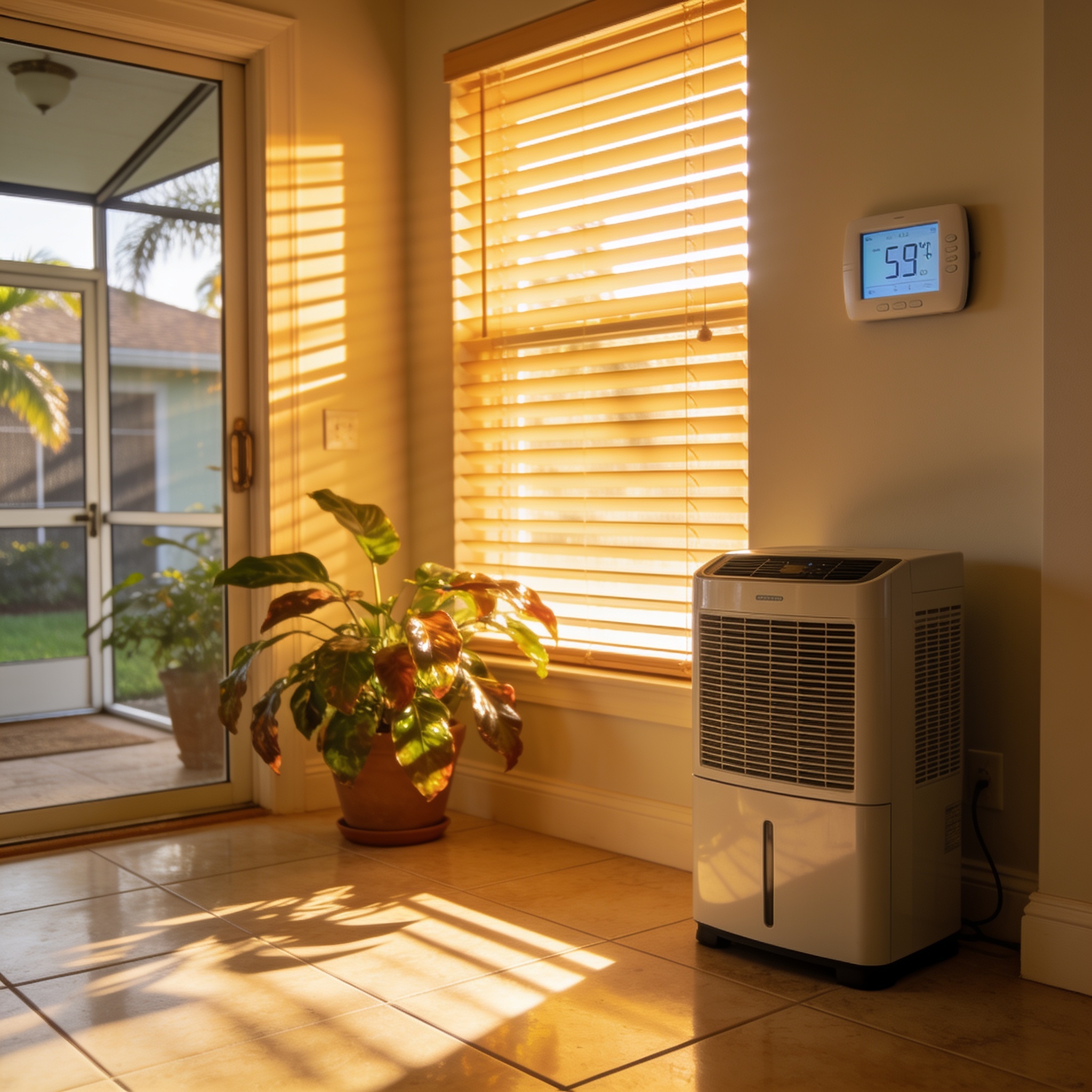
Key Takeaways
- Maintaining an indoor humidity level between 30% and 50% is essential to prevent mold growth and structural decay.
- High humidity in a house often leads to condensation on windows, musty odors, and potential water damage restoration sanibel needs.
- Proper HVAC maintenance and the use of a dehumidifier are the most effective ways to remove excess moisture from the air.
- Consistent humidity control helps lower utility bills by allowing your air conditioner to cool the home more efficiently.
- Southwest Florida homeowners should prioritize checking crawl spaces and attics for signs of excess moisture after heavy rain events.
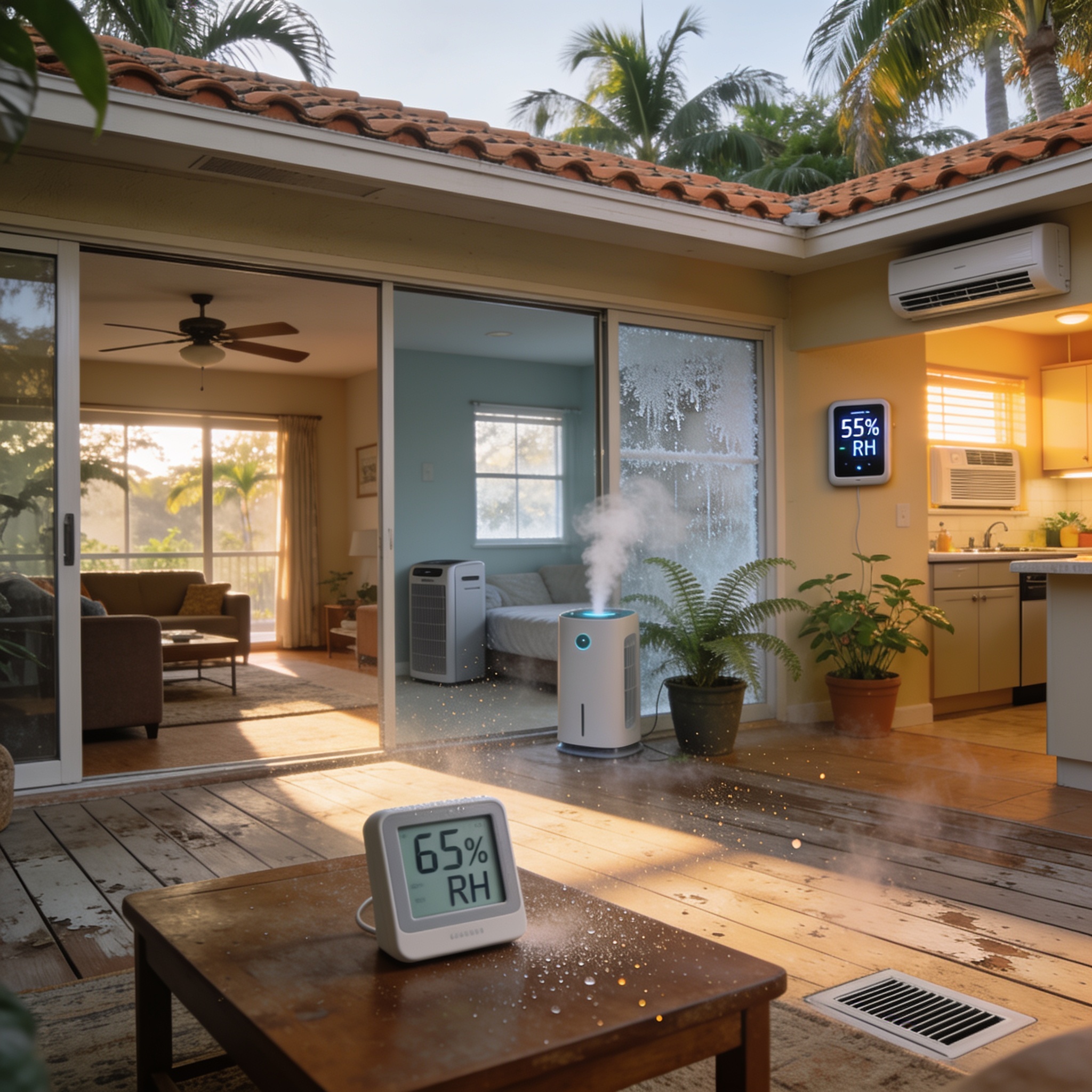
What Are the Ideal Humidity Levels for a Home (Summer, Winter, and Year-Round)?
The ideal relative humidity for a home remains consistent year-round, ideally staying between 30% and 50% to ensure a healthy indoor environment. While Florida experiences high humidity outdoors, keeping your indoor air within this range prevents the proliferation of dust mites and mold. Maintaining this specific range is the single most effective way to protect your home from long-term moisture damage. During the summer, your air conditioning system works double-duty to cool the air and remove moisture from the air simultaneously. In the winter, you must still monitor the humidity in your house to ensure it does not drop too low, which can cause wood flooring to crack or shrink. If the air is too dry, you may even need to add humidity to maintain comfort, as proper humidity is essential for protecting wooden structures.
What Are the Signs That Your Home’s Humidity Is Too High or Too Low?
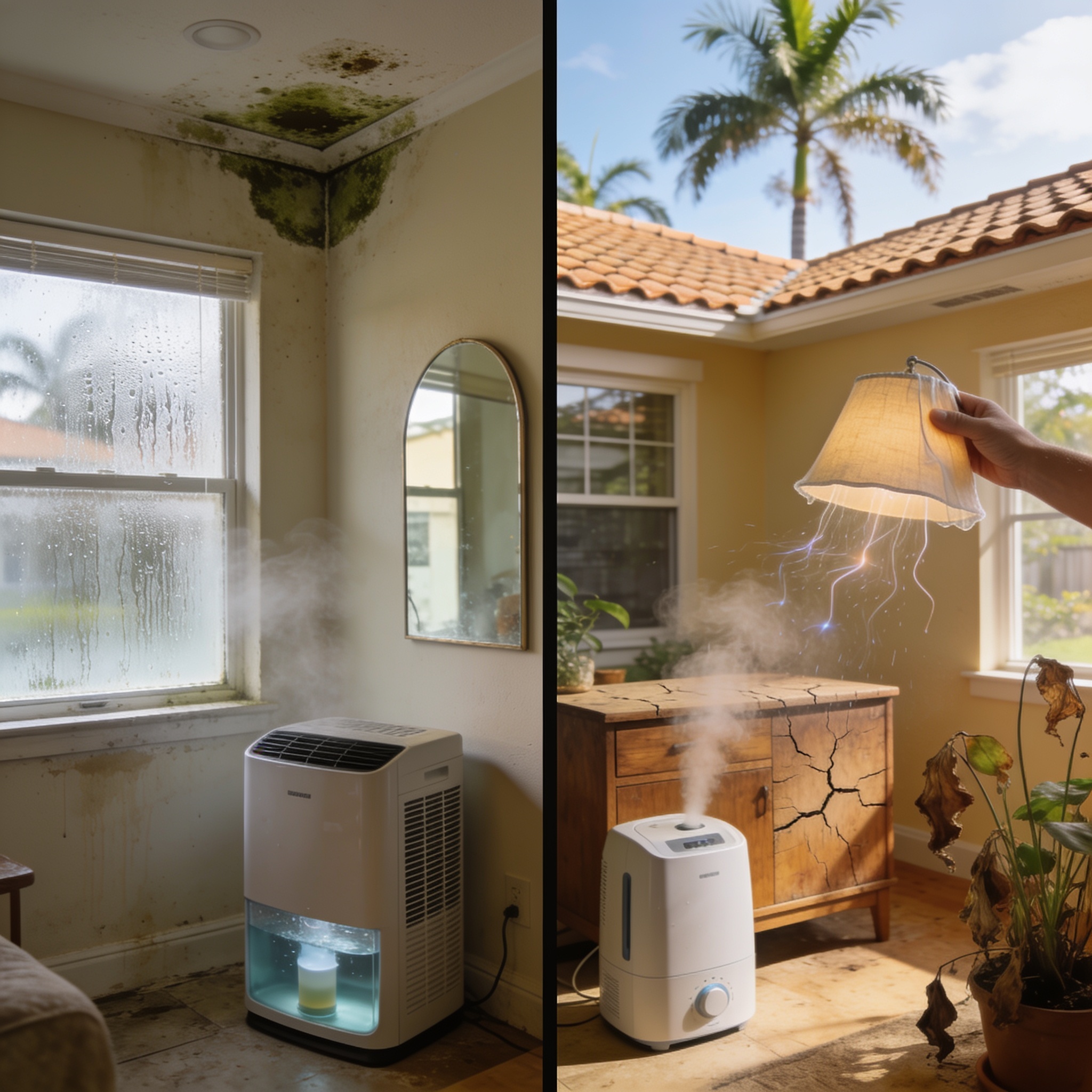
You can identify humidity problems by observing specific physical changes in your home’s environment. High humidity in a house typically manifests as visible condensation on windows, peeling wallpaper, or a persistent musty smell in closets and bathrooms. Visible signs of mold growth on walls or ceilings are clear indicators that your home’s humidity levels have exceeded safe thresholds. Conversely, if the air is too dry, you may notice static electricity, dry skin, or cracks in wooden furniture and trim. If you detect these signs, you may need professional water damage restoration port charlotte services to assess underlying moisture issues. Remember that humidity can cause significant damage if left unchecked, so monitoring humidity levels inside is vital to reduce moisture before it becomes a structural hazard.
Is 70% Humidity in Your House Too High — And What Are the Risks?
A relative humidity level of 70% is significantly too high for any indoor environment and poses a major risk for property damage. Allowing indoor humidity to remain at 70% or higher creates the perfect breeding ground for mold, mildew, and bacteria to thrive within 24 to 48 hours. Because warmer air can hold more water, high humidity levels can lead to rapid condensation on cool surfaces. Residents in flood-prone zones should be particularly vigilant, as high humidity can exacerbate the need for water damage remediation after a storm. When you notice your house so humid, it is time to take immediate action, as this can lead to mold and other health hazards.
What Causes High Humidity in a House, Including During Winter?
High humidity is caused by a combination of exterior climate factors and internal household activities that introduce water vapor into the air. Common causes of high humidity in a house include poor ventilation in kitchens and bathrooms, leaking pipes, and inadequate insulation in crawl spaces. Even during humidity in winter, moisture can remain trapped inside if your home is tightly sealed without proper exhaust fans. Activities such as cooking, showering, and running a clothes dryer without an external vent significantly increase the amount of humidity in the house. Furthermore, when heat and humidity combine, the moisture that the air holds increases, and as relative humidity increases, you may find that you need to reduce condensation on cold surfaces.
How Does Humidity Affect Your Health and Your Home’s Structural Integrity?
Humidity affects both your physical well-being and the structural integrity of your property by facilitating the growth of pollutants and rot. Excess moisture in your home can lead to severe structural issues, including wood rot, rusted metal fasteners, and the deterioration of your home’s foundation. From a health perspective, the EPA notes that high humidity encourages the growth of allergens, which can trigger respiratory issues or exacerbate existing conditions. If you notice signs of water intrusion, contacting a professional for water damage assessment is a proactive step to prevent further degradation. Monitoring humidity and prevent long-term damage is essential for your home’s longevity.
What Is a Good Humidity Level for Someone With COPD or Respiratory Conditions?
For individuals with COPD or respiratory conditions, maintaining a stable indoor humidity level between 30% and 45% is often recommended by health professionals. Keeping the air within this narrower range helps reduce the presence of airborne irritants like mold spores and dust mites that can trigger breathing difficulties. It is important to monitor these levels closely using a digital hygrometer, as both excessively dry and excessively humid air can cause discomfort. Always consult with your primary healthcare provider regarding specific environmental needs for your respiratory health.
How Can You Quickly Lower the Humidity in House Environments?
You can quickly decrease humidity by increasing ventilation and utilizing mechanical tools to remove moisture from the air. The most effective way to lower the humidity in your house is to use exhaust fans in the kitchen and bathroom during and after activities that generate steam. If you do not have a new dehumidifier, you can improve airflow by opening windows when the humidity outside is lower than the indoor humidity. For persistent issues, purchasing a dehumidifier is the most reliable method to maintain a stable environment and control the humidity effectively throughout the home.
Does Turning the Heating On Reduce Much Moisture?
Turning on your heating systems can help reduce humidity in your home because warm air has a higher capacity to hold moisture, which is then often processed by the HVAC system. While heating the air can make it feel drier, it does not actually remove the moisture unless the system is equipped with proper ventilation and dehumidification capabilities. In Southwest Florida, heating is rarely used, but if you do turn it on during a cold snap, ensure your HVAC system is functioning correctly to avoid trapping moisture. Relying solely on heat to control humidity is generally inefficient compared to using a dedicated dehumidifier for removing humidity.
How Does an HVAC System Help Control Humidity — And Is It Enough on Its Own?
Your HVAC system is designed to control humidity by cooling the air, which causes water vapor to condense on the cold evaporator coils and drain away. While a properly sized HVAC system is essential for moisture control, it is often not enough on its own during the peak of Florida’s humid summer months. If your air conditioner is oversized, it may cool the room too quickly without running long enough to effectively remove the moisture from the air. Regular maintenance, including cleaning air filters and checking condensate lines, is vital to ensure your system continues to function as a dehumidifier.
How Can You Prevent High Humidity From Returning and Keep Levels Stable Year-Round?
You can prevent high humidity from returning by sealing your home’s envelope and maintaining consistent airflow throughout the living space. Implementing a strategy of regular maintenance, such as cleaning rain gutters and inspecting the home for any hidden leak, is the best way to keep humidity levels stable year-round. Use a humidistat to monitor the humidity levels in your home and adjust your thermostat settings accordingly. Investing in proper insulation and ensuring that all exhaust vents lead directly to the outdoors are critical steps for long-term moisture management. These steps also help prevent moisture from seeping into your walls.
5 Proven Tips to Add Humidity or Control It
- Use Exhaust Fans: Always run exhaust fans in your bathroom during showers and in the kitchen while cooking to vent steam directly outside.
- Maintain Your HVAC System: Schedule annual professional inspections to ensure your air conditioner is effectively removing moisture from your home.
- Invest in a Dehumidifier: Place a high-quality dehumidifier in basements or rooms prone to dampness to keep the relative humidity below 50%.
- Shop Locally: Visit local home improvement stores to find the right equipment to manage your indoor air quality.
- Seal Air Leaks: Use weatherstripping and caulk to seal gaps around windows and doors, preventing humid outdoor air from entering your home.
Frequently asked questions
Below are common inquiries regarding moisture management in Southwest Florida homes.
Does a ceiling fan help reduce humidity?
A ceiling fan helps improve airflow and evaporation, but it does not actually remove moisture from the air like a dehumidifier does.
How often should I change my HVAC filter to help with humidity?
You should change your HVAC filter every 30 to 90 days, as a clogged filter restricts airflow and prevents the system from effectively removing moisture.
Can indoor plants increase the humidity in my house?
Yes, indoor plants release moisture through a process called transpiration, which can slightly increase humidity in smaller, poorly ventilated rooms.
Is it better to keep the AC running constantly?
Keeping your AC fan on “auto” is generally better than “on” for humidity control, as it prevents re-evaporating moisture from the coils back into the air.
What is the most accurate way to measure humidity?
The most accurate way to measure humidity is by using a digital hygrometer, which provides a real-time reading of the relative humidity in your home.
| Humidity Level | Status | Action Required |
|---|---|---|
| Below 30% | Too Dry | Consider a humidifier to add moisture to the air |
| 30% – 50% | Ideal | Maintain current settings |
| 50% – 60% | Caution | Increase ventilation to reduce moisture |
| Above 60% | High | Use dehumidifier immediately |
See also: Water Damage Restoration
See also: Water Damage Restoration
See also: Water Damage Restoration
Our editorial team verifies licensing and reviews for every restoration company in the directory and writes practical, Florida-specific guides to help homeowners act fast and protect their insurance claims after water, fire, mold or storm damage.