What to Do After a House Flooded: Essential Steps for Recovery
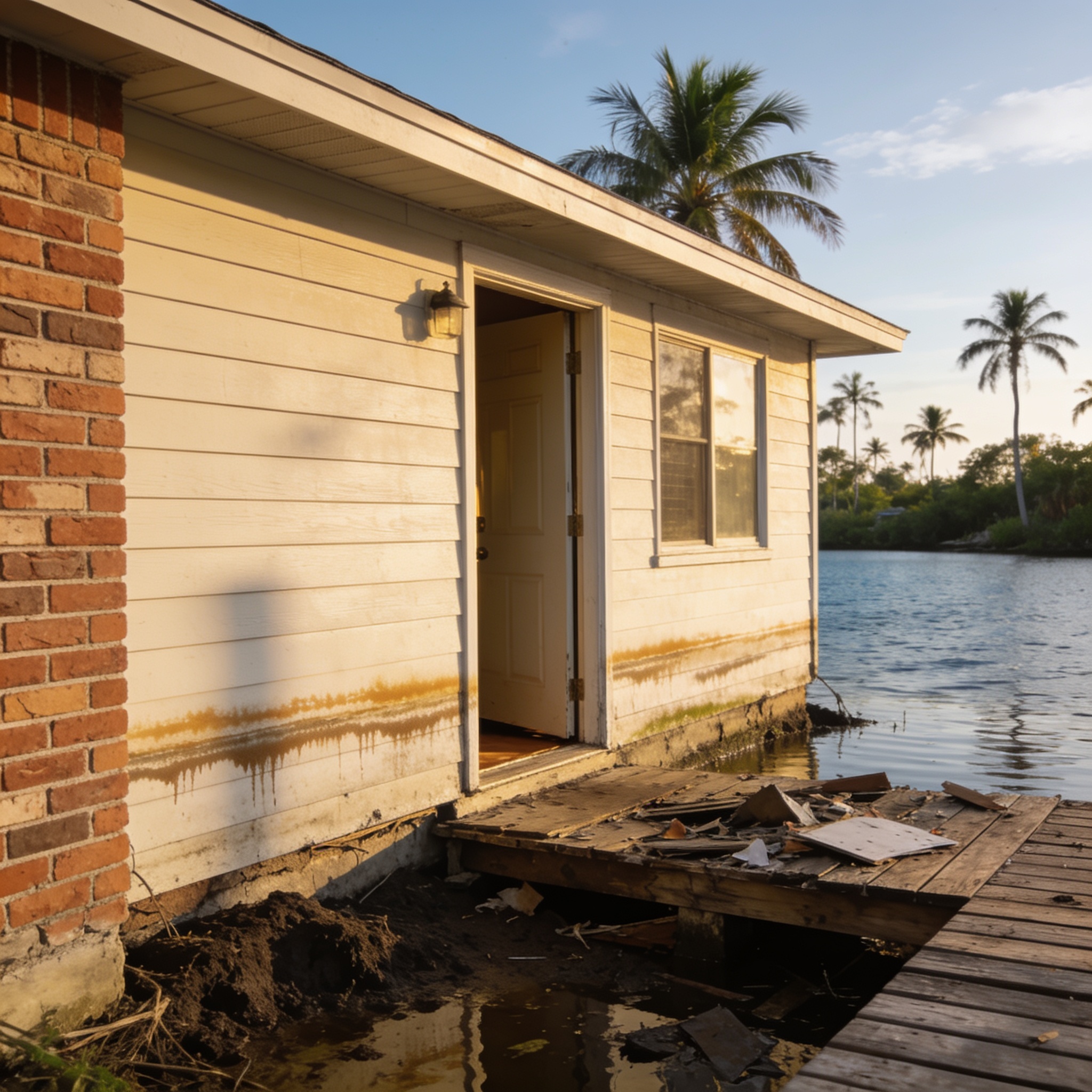
The most critical factor when deciding what to do after a house flooded is ensuring the structural integrity and electrical safety of the property before beginning any safety first protocols, as restoration costs in Southwest Florida often range from $3,000 to over $20,000 depending on the square footage and water category. When your flooded home is impacted by storm surges or heavy tropical rainfall, prioritizing safety and immediate mitigation prevents long-term structural decay. Following a structured recovery process is the only way to protect your structure and contents and health in the humid Florida climate. Effectively cleaning up after a flood requires a methodical approach to ensure all hazards are addressed.
Key Takeaways
- Prioritize safety first by turning off electricity and gas before entering a flooded property.
- Document all damage with photos and videos for your insurance claim before discarding any damaged items.
- Remove the drywall and insulation within 24-48 hours to prevent mold growth.
- Use fans and dehumidifiers to accelerate the drying process.
- Contact your insurance company immediately to initiate the filing process and document the floodwater source.
What Are the Immediate Steps to Take After a House Floods?
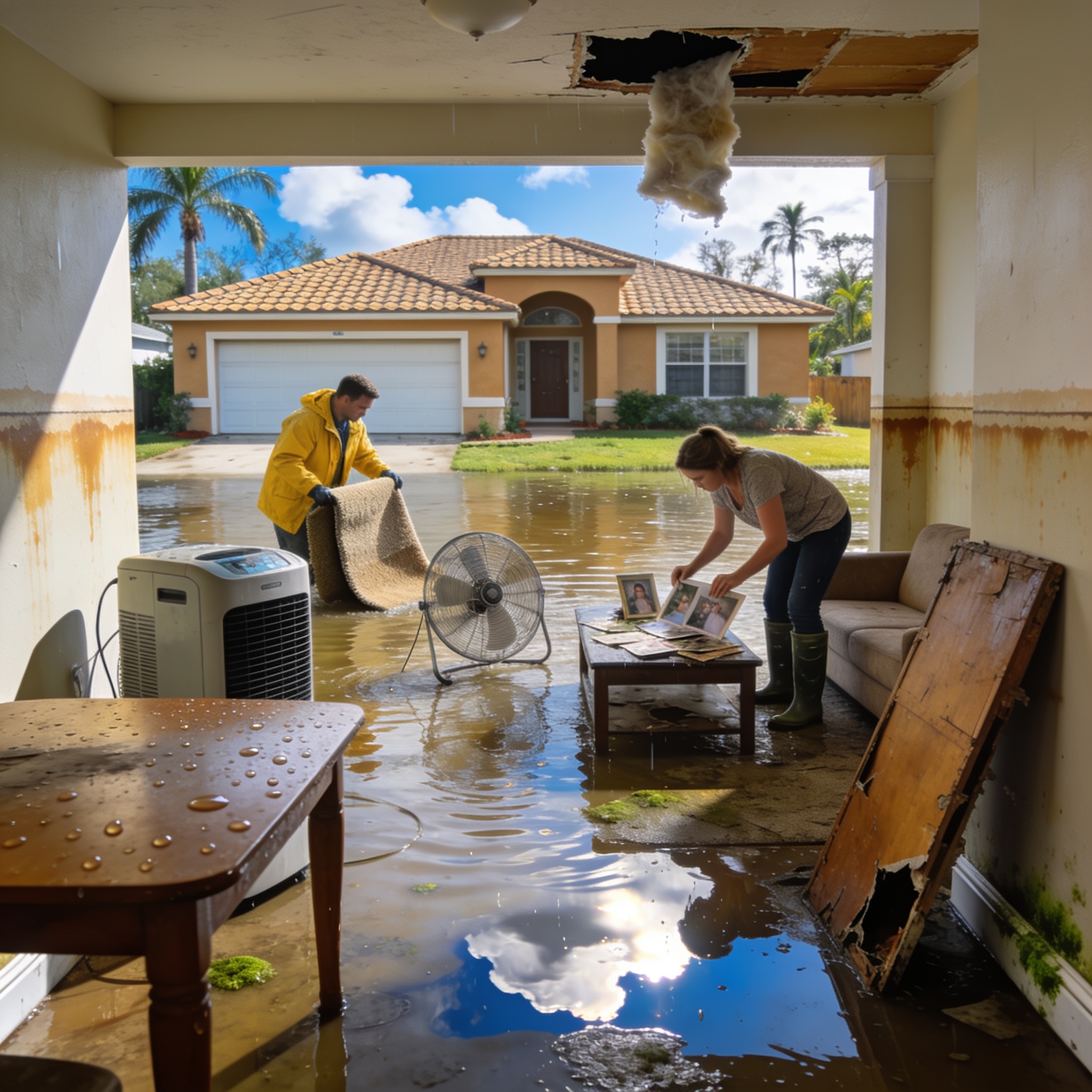
The first priority when your house is flooded is to ensure the environment is safe for entry and to prevent additional hazards. You must turn off the power at the main breaker panel if it is not located in standing water to avoid electrocution, as flipping a switch in a damp area can cause a spark. If you cannot safely reach the breaker, enter briefly to open doors only if it is safe, or call an electrician. Wear personal protective equipment, including rubber boots and gloves, to protect yourself from contaminants often found in floodwater. Even the average homeowner should avoid standing water until the power is confirmed off to prevent carbon monoxide poisoning from generators or electrical fires. Managing home floods safely is the first step in the overall cleanup process.
How Do You Remove Flood Water From Your House?
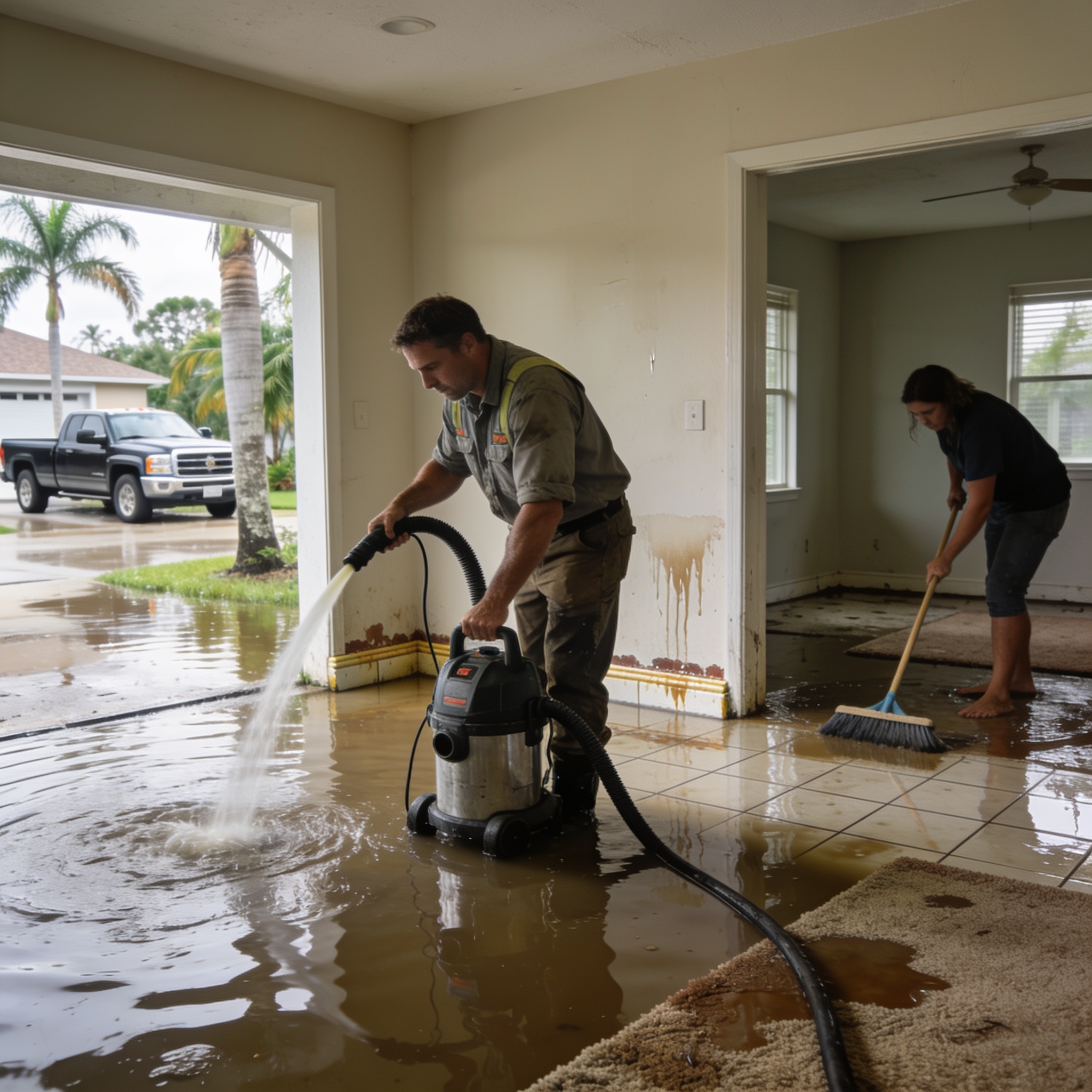
Removing flood water requires specialized equipment to remove standing water efficiently before it saturates the subfloor. You should utilize a pump or a high-capacity wet-dry shop vac to extract excess liquid from the living areas of the home. If you have inches of water, you may need to drill holes in the bottom of the wall plates to allow trapped moisture to escape. In Southwest Florida, where humidity remains high, relying on passive evaporation is insufficient to prevent severe water damage. For professional assistance, residents should look into Water Damage Restoration services to ensure the extraction process is thorough.
How Long Does It Take to Dry Out a House After a Flood?
The drying time for a flooded house typically ranges from three days to two weeks depending on the severity of the saturation and the ambient humidity levels. You must maintain a consistent indoor temperature and use industrial-grade fans and dehumidifiers to effectively lower the moisture content in the air. Monitoring the drying process with a moisture meter is essential to ensure that wall cavities and subfloors are truly dry. If the structure remains damp, you may need to seek Water Damage Restoration to prevent secondary issues.
What Are the Health Risks After a Flood, Such as Leptospirosis?
Health risks after a flood are significant because floodwater often acts as a carrier for bacteria, chemicals, and sewage. Exposure to contaminated water can lead to serious illnesses, including leptospirosis, which is transmitted through contact with water contaminated by animal urine. Always consult your local health department if you experience symptoms after flood cleanup. According to the EPA, disaster response efforts should always emphasize wearing protective gear to minimize contact with hazardous pathogens.
Do You Need to Remove Drywall After Flooding?
Removing drywall is a necessary step if the floodwater level rose above the baseboards, as this material acts like a sponge and traps moisture. You must remove the drywall and insulation at least 12 to 24 inches above the visible water line to ensure that all wet insulation and contaminated materials are completely removed. To properly remediate the wall cavity, you must cut the drywall carefully to expose the studs for thorough drying. Leaving wet materials behind creates a breeding ground for mold that can compromise the structural integrity of your home. If you are in a coastal area, consider consulting specialists in Water Damage Restoration to handle the removal safely.
How Do You Clean and Disinfect Your House After a Flood?
Cleaning and disinfecting your property requires a systematic approach to eliminate bacteria and mold spores left behind by the flood. You should clean all hard surfaces with a solution of soap and clean water, followed by a disinfectant to ensure the area is sanitary. Using simple soap and water is often the first step in removing surface-level grime before applying professional-grade sanitizers. Never mix bleach with ammonia, as this creates toxic fumes that are dangerous in enclosed spaces. The CDC recommends using a bleach solution of one cup per gallon of water for non-porous surfaces like tile or concrete.
What Items Should You Throw Away or Keep After a Flood?
Deciding what to keep depends on the material’s porosity and the level of contamination in the floodwater. Items that are porous, such as carpet, mattresses, upholstered furniture, and insulation, generally need to be discarded if they have been soaked by floodwater. Solid wood furniture may be salvageable if cleaned and dried properly, but items contaminated with sewage need to be professionally cleaned or disposed of for safety. Always document water touched items with photos before throwing anything away for your insurance claim.
How Can You Prevent Mold Growth After a Flood?
Preventing mold cleanup is the most important step in long-term flood recovery because spores can begin to colonize within 24 to 48 hours. You must open doors and windows to increase airflow and use fans and dehumidifiers to keep indoor humidity below 60 percent. Regular monitoring of the structure is vital, as high Florida humidity can cause mold to return even after initial cleaning. If you notice a musty smell, it is a sign that moisture is still trapped in the walls or flooring.
When Should You Hire Professional Help for Flood Damage Restoration?
Professional help is recommended when the damage is extensive, involves sewage, or if the homeowner is unable to physically manage the clean-up process. You should hire a licensed damage restoration company if the floodwater was deep or if you suspect the presence of mold in the HVAC system. Professionals have the industrial equipment to remove standing water and treat the home to prevent future issues. FEMA suggests that professional intervention is often faster and safer for large-scale disasters.
What Should You Do About Flood Insurance Claims?
Managing an insurance claim effectively requires detailed documentation and prompt communication with your insurance company. You must file a claim as soon as possible and take clear photos of all damage before you begin any cleanup or removal of materials. Keep a detailed log of all conversations with your adjuster and save receipts for any emergency repairs or supplies purchased. According to the National Flood Insurance Program (NFIP), failing to document damage properly can delay your recovery process significantly.
Frequently asked questions
Understanding the common concerns of homeowners helps streamline the recovery process after a disaster.
Does homeowner’s insurance cover flood damage?
Standard homeowner’s insurance policies typically do not cover flood damage; you generally need a separate policy through the National Flood Insurance Program or a private insurer.
What should I do if I find mold after a flood?
If you find mold, you should isolate the area, use protective gear, and contact a professional mold remediation specialist to ensure it is handled without spreading spores.
Can I use bleach on all surfaces?
No, bleach can damage certain materials like wood or metal and should only be used on non-porous surfaces that are safe for such chemicals.
How do I know if my electrical system is safe?
If your home has been flooded, you must call an electrician to inspect the wiring and panels before turning the power back on to avoid fire or shock hazards.
What is the role of an insurance adjuster?
An adjuster is sent by your insurance company to inspect the damage, verify the cause of the loss, and determine the payout amount based on your policy coverage.
| Action Item | Priority Level | Safety Requirement |
|---|---|---|
| Shut off electricity | Immediate | High |
| Check windows and doors | High | Medium |
| Document damage | High | Low |
| Remove standing water | High | Medium |
| Remove wet drywall | Medium | Medium |
| Disinfect surfaces | Medium | High |
Our editorial team verifies licensing and reviews for every restoration company in the directory and writes practical, Florida-specific guides to help homeowners act fast and protect their insurance claims after water, fire, mold or storm damage.