Cleanup After a Flood: Essential Steps for a Safe Home Recovery
Professional restoration for a flooded home in Southwest Florida typically costs between $3,000 and $15,000 depending on the square footage and the level of contamination, making the ability to perform a professional flood cleanup safely a critical financial priority. Whether you are dealing with storm surge in Lee County or heavy rainfall in Charlotte County, the speed and accuracy of your response dictate your long-term recovery costs. This guide provides the essential steps to manage flood damage while protecting your health and your property value. Every homeowner must understand the risks of returning to a home or business after a flood to ensure their safety.
Key Takeaways
- Prioritize safety by ensuring electricity and gas are shut off before entering a flooded home.
- Document all damage with photos and videos before beginning any cleanup work for your insurance claim.
- Remove standing water and saturated materials like drywall and insulation within 24-48 hours to prevent mold.
- Use personal protective equipment, including N-95 respirators, to avoid contact with sewage or other contaminants.
- Consult professional restoration services for significant structural damage or category 3 water contamination.
What Are the Essential Steps for Flood Cleanup
?
The first priority when you begin the recovery process is to contact your insurance company to document the extent of the flood damage before moving or discarding items. Once you have authorization, you must safely enter your property and assess the structural integrity of the walls and floors. If you notice sagging ceilings or shifting foundations, stay out until a professional inspector clears the area. To successfully clean up your home, ensure you have a clear plan for debris removal and the necessary tools for cleaning and repairing the structure.
The 7-Step Professional Recovery Checklist
Following a structured approach ensures you do not miss hidden pockets of moisture that lead to long-term issues.
- Safety Assessment: Turn off main power and gas lines to eliminate the risk of electrocution or explosion.
- Documentation: Take high-resolution photos and videos of every room and damaged item for your insurance claim.
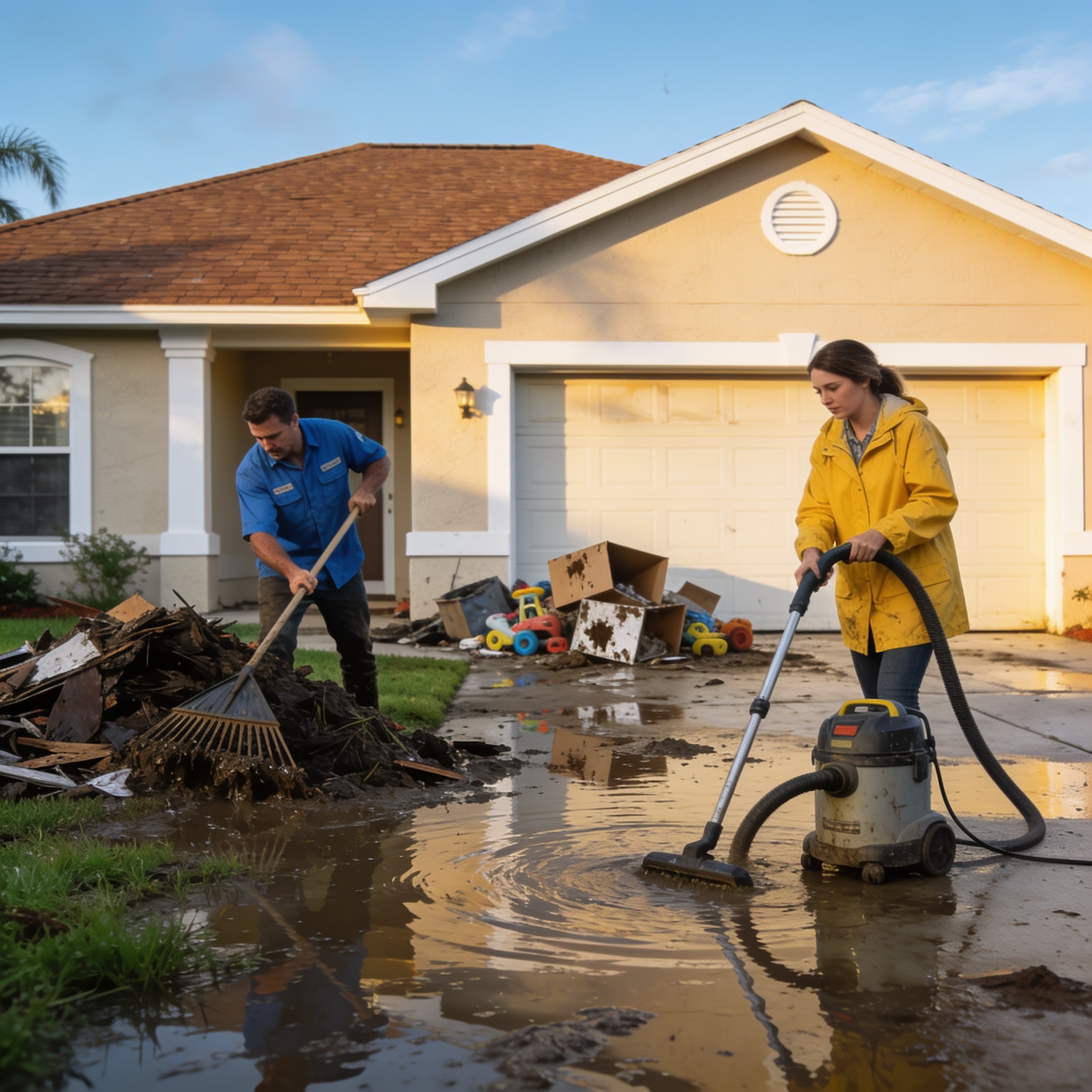
- Water Extraction: Use pumps or wet-dry vacuums to remove standing water from the floor.
- Debris Removal: Clear out mud, silt, and damaged household items that cannot be washed and disinfected.
- Material Removal: Cut out water-logged drywall, insulation, and porous materials like pressboard at least 12-24 inches above the high-water line.
- Cleaning and Sanitizing: Apply a disinfectant to all non-porous surfaces to neutralize bacteria.
- Drying: Use fans and dehumidifiers to speed up the drying process to ensure the structure reaches a moisture content level safe for reconstruction.
What Safety Precautions Should You Take During Mildew
Prevention?
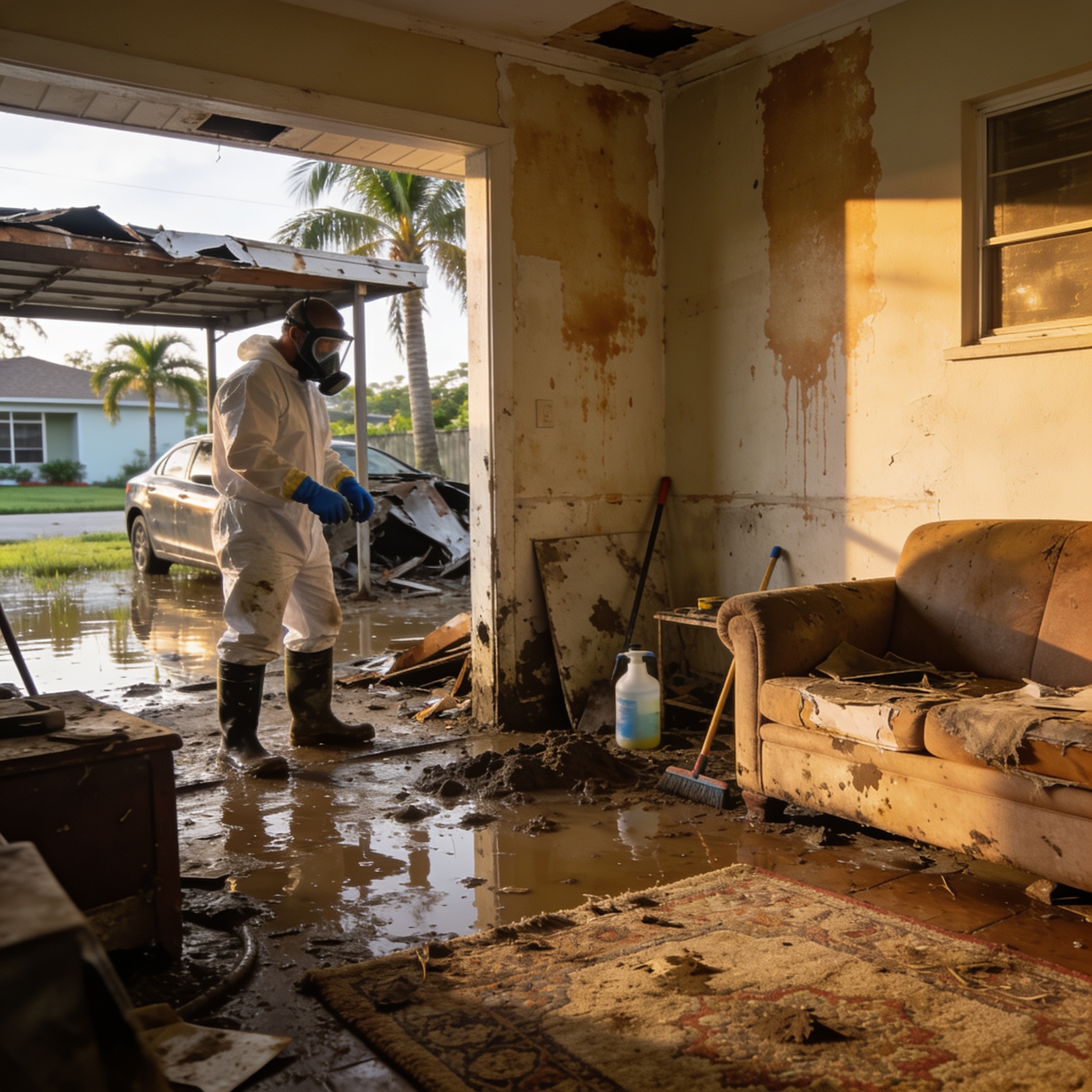
You must wear an N-95 respirator, rubber boots, and eye protection whenever you come into contact with floodwater to protect against airborne pathogens and chemical hazards. Flood water contains sewage, oil, or pesticides common in SWFL landscapes, which can contaminate your skin and lungs. Because flood water contains potential hazards, you should contact your local health department for guidance on safety protocols. Never mix bleach with ammonia, as this creates toxic fumes; always use cleaning agents in well-ventilated areas. Be aware that items like heavy rugs or antique furniture may need to be professionally cleaned to avoid health risks.
What Contaminated Items Can Be Saved or Should Be Thrown Away?
Any porous material that has absorbed flood water, such as carpet, padding, mattresses, and upholstered furniture, must be discarded because it cannot be fully sanitized. Items made of solid wood or metal may be salvageable if they are cleaned and dried thoroughly within 48 hours. If you are unsure about an item’s safety, the United States Environmental Protection Agency (EPA) suggests erring on the side of caution to prevent future indoor air quality issues. If an item is contaminated with flood residue, it is often safer to dispose of it during your flood recovery efforts.
| Item Category | Action Required |
|---|---|
| Drywall & Insulation | Remove and discard |
| Solid Wood Furniture | Clean, disinfect, and dry |
| Carpet & Padding | Remove and discard |
| Hard Plastic/Metal | Clean and disinfect |
| Clothing/Linens | Wash with hot water and detergent |
What Cleaning Methods and Products Should You Use?
To effectively clean and disinfect surfaces, mix bleach with water (1 cup per gallon), but only after all debris has been scrubbed away with soap and water. The cleaning process is ineffective if you do not first remove the mud and silt that harbor bacteria. For laundry, use a heavy-duty detergent in your washing machine to sanitize fabrics affected by the flood. For specialized needs, such as water damage restoration, ensure your cleaning company uses EPA-registered biocides.
How Long Does It Take to Dry Your Home?
The drying process typically takes between three days and two weeks depending on the humidity levels in Southwest Florida and the efficiency of your equipment. You must use fans and a high-capacity dehumidifier to pull moisture out of the structural framing throughout the house. If you live in a flood zone, consider seeking Water Damage Restoration services immediately to shorten this window.
How Can You Prevent Mold and Spores After a Flood?
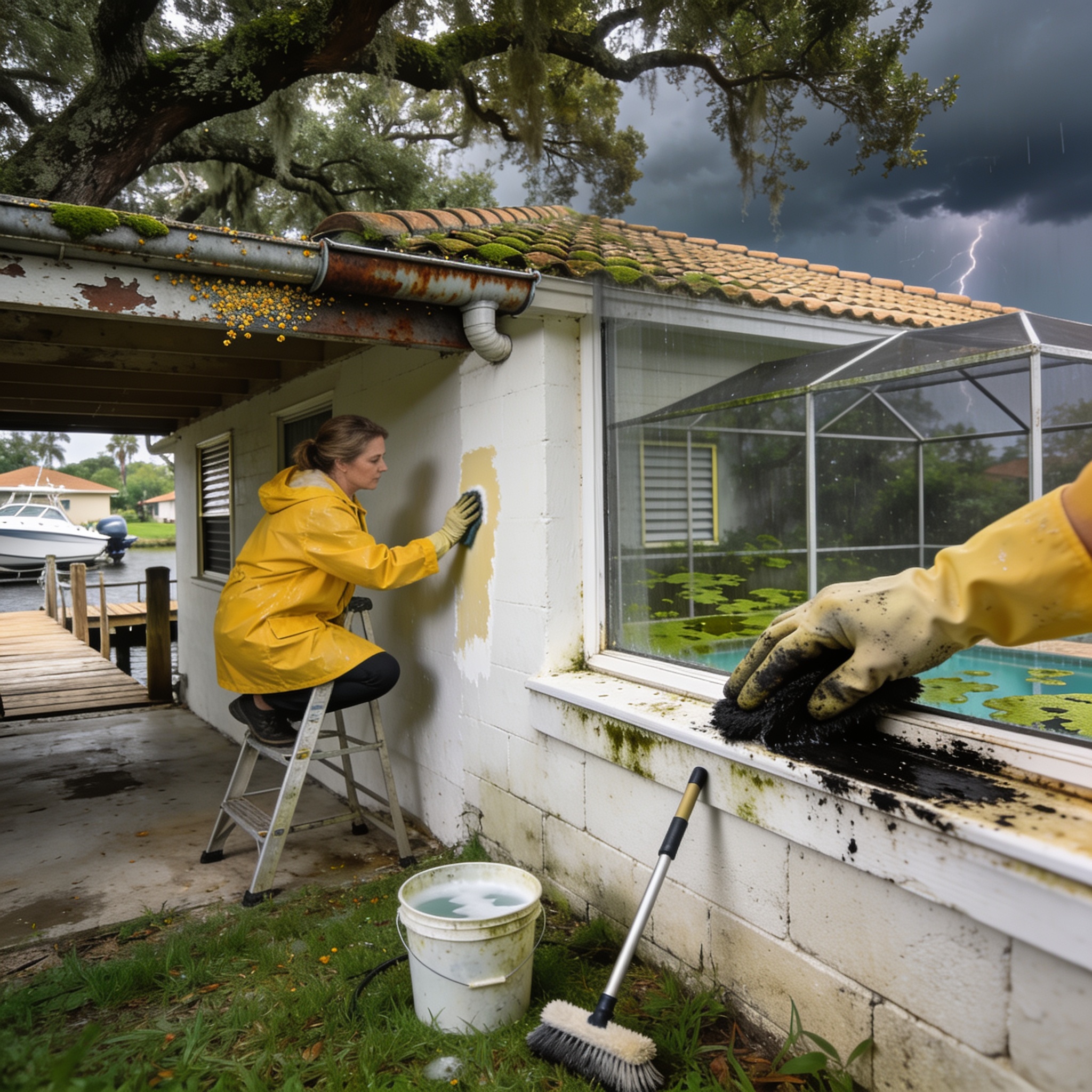
Mold growth begins within 24 to 48 hours of water exposure, so you must clean and dry the affected area immediately to stop mold spores from colonizing. Open doors and windows to increase airflow if the outdoor humidity is lower than the indoor humidity. If you find significant growth, you may require professional remediation, especially for Water Damage Restoration where heat and humidity accelerate the process. Check with the department of health for specific advice on handling toxic growth.
Should You Hire a Cleaning Company
, or Can You Do It Yourself?
You should hire a professional if the flood involved sewage or if the water has been standing in your home for more than 48 hours. Professionals have the industrial-grade equipment required to safely handle hazardous waste and deep-clean structural components. Organizations like Team Rubicon may also provide assistance in disaster-stricken areas. Attempting to manage a major flood alone can lead to health risks and denied insurance claims due to improper remediation.
How Much Does It Cost to Repair?
The average cost to clean a basement after a flood ranges from $2,000 to $10,000, depending on the severity of the water damage and the amount of contaminated items that need to be removed. This cost includes labor, waste disposal fees, and the rental of industrial drying equipment. Always obtain a written estimate from a reputable restoration firm before authorizing any work. Proper documentation is essential for your insurance claim when dealing with property damaged by water.
How Long Does the Entire Cleanup Process Take?
The total cleanup process can take anywhere from a few weeks or even months depending on the extent of the damage and the availability of contractors in your area. While the initial cleanup takes only days, the full restoration of walls, flooring, and cabinetry depends on the drying time and supply chain logistics. Patience is necessary, but maintaining consistent communication with your insurance adjuster will keep the project moving forward.
How to Manage a Flooded Appliance
?
If you have any appliance that was submerged, do not turn it on. Have a professional inspect the washing machine or refrigerator to ensure no electrical shorts exist. Using clean water to rinse surfaces is vital before you attempt to sanitize them.
Frequently asked questions
These answers address common concerns regarding the recovery of your property after a severe weather event in Florida.
Is it safe to use a regular vacuum cleaner to remove water?
No, you should never use a standard vacuum cleaner on wet surfaces, as this poses a severe risk of electric shock and can permanently damage the appliance.
What should I do if I find mold on my belongings?
If the item is porous, such as a mattress or clothing, it is best to discard it; non-porous items can often be cleaned with a bleach solution.
Does my flood insurance policy cover the cost of professional cleanup?
Most standard flood insurance policies cover the cost of professional cleanup, but you must contact your provider immediately to verify your coverage limits.
How do I know if the drywall needs to be replaced?
If the drywall has been saturated by flood water, it will lose its structural integrity and likely harbor mold, meaning it must be removed and replaced.
Our editorial team verifies licensing and reviews for every restoration company in the directory and writes practical, Florida-specific guides to help homeowners act fast and protect their insurance claims after water, fire, mold or storm damage.