How to Treat Bathroom Ceiling Mold Effectively and Safely
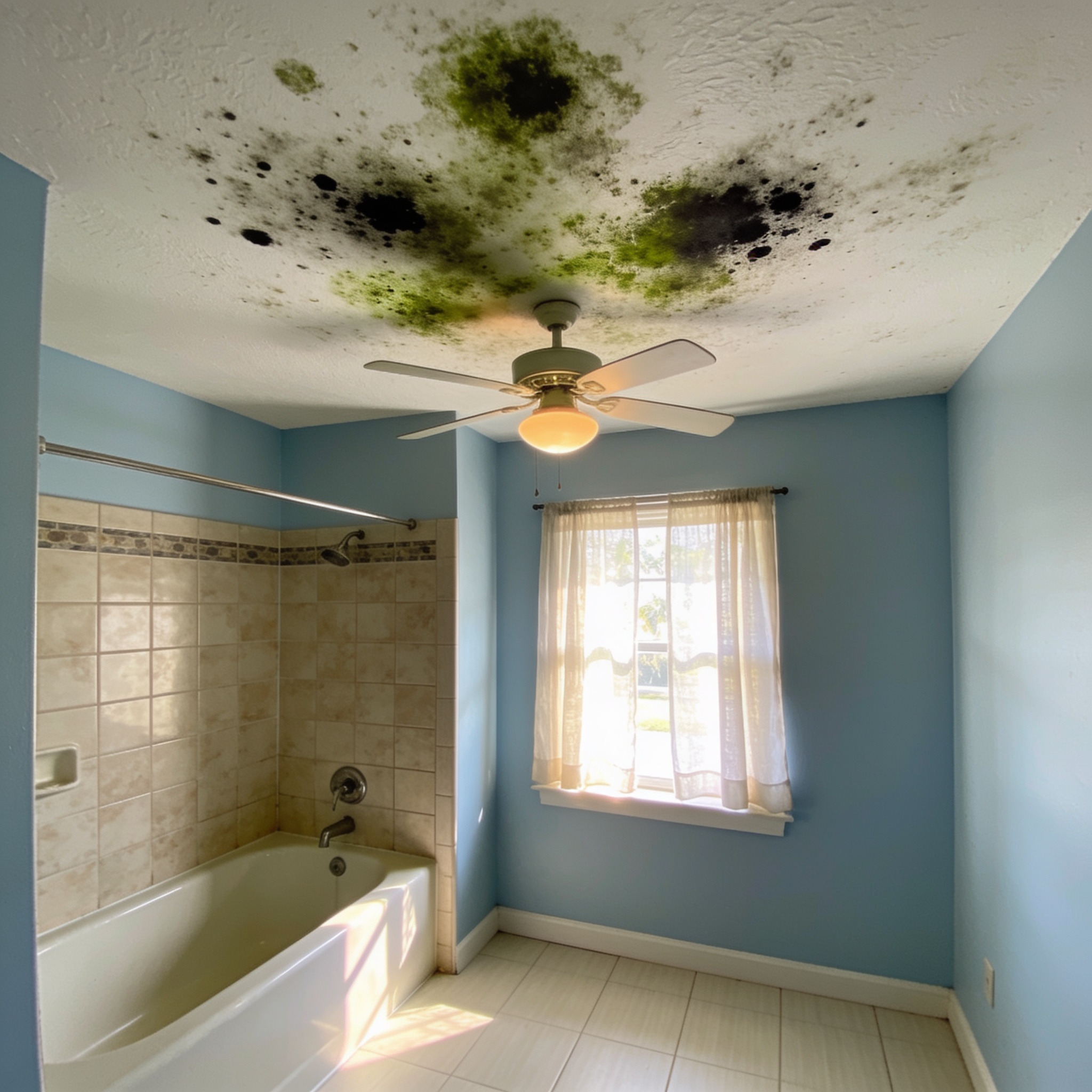
You can effectively treat bathroom ceiling mold by using a solution of 1 part bleach to three parts water or white vinegar for surface-level growth, provided the affected area is less than 10 square feet. Addressing this issue promptly is essential for SWFL homeowners, as our high humidity levels create the perfect conditions for mold to grow year-round. When you learn how to remove mold, you prevent costly structural repairs to your drywall and protect your indoor air quality. If you notice a small patch of mold, act immediately to stop mold from spreading further.
Key Takeaways
- Surface-level mold on non-porous surfaces can often be cleaned with DIY solutions like vinegar or hydrogen peroxide.
- Proper ventilation, such as running an exhaust fan, is the primary defense against recurring mold problems.
- If mold covers an area larger than 10 square feet or has penetrated the drywall, professional mold remediation services are required.
- Always wear personal protective equipment, including a respirator, when attempting to remove mold safely.
- Florida’s climate necessitates consistent moisture control to keep your bathroom mold-free.
What Causes Mold to Grow?
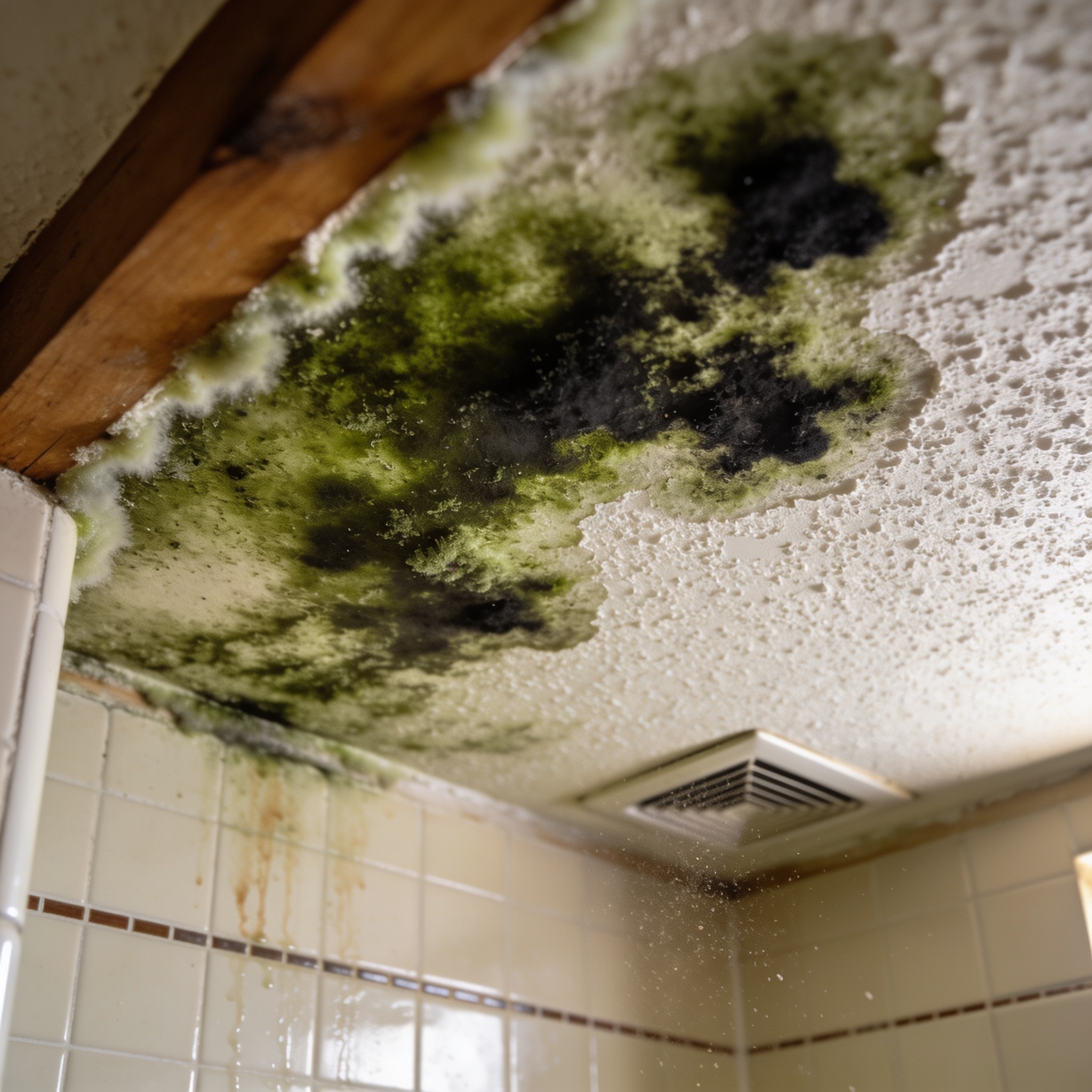
Bathroom ceilings are especially vulnerable to mold growth because poor ventilation traps warm, humid air against the surface after every shower. In Southwest Florida, where ambient humidity often exceeds 70%, moisture lingers on surfaces, providing the ideal environment where mold thrives. When condensation settles on the ceiling, it creates the perfect conditions for mold and mildew to grow, especially if there is dust or organic material present on the bathroom walls or ceilings. Identifying the cause of the mold is the first step to ensuring the mold is gone for good.
Is Mold on a Bathroom Ceiling Harmful or Dangerous to Your Health?
Inhaling mold spores can lead to serious health risks, including respiratory irritation, allergic reactions, and asthma exacerbations, according to the EPA. While not all mold is toxic, the presence of Stachybotrys chartarum, commonly known as black mold, is a significant concern for homeowners in Lee, Collier, and Charlotte counties. You should avoid disturbing any suspected black mold, as this releases spores into the air, potentially spreading the contamination throughout your home.
Can Mold on the Ceiling Spread to Walls and Other Areas of Your Home?
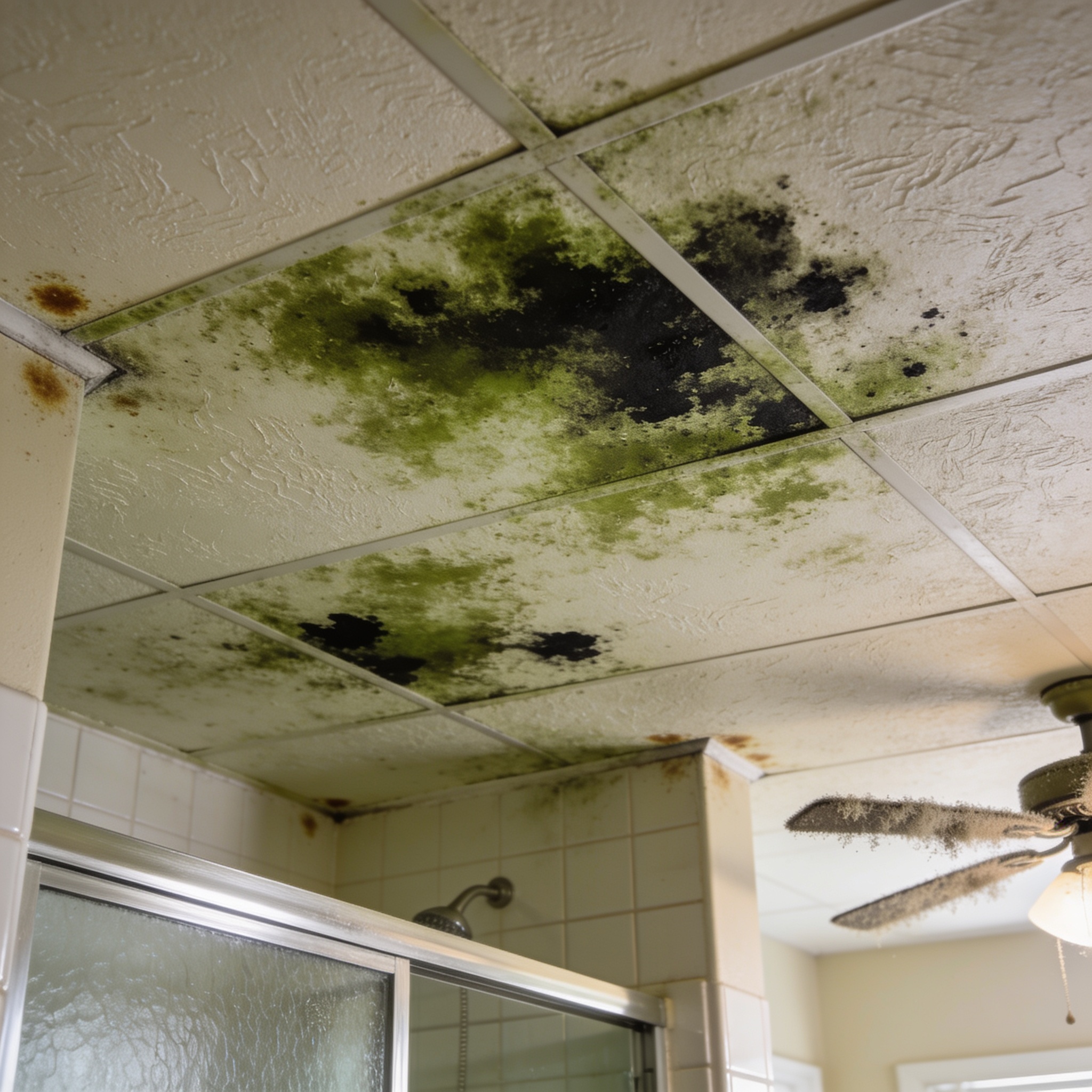
Mold spores are microscopic and travel easily through HVAC systems, meaning mold on ceilings can quickly colonize adjacent walls if left untreated. Once mold has penetrated the drywall, it can spread into the wall cavity, leading to hidden growth that is difficult to detect without professional mold removal services. If you notice recurring problems, it may indicate a deeper issue, such as a leaking roof or plumbing failure, which requires you to mold and fix the underlying moisture source. This often requires Water Damage Restoration in Naples.
What Supplies and Cleaners Do You Need to Kill the Mold?
To effectively clean mold, you need a respirator, gloves, safety goggles, and a cleaning solution like white distilled vinegar or a mixture of 1 part bleach to three parts water. Many homeowners prefer to use vinegar because it is a natural, acidic cleaner that kills mold at the root. Avoid using harsh chemicals that can damage porous drywall. You will also need a scrub brush, a spray bottle, and microfiber cloths to remove any remaining residue after the treatment.
| Supply | Purpose |
|---|---|
| Respirator (N95) | Prevent inhaling mold spores |
| White distilled vinegar | Kill mold on non-porous surfaces |
| Scrub Brush | Physically remove surface-level mold |
| Spray Bottle | Apply cleaning solution evenly |
Remove Mold from Bathroom Ceilings
Follow this 5-step removal checklist to safely get rid of mold on your bathroom ceiling:
- Contain the mold: Close the bathroom door and cover air vents to prevent spores from spreading to other rooms.
- Protect yourself: Wear a respirator, gloves, and goggles before you begin to remove mold from your bathroom.
- Apply the solution: Use a spray bottle to apply white vinegar or a bleach solution to the affected area.
- Scrub the surface: Use a scrub brush to gently remove mold from your bathroom ceiling, being careful not to gouge the drywall.
- Dry the ceiling: Wipe the area clean and use a fan to ensure the surface is completely dry to prevent mold from returning.
Is It Safe to Remove Mold from Bathroom Yourself — and When Should You Call a Professional?
You can safely remove small patches of surface-level mold yourself, but you should call a professional if the mold covers an area larger than 10 square feet or if you suspect hidden mold inside the walls. Extensive mold growth often requires professional mold remediation services to ensure the underlying structure is not compromised. For severe cases, consider contacting experts in Water Damage Restoration to assess the damage.
Prevent Mold
Never paint over mold, as the paint will eventually peel, and the mold will continue to grow underneath the surface. You must kill the mold and let the wall dry before applying any primer or paint. Always dry completely before applying new coats of mold-resistant paint to help prevent mold growth once the area is fully restored and mold-free.
Keep Your Bathroom Mold-Free
The most effective way to prevent future mold growth is to upgrade your bathroom ventilation with a high-CFM exhaust fan that runs for at least 30 minutes after every shower. Additionally, leave the bathroom door open to promote airflow and regularly wipe down surfaces to keep the bathroom dry. Without proper ventilation, moisture accumulates rapidly. If you continue to see mold, you may need to consult with Mold Remediation & Removal Companies in Southwest Florida to identify the root cause of the moisture.
Frequently asked questions
Understanding these common concerns helps homeowners maintain a healthy, mold-free bathroom environment.
Does bleach kill mold on drywall?
Bleach is effective at killing surface-level mold, but it cannot penetrate porous drywall to kill mold roots, which may lead to recurrence.
How long should I run the bathroom fan?
You should run your exhaust fan during your shower and for at least 20 to 30 minutes afterward to ensure all moisture is removed.
Is vinegar better than bleach for mold?
Vinegar is often preferred because it is non-toxic and can penetrate porous surfaces better than bleach, making it more effective at killing mold roots. When you use vinegar, you are choosing a safer, eco-friendly alternative for your home.
What if the mold keeps coming back?
If mold returns, there is likely a persistent moisture source, such as a hidden leak or inadequate ventilation, that requires professional inspection.
Our editorial team verifies licensing and reviews for every restoration company in the directory and writes practical, Florida-specific guides to help homeowners act fast and protect their insurance claims after water, fire, mold or storm damage.