Homeowners Insurance Ordinance or Law Coverage: What You Need to Know
Homeowners insurance ordinance or law coverage typically provides an additional 10% to 25% of your dwelling coverage limit to pay for building code upgrades required after a disaster. This specific type of insurance is essential for SWFL residents because older homes often fail to meet current Florida Building Code standards after significant hurricane damage. Without this protection, you may find yourself paying out of pocket for mandatory structural improvements during the restoration process, as a standard homeowners insurance policy often excludes these regulatory expenses related to ordinances and laws.
Key Takeaways
- Ordinance or law coverage pays for the increased costs of complying with current building codes during a rebuild.
- Standard homeowners insurance policies often exclude costs associated with enforcing local ordinances or laws.
- SWFL homeowners in older properties face higher risks of code-related expenses after storm events.
- This coverage generally includes three parts: loss to the undamaged portion, demolition costs, and increased construction costs.
- Consulting with an insurance professional is the best way to determine your specific coverage needs.
What is ordinance or law coverage in homeowners insurance?
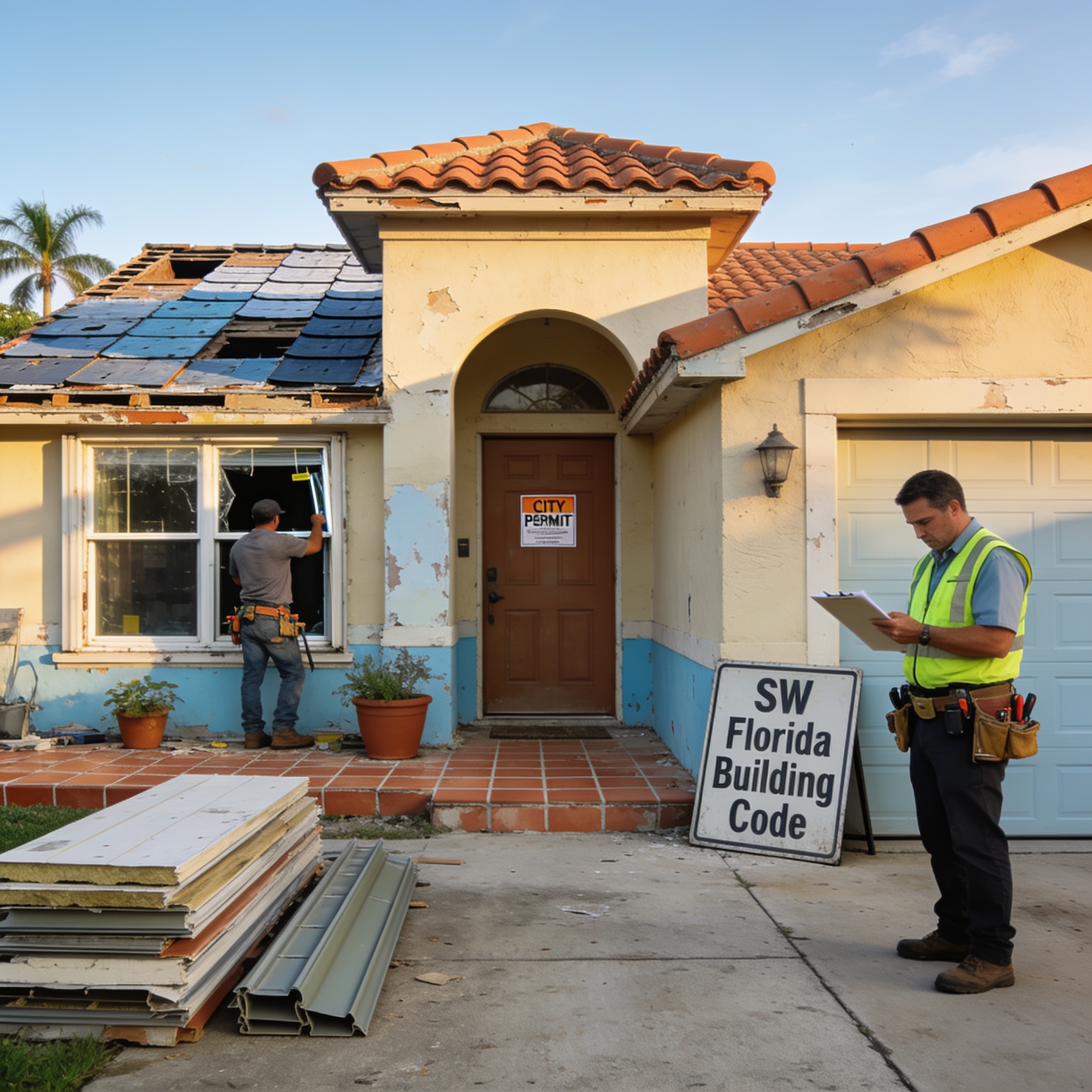
Ordinance or law coverage is an endorsement that pays for the extra expenses incurred when a local building code requires you to upgrade your home during repairs. When your property suffers a covered loss, such as major water damage or wind destruction, the local government may require you to bring the entire structure of your home up to the latest building codes. While a standard homeowners policy covers the cost to rebuild to pre-loss condition, this endorsement covers the gap when laws require upgrading the property to modern standards.
Are an ordinance and a law the same thing?
An ordinance is a specific regulation enacted by a local municipal government, while a law typically refers to state or federal statutes. In the context of property insurance, both terms refer to the legal requirements that govern how a building must be constructed, maintained, or demolished. Whether you are dealing with a local ordinance in Lee County or a state-wide mandate, the financial impact on your restoration project remains the same.
What are the three parts of ordinance or law insurance coverage?
Ordinance or law insurance coverage is structured to address three distinct financial burdens that arise after a property loss. Understanding these components is vital for anyone managing a is water damage covered by homeowners insurance claim or a total structural rebuild.
Coverage A: Undamaged portion
This covers the value of the undamaged portion of your home that must be demolished because the law requires the entire structure to be rebuilt to new standards. If a storm destroys half your home but local codes require the remaining half to be torn down, this coverage pays for that loss.
Coverage B: Demolition
This covers the cost of demolition and debris removal for the parts of your home that were not damaged by the peril but must be removed to comply with local laws or ordinances. This is a critical component for homeowners in flood zones who face strict elevation requirements.
Coverage C: Increased cost of construction
This covers the actual increased cost of rebuilding your home to meet the latest building codes, such as installing hurricane-rated windows or upgraded electrical systems. These are the most common additional costs homeowners face when restoring a property in Southwest Florida.
How does ordinance or law insurance coverage work?
Ordinance or law coverage functions as an add-on to your existing dwelling coverage once a covered peril occurs. When you file a claim for Water Damage Restoration, the adjuster evaluates the damage against current municipal regulations. If the inspector determines that your home cannot be repaired without triggering a mandatory upgrade to the entire system, your homeowners insurance company triggers this specific endorsement.
When does ordinance or law insurance coverage apply?
This coverage applies only when a covered loss triggers a requirement to comply with a building code or regulation. It does not apply to voluntary upgrades to your home that you choose to make during a renovation. You must have a valid claim for a covered peril before the ordinance or law coverage can be activated.
What does ordinance or law insurance coverage include and exclude?
The following table summarizes the typical scope of this coverage for homeowners in hurricane-prone regions like Charlotte or Collier County.
| Feature | Includes | Excludes |
|---|---|---|
| Scope | Mandatory code-compliant upgrades | Voluntary aesthetic renovations |
| Demolition | Removal of undamaged structures | Normal debris removal of damaged items |
| Compliance | Building laws or ordinances | Fines for prior code violations |
What is an example of an ordinance or law insurance coverage claim?
Imagine a hurricane destroys your roof, and the city requires you to replace the entire electrical system to meet current safety standards. The standard homeowners policy only pays to replace the damaged roof shingles and underlying decking. Without ordinance or law coverage, you would pay the thousands of dollars required to rewire your home out of pocket. This type of coverage ensures that the insurance company pays to cover the cost of the electrical upgrades necessitated by the new building code.
How much ordinance or law insurance coverage limit should I have?
Most experts recommend selecting an ordinance or law coverage limit equal to at least 25% of your dwelling coverage. If you live in an older home, you may need even higher limits to account for the significant gap between current building codes and the original construction standards. You should consult with an insurance professional to assess the specific age and condition of your property.
Should I get ordinance or law insurance coverage?
You absolutely need ordinance or law coverage if you own an older home that does not meet current hurricane or flood mitigation standards. Even if your home is relatively new, local laws change frequently, and compliance can be expensive. Investing in this additional coverage is a proactive way to protect your financial assets from unexpected regulatory costs.
Do I need ordinance or law insurance coverage in Florida?
Florida homeowners face a high probability of requiring this coverage due to the state’s stringent building codes and frequent storm activity. Following a major event requiring Water Damage Restoration or structural repairs, local municipalities often enforce strict compliance with the latest codes. Failure to secure this protection could leave you responsible for significant expenses that standard insurance policies simply do not cover. Homeowners in high-risk flood zones should prioritize this coverage as a core component of their risk management strategy. Securing adequate limits ensures that your home can be rebuilt to modern safety standards after a catastrophic loss.
Frequently asked questions
These answers address common concerns regarding the implementation and necessity of ordinance or law insurance.
Does standard homeowners insurance cover building code upgrades?
No, standard homeowners insurance only covers the cost to repair or replace your home to its pre-loss condition, excluding any costs associated with meeting new building codes.
Is this coverage mandatory in Florida?
While not legally mandated by the state, many mortgage lenders may require adequate insurance coverage, and it is highly recommended given Florida’s strict building regulations.
Can I add this coverage to an existing policy?
Yes, you can typically add ordinance or law coverage as an endorsement to your current policy at any time, though it is best to review it during your annual renewal.
Does this coverage pay for mold remediation?
Ordinance or law coverage specifically addresses building codes and regulations, not the cost of Water Damage Restoration or mold cleanup unless a specific law mandates a certain type of remediation.
Our editorial team verifies licensing and reviews for every restoration company in the directory and writes practical, Florida-specific guides to help homeowners act fast and protect their insurance claims after water, fire, mold or storm damage.