How to Clean Smoke Damage on Walls and Ceiling Effectively
Professional smoke damage restoration typically costs between $2,000 and $6,000, but you can learn how to clean smoke damage on walls and ceiling effectively using a dry-cleaning sponge and specialized degreasers. In Southwest Florida, where high humidity levels can cause soot to cling more aggressively to surfaces, immediate intervention is essential to prevent permanent staining. Whether you are dealing with minor kitchen flare-ups or larger incidents, following a structured cleaning process is vital to protecting your home’s structural integrity and avoiding the risk of causing further damage to your property.
Key Takeaways
- Always use a dry chemical sponge to lift loose soot particles before applying any liquid cleaner to avoid smearing.
- Southwest Florida humidity requires rapid action, as moisture can cause soot to bond deeper into drywall and plaster.
- Use a HEPA filter vacuum to remove loose soot from the ceiling and walls to prevent cross-contamination.
- Never use bleach on smoke-damaged surfaces, as it can react with residues and cause further discoloration.
- Consult a professional for fire damage restoration near me if the damage exceeds a single room or involves structural charring.
What supplies and tools do you need to clean smoke damage from walls and ceilings?
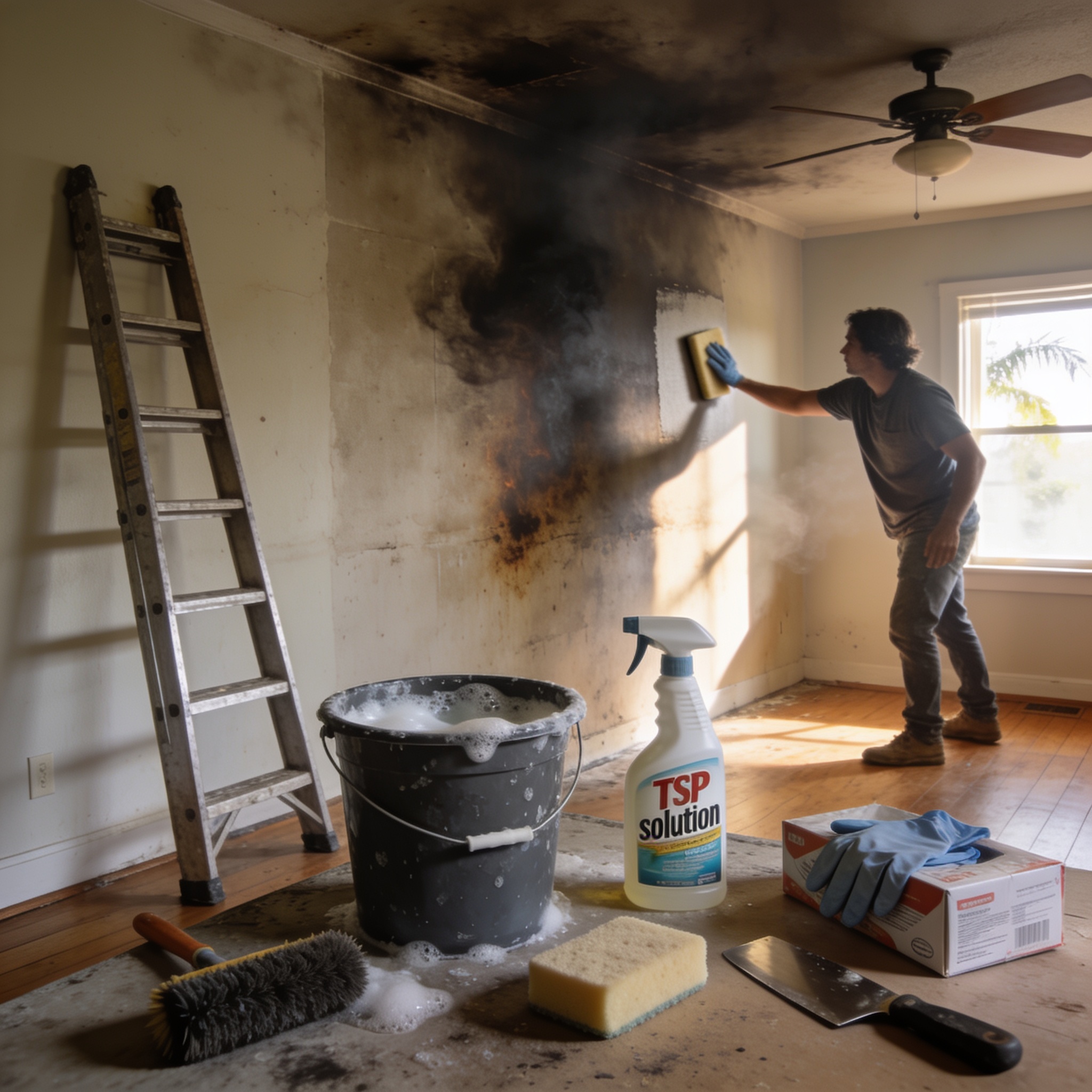
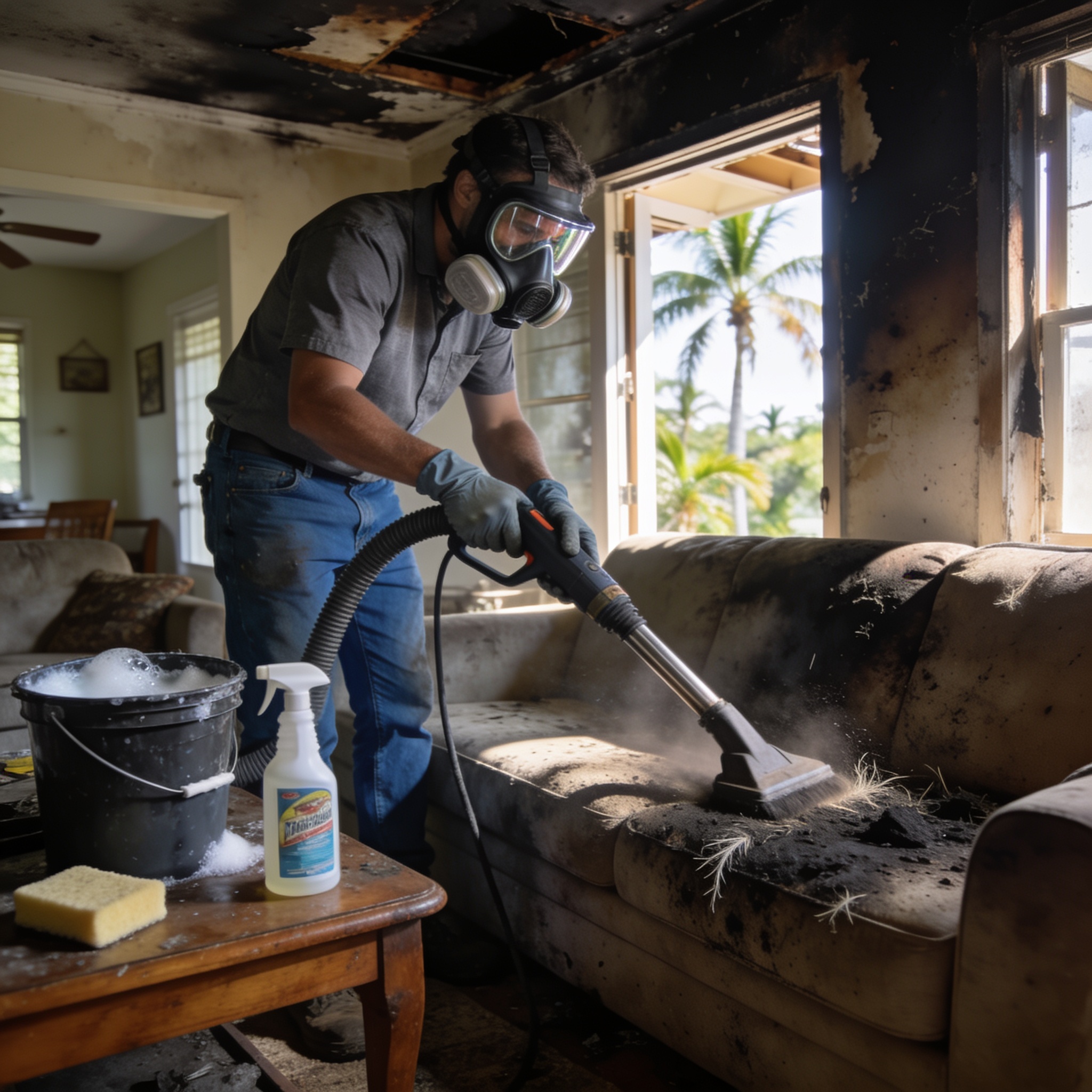
Effective soot removal requires specific tools and techniques to prevent the residue from embedding deeper into porous materials. You will need a dry chemical sponge, often called a soot sponge, to lift dry particles without water. Additionally, prepare a gallon of warm water mixed with a mild degreaser, a tablespoon (tsp) of sugar soap for tough grime, or dawn dish soap for the final wipe-down. Ensure you have a HEPA filter vacuum to capture fine soot particles that could otherwise circulate through your air ducts. When performing this work, always wear protective gear, including rubber gloves and a respirator, to shield yourself from airborne particles.
Is it safe to clean smoke damage yourself, and what precautions should you take?
Cleaning smoke-damaged walls is safe only if the fire was minor and there is no structural damage to the drywall or ceiling. You must wear gloves and a face mask to avoid inhaling toxic soot particles. In Florida, ensure you have proper ventilation by opening windows, especially if the air quality is affected by high humidity. Before starting, protect the floor with drop cloths to catch falling debris. If you notice signs of water damage restoration in Sanibel, FL, from firefighting efforts, prioritize professional assessment to prevent mold growth.
What is the best cleaner for smoke damage on walls and ceilings?
A specialized dry-cleaning sponge is the best starting point to remove smoke and soot damage without causing a smear. For detailed cleaning, a solution of warm water and a phosphate-based cleaner or high-quality soap and water works effectively to dissolve oily residues. Avoid harsh chemicals that could damage paint or leave behind a lingering smoke odor. Always test your cleaning solution on an inconspicuous area of the wall to ensure it won’t make things worse by streaking or stripping the finish. When tackling stubborn stains, you may need advanced equipment like a commercial-grade air scrubber to assist with the process.
How do you clean smoke damage from walls and ceilings step by step?
Follow these five steps to effectively remove soot and smoke residue from your home surfaces.
- Ventilate the area: Open windows and use fans to improve air circulation before you begin.
- Vacuum loose particles: Use a vacuum with a soft brush attachment to remove loose soot particles from the ceiling and walls.
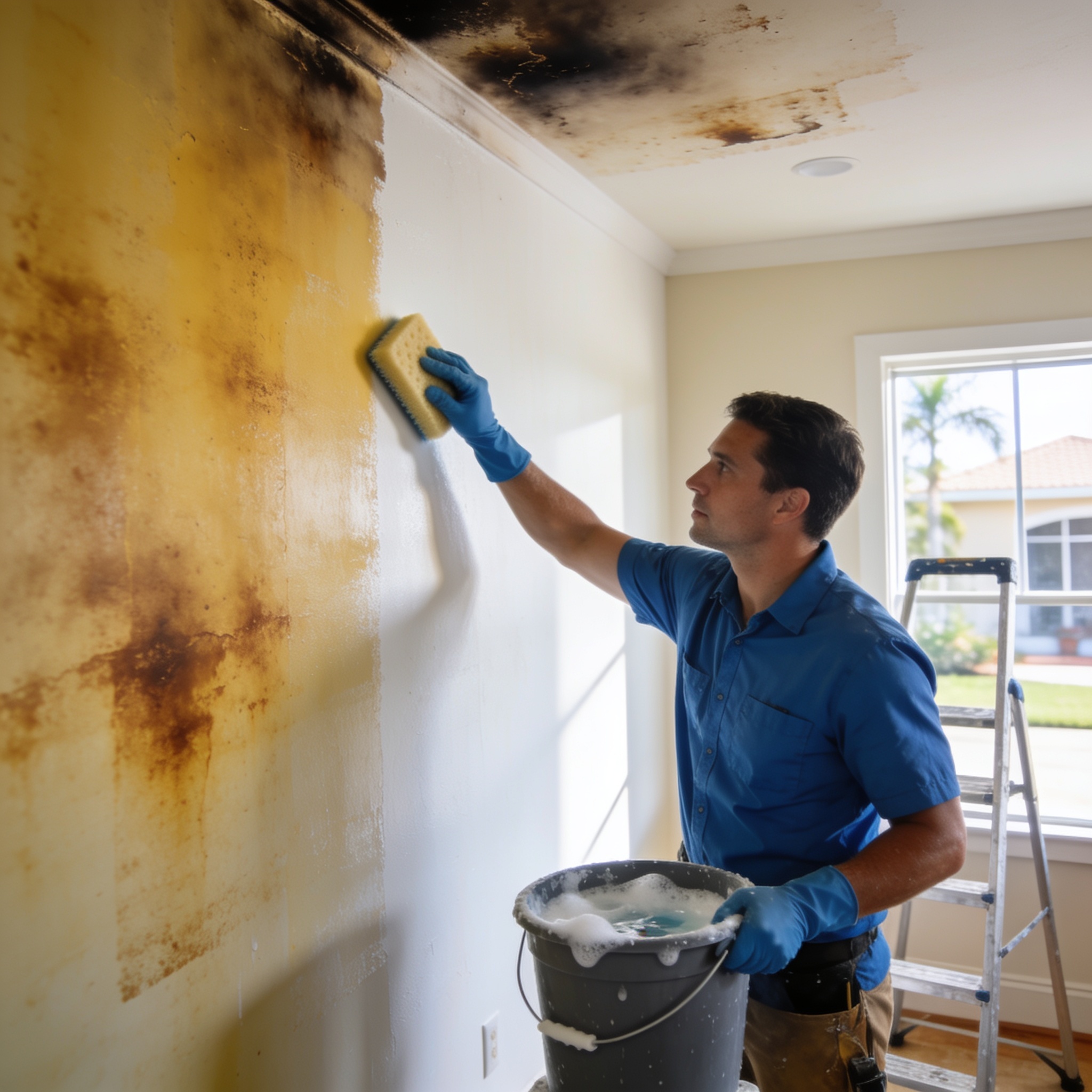
- Dry-clean the surface: Use a dry chemical sponge to wipe the walls in small sections, lifting the embedded soot rather than rubbing it in.
- Wash with detergent: Dip a soft sponge into a mixture of warm water and soap and water, wringing it out until nearly dry to prevent streaking.
- Dry thoroughly: Use a clean cloth to dry the area immediately to prevent moisture-related issues common in tropical climates.
How do you clean smoke off walls without removing paint?
To remove soot without smearing or stripping paint, you must avoid aggressive scrubbing and excessive water. Start by using a dry chemical sponge to lift the bulk of the residue from the wall. If you must use a liquid cleaner, ensure the sponge or cloth is only damp, not soaking wet. This technique prevents the paint from softening and keeps the smoke stains from spreading. Don’t scrub too hard, as this can grind the soot into the porous surface of the paint. Once the surface is clean and dry, you may choose to repaint the area to restore your home’s original aesthetic.
How long does it take to clean a house from smoke damage?
Small, localized smoke damage can often be addressed in a single day, but extensive soot removal may take several days of professional labor. Factors like the size of the home and the severity of the soot particles influence the timeline. If you require water damage restoration Punta Gorda services due to firefighting water, the drying process will add significant time to the project. For heavy buildup, you will need to apply significant elbow grease to ensure the surface is fully prepared for restoration.
How do you get rid of the smoke smell after cleaning walls and ceilings?
Eliminating the smoke odor requires neutralizing the air and the surfaces simultaneously. After cleaning the walls and ceiling, use air scrubbers or ozone generators to remove airborne particulates. Ensure your HVAC filters are replaced, as soot often accumulates in the air ducts and continues to circulate an unpleasant odour throughout the home. Using these cleaning tips will ensure you address the odor at the source rather than just masking it.
Can you paint over smoke-damaged walls, or do you need to clean first?
You must clean the smoke damage thoroughly before applying any primer or paint to the surface. Painting over soot will result in poor adhesion and the eventual bleeding of smoke stains through your new paint job. Always use a high-quality oil-based or shellac-based primer to seal the surface after cleaning. If you fail to perform deeper cleaning first, you risk trapping additional soot under the new paint layer, which will eventually cause the finish to peel or discolor.
When should you hire a professional for smoke damage cleaning instead of DIY?
Hire a professional restoration company if the smoke damage is widespread, involves structural charring, or if you suspect toxic residues are present. Professionals have access to industrial-grade cleaning agents and HEPA-filtered air scrubbers that are necessary for large-scale damage. Attempting to clean extensive soot yourself can often lead to improper cleaning, which may cause long-term damage to your property. Professional cleaning methods are designed to handle complex soot patterns that standard DIY supplies cannot reach.
Frequently asked questions
Addressing common concerns helps ensure your home recovery process is both safe and efficient.
Can I use bleach to clean smoke stains?
No, bleach is not recommended as it can react with smoke residues and cause permanent discoloration on your walls.
Does humidity affect smoke damage cleaning?
Yes, high humidity in Southwest Florida can make soot sticky, making it harder to remove without professional equipment.
Is soot toxic to breathe?
Yes, soot contains fine particulate matter that can be harmful to your respiratory system if inhaled during the cleaning process.
Should I clean my carpet after a smoke incident?
Yes, you should prioritize cleaning soot from carpet fibers, as they act as a sponge for smoke odors and fine particles.
| Cleaning Stage | Tool Required | Purpose |
|---|---|---|
| Initial Removal | Dry Chemical Sponge | Remove loose soot particles |
| Deep Cleaning | Warm Water & Soap | Dissolve oily smoke residue |
| Odor Control | HEPA Air Scrubber | Neutralize airborne smoke odor |
See also: fire damage restoration near me
See also: Water Damage Restoration
See also: Water Damage Restoration
Our editorial team verifies licensing and reviews for every restoration company in the directory and writes practical, Florida-specific guides to help homeowners act fast and protect their insurance claims after water, fire, mold or storm damage.