Flooded or fire damage right now? Call 24/7 — (239) 555-0199 for an emergency restoration company near you.
Fire & Smoke
Does Incense Cause Smoke Damage to Walls? Understanding the Risks
Practical, Florida-specific guidance from our restoration team.
SR
SWFL Restoration Editorial
Aug 21, 2026 6 min read
Key Takeaways
- Incense smoke contains particulate matter that adheres to walls, creating a sticky, oily residue.
- Long-term incense use can lead to yellowing or graying of paint, similar to the effects of cigarette smoke.
- SWFL’s high humidity levels can trap these soot particles against walls, making them harder to clean.
- Insurance policies often exclude damage caused by “gradual” smoke accumulation, unlike sudden fire events.
- Proper ventilation and air purification are essential to mitigate the buildup of indoor pollutants.
Does incense burning stain walls, and what causes the buildup?
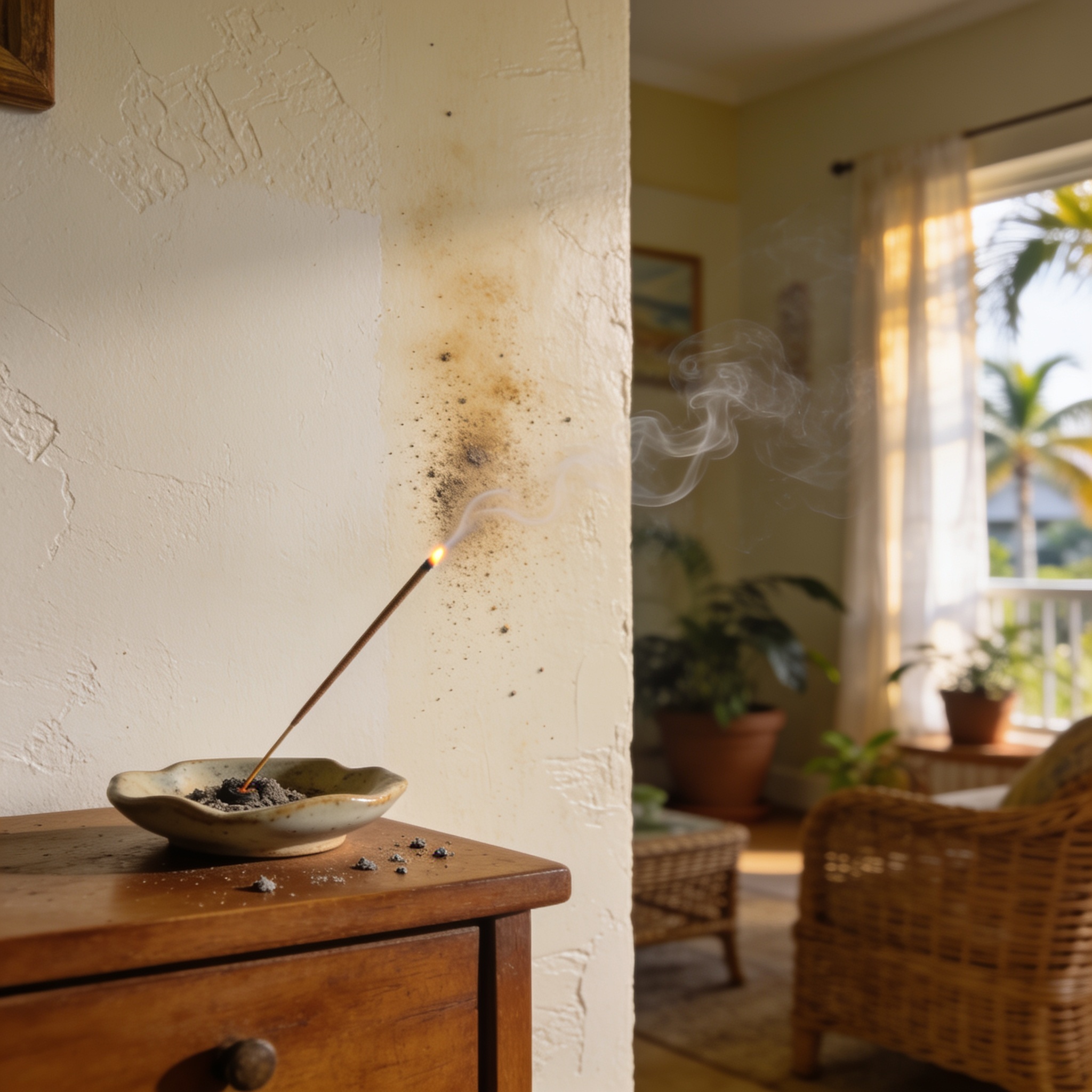
Burning incense releases microscopic soot particles and oily resins that gradually accumulate on walls and ceilings. In Southwest Florida, the high ambient humidity common in Lee and Collier counties can make these particles “stickier,” causing them to bond more aggressively to porous surfaces like drywall or flat paint. This buildup is a physical deposit of unburned carbon and organic material, often resulting from poor ventilation in the home. The residue may require professional cleaning services similar to those provided by Fire and Smoke Damage Restoration Companies. Incense ash can also accumulate on nearby surfaces, and if you use a mop to clean floors, you may find the residue has tracked onto the baseboards.What does an incense stick look like when it causes damage?
Smoke damage from an incense stick typically manifests as a yellowish or grayish film that darkens over time, particularly in corners and near the ceiling. This often occurs because the product is made with wood chips, a binding agent, or an adhesive material that releases a heavy fume during combustion. If you live in a coastal area like Sanibel and are already managing Water Damage Restoration, you may notice that the moisture interacts with the soot, creating a stubborn, streaky grime.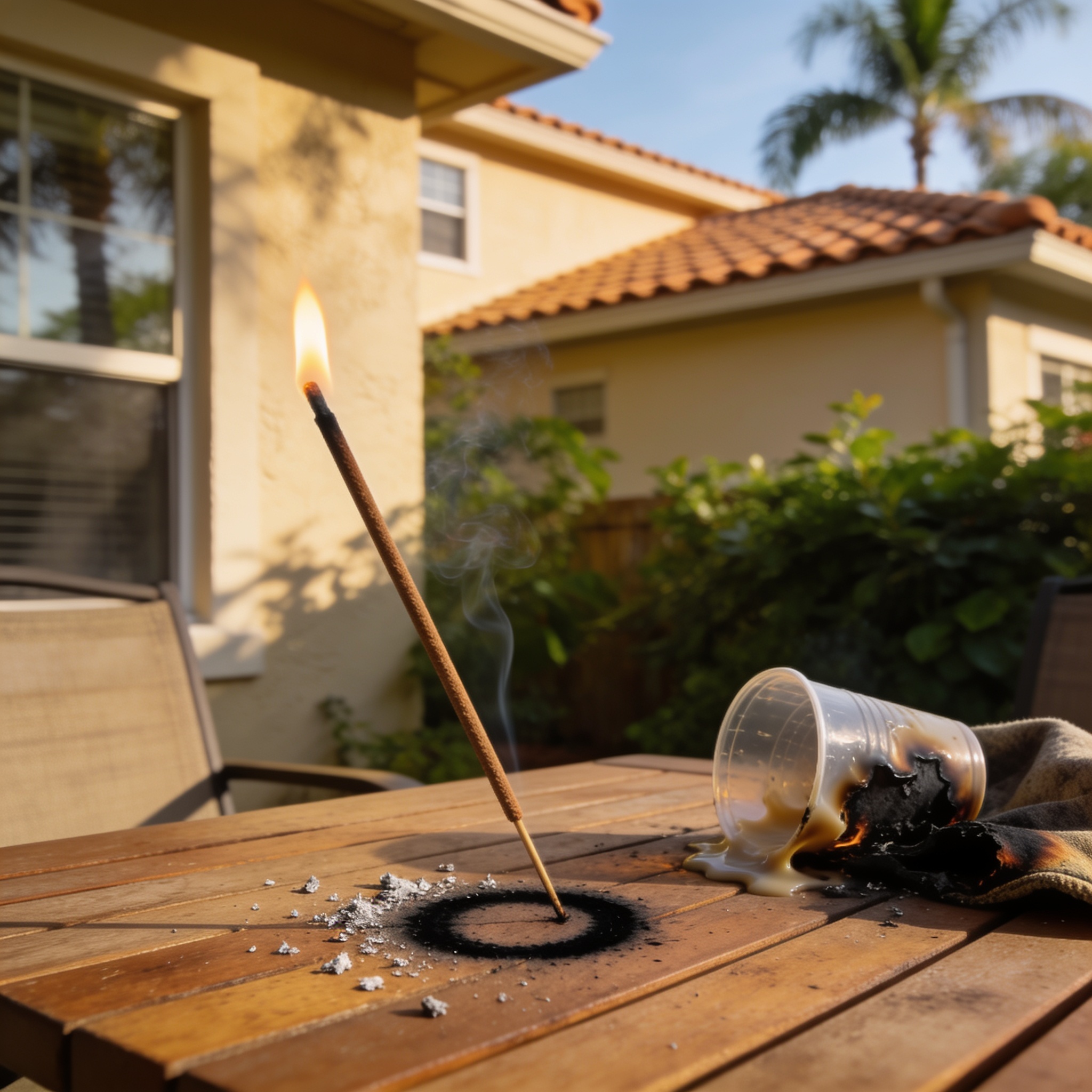
Does it matter if I use incense in a room with poor airflow?
When you use incense in a confined space, smoke accumulates rapidly, leading to visible residue buildup within a few months of daily exposure. While a single stick may seem negligible, the cumulative effect of burning incense every day at home creates a significant layer of soot. In regions like Punta Gorda, where residents often keep windows closed for air conditioning, the lack of natural cross-ventilation accelerates the rate at which these pollutants settle on interior surfaces. For professional assistance with lingering odors or residue, consult experts in Water Damage Restoration who often handle air quality remediation.Inhale: What are the health risks associated with incense?
When you inhale incense smoke, you expose yourself to health risks such as respiratory problems, allergic rhinitis, and the harmful effects of particulate matter. A study from taiwan has linked incense smoke to an increased risk of cancer and other chronic conditions. These particles can trigger asthma attacks in sensitive individuals, especially when the smoke is trapped indoors. Furthermore, long-term inhalation is associated with a higher risk of developing copd or a persistent wheeze.Is incense bad for indoor air quality?
Burning incense significantly degrades indoor air quality by releasing particulate matter (PM2.5), benzene, and formaldehyde into the living environment. These indoor air pollutants can reach concentrations that exceed safe standards, particularly when the incense is of lower quality. Research confirms that incense burning is a major source of indoor combustion byproducts, acting as a known carcinogen in some chemical compositions. Smoke from polluted air inside the home can also cause eye irritation and shortness of breath.Unattended: Why does my incense produce too much smoke?
Excessive smoke production usually indicates that the incense cone or stick is of low quality or is being left unattended in a drafty area. Whether it is a ceremonial stick or a cone, the combustion of synthetic resins can create a thick, oily plume. Ensure your burner is stable and away from air vents to maintain a cleaner, more controlled burn.Risk of lung: How does this impact long-term health?
Frequent exposure to incense smoke increases the risk of lung inflammation and long-term damage to the airways. The chemical composition of many incense varieties includes substances that, when burned, release toxins that irritate the bronchial tubes. Consistent exposure is a documented concern for those with pre-existing conditions, as it can worsen overall pulmonary function.Asthma attacks: How to burn incense safely?
To minimize the likelihood of asthma attacks and property damage, always burn incense in a well-ventilated room and never leave it unattended. Follow these five safety steps:- Use a heat-resistant burner that can catch all falling ash to prevent localized heat damage.
- Open windows or use an exhaust fan to ensure constant air circulation while the incense is lit.
- Limit the duration and frequency of incense use to prevent the accumulation of residue on your walls.
- Keep incense away from curtains, furniture, and other flammable materials to reduce fire hazards.
- Use high-quality, natural-ingredient incense to reduce the emission of harmful synthetic chemicals.
What are safer alternatives to burning incense?
Safer alternatives that provide fragrance without the soot include essential oil diffusers, reed diffusers, and soy-based candles. These options do not involve combustion, meaning they do not release the harmful particulate matter or soot associated with traditional incense. By switching to these methods, you can maintain a pleasant home environment without the risk of long-term smoke damage to your walls.Frequently asked questions
This section addresses common concerns regarding the impact of incense on your home’s interior and your personal well-being.Does incense smoke cause permanent wall staining?
Yes, if left untreated for years, the soot and oils in incense smoke can permanently discolor paint and wallpaper, often requiring a fresh coat of paint to fully restore.Can incense smoke affect my homeowners insurance?
Most standard policies cover “sudden and accidental” fire or smoke damage, but they typically exclude damage caused by the “gradual” buildup of smoke from regular incense use.Are there specific types of incense that produce less smoke?
Yes, natural resin-based incense, or high-quality sandalwood incense typically produce less soot than synthetic, charcoal-dipped varieties. Some brands like Satya or those used in Shinto traditions vary in composition, but all combustion carries risks.How does humidity in SWFL impact smoke damage?
High humidity levels in Florida can cause smoke particles to adhere more strongly to surfaces, making the resulting residue more difficult to clean than in drier climates.Is it safe to burn incense if I have asthma?
Medical professionals generally advise against burning incense if you have asthma, as the smoke acts as a potent irritant that can trigger respiratory symptoms or attacks. Incense can trigger coughing, and you should stop burning incense if you notice any difficulty breathing. Burning incense outdoors is a safer alternative if you must use it, as it allows pollutants to disperse rather than being something you inhale. SR
SWFL Restoration Editorial
Local restoration research team
Our editorial team verifies licensing and reviews for every restoration company in the directory and writes practical, Florida-specific guides to help homeowners act fast and protect their insurance claims after water, fire, mold or storm damage.