Water Damage Restoration in Cape Coral, FL
Cape Coral homeowners face elevated water, fire and storm damage risk from Southwest Florida’s hurricane season and humid subtropical climate. When disaster strikes, water damage restoration needs a fast, professional response to limit secondary damage.
Water Damage Restoration in Cape Coral typically involves rapid assessment, water extraction or debris removal, structural drying and dehumidification, and coordination with your insurance carrier. Acting within the first hours dramatically reduces mold growth and the total cost of repairs.
The 47 local providers below serve Cape Coral and the surrounding area, document losses for insurance claims, and offer 24/7 emergency response. Compare ratings and call directly, or request a free quote.
Water Damage Restoration providers in Cape Coral
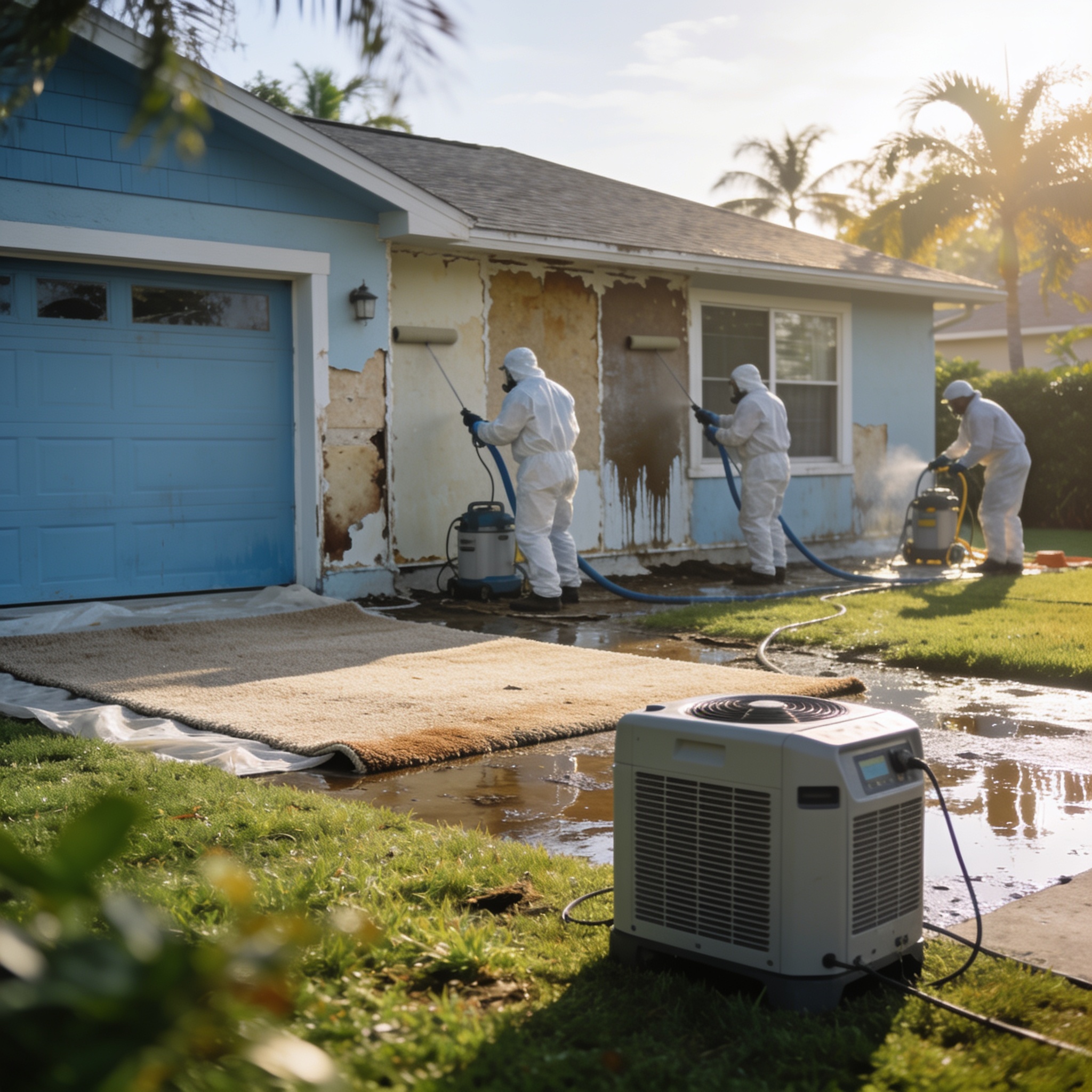
Why Is Cape Coral at a Higher Risk for Water Damage Than Most Florida Cities?
Cape Coral, FL faces a uniquely elevated water damage risk driven by its geography, canal infrastructure, and position directly in Southwest Florida’s hurricane corridor. The city sits within Lee County and contains more than 400 miles of navigable canals — more than any other city in the world — meaning that storm surge, heavy rainfall, and tidal backflow have countless pathways into residential and commercial properties. FEMA flood maps designate large portions of Cape Coral in Zone AE and Zone VE, the highest-risk categories for base flood elevation requirements.
Water damage in Cape Coral is a persistent threat, as Hurricane Ian’s 2022 landfall near Fort Myers demonstrated — the flooding caused by hurricanes can wreak havoc on properties through catastrophic storm surge and widespread inundation throughout the city, displacing thousands of residents and causing billions in property losses across Lee County. The city’s flat topography provides almost no natural drainage gradient, so standing water lingers far longer here than in elevated inland communities. Aging plumbing systems in the city’s older western and northwest quadrants compound the risk, with burst pipe events spiking each winter when overnight temperatures briefly dip.
Southwest Florida’s warm and humid climate, with average annual humidity hovering above 75%, creates conditions where moisture trapped behind walls or beneath floor materials accelerates mold growth within 24 to 48 hours of a water intrusion event, according to IICRC S500 standards.
What Is the Difference Between Water Damage Remediation and Restoration?
Remediation focuses on removing hazards — contaminated water, mold colonies, and compromised materials — while property restoration returns the structure to its pre-loss condition through repair and reconstruction. In practice, a Cape Coral water damage job typically requires both phases in sequence. Remediation technicians extract standing water, treat affected areas with antimicrobial treatments, and remove unsalvageable drywall or flooring. Restoration crews then rebuild, refinish, and reinstall.
Water damage and mold remediation are often distinct line items on a Cape Coral estimate because Florida’s humid climate means spore colonization can begin before the drying phase is complete. Homeowners and business owners should confirm that any restoration company they hire holds both an IICRC certification and Florida’s Mold-Related Services license (MRSA/MRSR) before work begins.
What Services Do Water Damage Restoration Companies in Cape Coral Offer?
Full-service professional restoration services in Cape Coral cover everything from the first emergency call through final reconstruction for both commercial and residential properties. Companies that provide water damage cleanup services near Cape Coral and throughout Lee County typically offer water extraction and structural drying, dehumidification, mold remediation, sewage cleanup, storm damage repair, and content pack-out. Many providers also offer board-up, debris removal, and tarping services immediately after wind damage or severe weather events to prevent secondary water intrusion.
- 24/7 emergency water extraction and water damage cleanup
- Industrial air movers and dehumidifier deployment
- Floor, wall cavity, and ceiling drying
- Sewage cleanup and Category 3 contamination removal
- Mold remediation and antimicrobial treatment
- Storm damage and hurricane damage repair services
- Condo and commercial and residential cleanup and repair
- Reconstruction and repair services to pre-loss condition
What Is the Step-by-Step Process for Water Damage Restoration?
IICRC-certified restoration technicians follow a structured, documented process to ensure no hidden damage is left behind in a Cape Coral home or business. The sequence below reflects the IICRC S500 Standard for Professional Water Damage Restoration.
Step 1 — Emergency Contact and Inspection
Restoration technicians conduct a thorough inspection using moisture meters and thermal imaging to map visible and hidden water damage behind walls, under floor assemblies, and inside ceiling cavities.
Step 2 — Water Extraction
Truck-mounted or portable extractors remove standing water from the affected area. Fast water extraction and structural drying is critical in Cape Coral FL because prolonged water exposure accelerates both structural compromise and mold growth.
Step 3 — Drying and Dehumidification
High-velocity air movers and commercial dehumidifiers run continuously — often 3 to 5 days — until moisture readings return to baseline. Technicians log readings daily to satisfy insurance documentation requirements.
Step 4 — Cleaning and Antimicrobial Treatment
All affected surfaces receive antimicrobial treatments to suppress mold spore activity. Sewage cleanup and restoration situations require EPA-registered disinfectants and full personal protective equipment under Florida DEP guidelines.
Step 5 — Restoration and Reconstruction
The final phase returns the Cape Coral property to its pre-loss condition, including floor replacement, drywall installation, painting, and any required electrical systems inspection.
Are There Serious Health Risks Associated With Water Damage in Your Home?
Unaddressed water damage and mold growth in Cape Coral creates a hazardous indoor environment through bacterial contamination and compromised electrical systems. The CDC and FEMA both identify indoor mold exposure as a trigger for respiratory illness, allergic reactions, and asthma exacerbation — risks that are amplified in Florida’s high-humidity climate. Category 2 and Category 3 water intrusions (gray and black water) carry sewage-borne pathogens that pose direct contamination hazards to occupants.
Moisture that reaches electrical systems creates shock and fire hazards that persist even after visible water recedes. Restoration technicians recommend keeping the affected area vacated until a licensed electrician clears the system following any significant flooding event across Cape Coral.
What Are the Risks of Not Addressing Water Damage Promptly?
Delaying water damage cleanup services in Cape Coral FL dramatically increases both remediation costs and structural damage severity. According to IICRC S500, mold colonies can establish within 24 to 48 hours of water intrusion under Southwest Florida’s ambient humidity conditions. What begins as a localized floor or wall issue can spread to framing, subfloor, and HVAC ductwork within days, converting a straightforward cleanup and restoration project into a major reconstruction effort.
FEMA’s National Flood Insurance Program (NFIP) documentation requirements also favor prompt action — policyholders who delay mitigation risk claim disputes on the grounds that secondary damage was preventable. Structural drying logs and daily moisture readings generated by a certified restoration company serve as critical evidence in those situations.
How Much Does Water Damage Restoration Cost in Cape Coral — and Does Insurance Cover It?
Water damage restoration in Cape Coral typically ranges from $1,500 for a minor cleanup to more than $50,000 for hurricane-related widespread flooding with mold remediation and full reconstruction. Industry data from Xactimate pricing models used throughout Lee County places average mid-range residential projects between $3,800 and $12,000, depending on affected square footage, water category, and floor and wall material types.
| Damage Scope | Estimated Cost Range | Typical Coverage Source |
|---|---|---|
| Burst pipe / minor intrusion | $1,500 – $4,000 | Homeowners insurance (HO-3) |
| Storm damage / roof leak | $3,500 – $15,000 | Homeowners / wind policy |
| Hurricane surge flooding | $15,000 – $50,000+ | NFIP flood policy |
| Sewage cleanup + mold remediation | $4,000 – $20,000 | Homeowners (varies by policy) |
Standard homeowners policies in Florida generally cover sudden and accidental water damage but exclude flood damage — a critical distinction for Cape Coral property owners in FEMA AE zones who must carry a separate NFIP or private flood policy. Always request an itemized written estimate from any damage restoration service before authorizing work.
How Quickly Can Water Damage Restoration Services Respond in Cape Coral?
Reputable water damage restoration companies serving Cape Coral, FL maintain 24/7 emergency services with typical on-site arrival times of 60 to 90 minutes for properties throughout Cape Coral. The city’s grid street layout and multiple bridge access points from Fort Myers generally allow rapid deployment, though post-hurricane conditions following weather events like Ian can extend response windows significantly as crews address widespread flooding across Lee, Collier, and Charlotte counties simultaneously.
When contacting a restoration company after hours, confirm that the responding crew is IICRC-certified and carries the appropriate Florida state licenses — not a subcontracted team dispatched from outside the region. Local Cape Coral-based providers typically offer faster response and greater familiarity with city-specific permitting requirements for reconstruction work.
What Is the 50% Rule in Cape Coral and How Does It Affect Your Restoration Options?
The City of Cape Coral enforces FEMA’s Substantial Improvement / Substantial Damage rule, commonly called the 50% Rule, which requires full floodplain compliance upgrades when repair costs exceed 50% of a structure’s pre-damage market value. For older Cape Coral homes in Zone AE with lower assessed values, even moderate hurricane damage or flooding can trigger this threshold, requiring the structure to be elevated to current Base Flood Elevation standards before a certificate of occupancy is reissued.
This rule directly affects restoration planning — a project that appears to be a straightforward cleanup and repair may require a full elevation assessment and permitting process through Lee County. Your restoration company should flag this possibility during the initial inspection so that you can engage a licensed contractor and the City of Cape Coral’s building department early in the process.
How Do I Choose the Best Water Damage Restoration Company in Cape Coral?
Selecting the right restoration company for your Cape Coral home or business comes down to verifiable credentials, local experience, and transparent documentation practices. At minimum, confirm that any provider holds current IICRC certification, Florida Mold-Related Services licenses (MRSA and MRSR), and a Florida contractor license for reconstruction repair services. Ask specifically about their experience with tropical storms and hurricanes in Lee County, as post-storm logistics — permitting, material supply chains, adjuster coordination — differ substantially from routine water damage cleanup jobs.
Request a written scope of work with daily drying logs, moisture mapping documentation, and a clear line-item estimate before signing any authorization. Providers who offer direct insurance billing and have established relationships with NFIP adjusters active across Cape Coral FL can significantly streamline the claims process for flood-affected properties. Reading verified reviews from Cape Coral customers and confirming the company maintains a physical presence in or near the city — rather than dispatching from Tampa or Miami — helps ensure accountability throughout the full restoration process.